
Great Tips for Creating a Great Studio
1:
Check with the local council or even a Private Certifier to see if a granny flat or studio is permissible on your block.
2:
Check out your local architects or building designers who may be able to assist you. It’s essential that your designer understands and shares your vision
3:
Some issues to consider:
- Siting of the building on the block
- Should the structure be free-standing or attached
- Do you get winter sun and summer breezes
- Is there any indoor/outdoor connection
- Do you have your own private space
- Can you be connected if it needs to be or when it suits
- Do you have your own private access
- Is it a flexible space so as to meet different needs over time
Write a brief. That way your building designer understands exactly what you are trying to achieve. Include any practical ideas you have for the space, but also what the space needs to do and how you want it to feel.
The above are just some ways you can have a personal input into your granny flat or studio.
Make it your own space – reflect Your personality.

GRANNY FLATS
Do you own an investment property or a home in the Logan or Ipswich areas?
At Ipswich (Logan) Granny Flats we have thoroughly researched and created a working model that will take any homeowner or investor from a negative geared position to a positive cash flow outcome on their investment. We have developed a fail proof system that if followed will guarantee a positive return on investment, made possible from changes to regulations in Ipswich (Logan) now allowing auxiliary dwellings or granny flats to be built for investment purposes.
Managing everything for you – it’s an easy process! Ipswich (Logan) Granny Flats will project manage it all from the soil test, the approval process to the build itself and will even find a suitable tenant for your investment. Don’t have a suitable property? Don’t worry about that either – we can act as Buyers Agents and find one for you.
So, What is a Granny Flat?
Granny Flat’s are essentially a “mini-home” on your property. They are usually located to the rear of the main house, however they can also be built beside, below or above a primary dwelling or even as an extension to the existing house. And the best part is, they can be rented out to generate some income, a Profit! Such an investment is a no-brainer – you don’t need to buy additional land, use what’s already there = therefore, no extra cost!
Whether you’re looking to pay off your mortgage faster, take that overseas holiday or simply be comfortable knowing you’re now getting a positive cash flow income, granny flats are a great investment!
What will be my Returns on Investment?
 Ipswich and Logan Granny Flats are the leading experts in The Granny Flat Solution – we are the largest supplier of Granny flats in Brisbane and SE Queensland. Whilst your rent returns may vary slightly from area to area, we can guarantee our Granny Flat Solution will DOUBLE your rent return regardless. We can turn your negatively geared investment into a positive one!
One of our seasoned investors built a two bedroom, one bathroom granny flat on a property and rented it for $300 per week – just the flat on its own! For his total costs, we have helped him achieve a 10% rent return … and who wouldn’t be happy with that??
Whether you’re after some renovations / home improvements or looking for a positively geared cash flow, Ipswich and Logan Granny Flats will work to suit your needs.
It’s all about Location!
Ipswich and Logan City Councils are two of the local councils in SE Queensland that have allowed Granny Flats to be built for investment purposes. Even more importantly, these two areas both have the HIGHEST growth rates in Queensland!! Logan alone is expected to have a population of 400 000 within the next 6 years. With housing demands increasing rapidly, the continuous influx of eager tenants will guarantee your granny flat will turn your negative investment into a positive one. Ipswich and Logan are both fantastic areas for families, young couples and students alike – making it perfectly suitable for tenants!
Financing and Costs…
Ipswich and Logan Granny Flats will manage the entire process for you – from acting as Buyers Agents on your behalf to find a suitable property, to organizing a soil test right through to project managing the build itself and then to even finding a suitable tenant! You are just one call away from having your investment pushed into highly positive territory. Our one stop shop will take all the pressure out of building a granny flat – leaving you instead to reap the benefits! Rather than costing you money, our Granny Flat Solution will guarantee you at least $250 a week in rent return!
Your Opportunities Are Endless!
Ipswich and Logan Granny Flats are the market leaders in the implementation of this new opportunity, and with the expected population growth it has become a fantastic area for families and students – making a Granny Flat a new opportunity for YOU! Logan’s proximity with Brisbane’s CBD and the Gold Coast make it an easily accessible region to be enjoyed. Granny Flat accommodation is eagerly sourced by uni students, young couples making a start and even families or grandparents looking to downsize.
So, NOW is the time to contact us about turning the space in your backyard into a positive cash-flow investment.
Built to Last
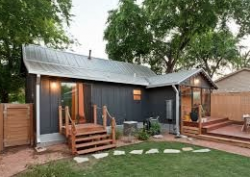 Here at Ipswich and Logan Granny Flats we will tailor your Granny Flat build so that it’s just right for you! A Granny Flat will add value you to your property, even if it is for Granny’s so that Granny is a little bit closer to home!
All of our Granny Flats are designed by our own architect, Russell Wombey, who has a passion for light, bright open spaces. As Granny Flat Builders – we are the market leaders in both Ipswich and Logan. Just ask us – we’ll tell you !
So whether you’re looking for investment purposes or just for renovations to your own home, we tailor our work to suit your preferences WITHOUT the hassle!
GET STARTED TODAY
Over 35 years Industry Experience!
Guaranteed Positive Cash-flow Investment!
All from the Comfort of your Own Home!
CALL NOW: Sonia 0403 309 136
Ipswich Granny Flats: www.ipswichgrannyflats.com.au
Logan Granny Flats: www.logangrannyflats.com.au
Granny Flats in Australia – A Growing Phenomena
We thought we would put together a quick easy to read guide for whats happening Australia wide as part of the Granny Flat Revolution!
Sonia Woolley
11 February 2016
NSW
Governed by State Legislation
60m2 Dwelling – 450m2 min. land size
Can be rented out as investments
WA
Governed by State Legislation
Called Ancillary Dwellings
60m2 – 70m2, 2 bedroom – 450m2 min land size
Can be rented out as investments
Victoria
Governed by State Legislation
(DPU) Dependant Person Units
m2 Currently being done
Cannot be rented out as investments
QLD
Governed by each Local City Council (LGA)
Some Councils call them Secondary Dwellings; Auxiliary Dwellings; Granny Flats
Ipswich : 50m2 – no minimum land size
Logan : 70m2, 2 bedroom – land up to 999m2
Logan : 100m2, 2 bedroom – land size over 1,000m2
Ipswich, Logan, Toowoomba – can be rented out as an investment.
Moreton Bay Shire Council is expected to make a public announcement shortly that they too will allow second dwellings to be built and rented out
SA
Governed by State Legislation
(DPU) Dependant Person Units – 60m2
Cannot be rented out as investment
ACT
Governed by ACT State Government
Called Secondary Dwellings
90m2, 2 bedroom
Can be rented out as investments
Tasmania
Governed by State Legislation
The “Ancillary Flat” 30% of main dwelling (or 60m2)
Hidden Traps in the Granny Flat Boom
This week, Ipswich Granny Flats brings to you an interesting article bringing to attention some things that not everyone might be aware of!
Read on & Enjoy…
Hidden Traps in the Granny Flat Boom
Duncan Hughes
Australian Financial Review
28 January 2016
Granny flats are springing up across the nation’s suburbs as property owners convert their backyards for more living space, additional income and generous tax deductions, say financial and construction specialists.
But a threefold increase in granny and “Fonzie” flats in the past five years also creates the possibility of backyard eyesores and sales of the family home, which are usually tax-free, attracting capital gains tax, they warn.
“Those thinking that a granny flat will increase the value of their home should think again,” says Paul Nugent, a director of buyers’ advocacy Wakelin Property Advisory. “Any additional value is likely to be negligible.
“Most people would prefer to have their backyard left alone and many granny flats end up as storage rooms for old exercise bicycles and rowing machines.”

(PLEASE NOTE : HOW UP TO DATE IS THIS INFORMATION? IN QLD WE CAN CERTAINLY BUILD SECOND DWELLINGS TO RENT OUT…)
Other commentators believe granny flats are here to stay as working couples enlist the support of their parents to help raise their children, middle-aged parents create an autonomous space for teenagers, and empty nesters use them for rental income.
“A well-constructed and attractive granny flat can definitely add value to the overall property,” says Tony Velardi, a builder who specialises in granny-flat construction. “In addition to providing extra space, it creates rental-income options.”
Granny flats cannot be put on a separate ownership title, which means the cost is added to the price of the property. It also means they cannot be sold separately.
Nearly 100 granny flats were being completed each week in Sydney alone, a threefold growth in five years, according to state government statistics.
NSW, which has the highest overall demand for rental accommodation, allows granny flats to be rented. Information about eligibility and restrictions is available online from its planning and environment department.
NSW also allows Fonzie flats to be built over garages in new developments, subject to council approval.
Fonzie flats are named after Arthur “Fonzie” Fonzarelli a character from the American sitcom Happy Days, who lived in a loft.
They can be sold separately to the primary residence.
Granny flats may be rented out in Western Australia, the Northern Territory, Tasmania and ACT, but cannot be offered as rental apartments in Queensland, Victoria and South Australia.
DIFFERING REQUIREMENTS
Requirements for planning permits and approvals also vary between states.
Velardi says a three-bedroom, self-contained apartment will cost about $150,000 and take between three and four months to complete.
Engineers might need to be consulted before building a Fonzie flat to assess the strength of existing beams and posts.
There are cheaper alternatives, such as DIY flat-pack construction kits that can be bought online for less than $10,000 and are delivered in about eight weeks.
Pre-built granny flats from kit home builders usually start about $69,000 for 60 square metres.
This will give you “the most bang for your buck” says Dino Talic, vice-president of hipages.com.au, a website for hiring home improvement professions.
Velardi says you “get what you pay for. Home owners shopping for a granny flat need to ask: “How sturdy are they? Will they pass the test of time.”
They also need to consider the access needed to deliver materials. “Will they be easily delivered and constructed in a conventional backyard, or will a crane be needed to lift them over existing buildings?” he asks.
A granny flat costing around $120,000 to build typically generates an annual rental yield of about 15 per cent, assuming the owner can find a tenant willing to pay the going market rate, says BMT Tax Depreciation, a quantity surveyor that specialises in depreciation schedules for residential and commercial investors. This many not be possible in former mineral boom towns like Perth and Darwin, it warns.
Average depreciation deductions for a granny flat are about $5300 in the first year, rising to a total of more than $23,700 over five years, according to BMT.
Shared areas between the granny flat and owner-occupied property, such as patios, pools and barbecues, can also be deducted depending upon usage, BMT says.
IMPACT ON BENEFITS
Retirees considering renting out granny flats should check with Centrelink about the impact of rental income on their benefits.
For example, if the flat is being rented to a grandmother or another relative for a nominal amount, it would not be regarded as a commercial transaction and neither the income nor the expenses would be taxable or tax-deductible, says Mark Chapman, director of tax communications for H&R Block.
It becomes more complicated if the flat is rented to third parties, or taxable commercial rents are charged, he says.
“Any expenses incurred on running the flat – such as a proportion of utility bills and land rates or borrowing rates arising from the construction of the flat – will be tax deductible. Depending on the precise circumstances, this might generate a taxable profit or it might generate a loss for the taxpayer to claim against other income,” he says.
There’s also a possible risk of incurring capital gains tax on the main residence, which is normally exempt.
Say a house is bought for $300,000 in 2005 and sold 10 years later for twice the price. In 2010, the owners build a granny flat occupying one-sixth of the total area of the property and rent it to a third party.
“This means one-sixth of the gain arising from 2010 to 2015 ($150,000/6=$25,000) will be liable for capital gains tax,” Chapman says.
This example is illustrative and, to avoid too much complexity, excludes deducting the construction costs of the flat.
“The gains would be based on how much space the granny flat takes up,” says Chapman. “You would also need to consider how long the flat has been in existence. If you have owned the property for 10 years but the flat was built only five years ago, you don’t need to worry about CGT on the first five years.
“If granny really does live in the flat and you can demonstrate that the space is an integrated part of the household lifestyle, you may be able to argue that the main residence exemption should cover the granny flat too.”
Options for financing a granny or Fonzie flat range from using an equity release from the main residence, refinancing with a different lender or a construction loan, according to Mortgage Choice spokesperson Jessica Darnbrough.
There are dozens of loan packages available, so it could be useful to seek advice from a broker about the best strategy, lowest rates and easiest terms, she says.
For example, a $90,000, 20-year reverse mortgage loan at 6.6 per cent is likely to cost about $344,000, according to Canstar, a company that provides financial information. This assumes a 15 per cent loan-to-value ratio, upfront fees of about $1000, annualised charges of $112 and a $300 discharge fee.
According to Canstar’s review of the sector, there is a 30-basis point difference between the lowest rate of 6.45 per cent and highest at 6.75 per cent.
Rising property prices, rental increases, an ageing community and attempts to limit urban sprawl are contributing to the rise in the popularity of granny flats, particularly in Melbourne and Sydney, according to property specialists.
But there are also deeper social issues in the mix of causes, says Anne Hollonds, a psychologist and director of the Australian Institute of Family Studies, a government body that researches family well-being and welfare issues.
Hollonds says having grandparents, parents and children in the same household, or newlyweds remaining in the family home until they saved a deposit, was a tradition until recent generations, particularly in the inner suburbs.
The growing trend for both parents to work increases the financial and social value of having grandparents nearby to look after children, particularly after school before parents get back from work.
“For many, it is important not to live in the same house but nearby,” she says.
Granny flats can provide the older generation, particularly those who do not mind less space, with a degree of independence, autonomy and distance.
“Close enough to be together but enough room to be apart,” is how she describes the adult relationship Generation X and Y (born after 1961) are renegotiating with their parents.
Unfortunately the information about Qld not being able to rent out second dwellings is not strictly true. Queensland is governed by local councils in terms of planning schemes – there are only a handful of local councils at this point in time that allow them to be built. And Ipswich and Logan are two of the councils that have moved with the times and joined the Granny Flat Revolution!
Want to know more?
Ring Sonia 0403 309 136
Ipswich Granny Flats
2015, When Granny Flats Became Flexible Multi-function Spaces
Granny Flats are becoming a world wide phenomena. The evolution of the granny flat into flexible multi- function spaces is explored in more detail here in the article by domain.com.au.
When we have people visit one of our current projects to see the quality of what we build, the first they say in getting out of the car is “This isn’t a Granny Flat – it’s a house”.
I think is well summed up below: In the process, she became one of the newest members of a rapidly growing club – Australians of all ages, circumstances and aspirations collaborating with award-winning architects to create affordable, secondary dwellings with as much care and thoughtfulness as the primary family home.
Approvals for secondary dwellings has increased 20% Australia wide in 2014 – 2015, with nearly 4,000 given the go ahead.
Another great article brought to you by Ipswich Granny Flats, your local granny flat experts.
Read on and Enjoy!
2015, When Granny Flats Became Flexible Multi-function Spaces
Trisha Croaker
3 January 2016
domain.com.au
Award-winning architects are creating affordable secondary dwellings with as much care and thoughtfulness as the primary family home, writes Trisha Croaker.
When Shona Veney, a petite, young, single mother of two, approached architect Peter Stutchbury to design her granny flat, she thought “he’d think I was crazy”.
Why, she reasoned, would the internationally renowned Stutchbury – the creator of some of Australia’s most beautiful, award-winning homes and frequent recipient of the nation’s top architecture prizes – want to imagine a simple, “primitive” studio on a landlocked backyard site in a suburban street in Narrabeen?
And, why, with the international opportunities he enjoyed, would he agree to a 60-square-metre project with a budget of under $300,000?

‘Garden pavilion’ in Narrabeen was designed by Peter Stutchbury for Shona Veney. Photo: Michael Nicholson
Fortunately, fearlessness was rewarded, Ms Veney’s misgivings proved misguided, and earlier this year she moved across her parents’ backyard into a delightful, Stutchbury-designed, three-bedroom, garden pavilion that’s “changed her life”.
In the process, she became one of the newest members of a rapidly growing club – Australians of all ages, circumstances and aspirations collaborating with award-winning architects to create affordable, secondary dwellings with as much care and thoughtfulness as the primary family home.
Designing a successful studio, just like any building, is an art.
Brent Dunn
New figures released by the ABS in late December confirm demand for secondary dwellings over the past financial year has continued to skyrocket, with approvals jumping a solid 20 per cent in 2014-2015 and around 3,650 flats green-lighted.
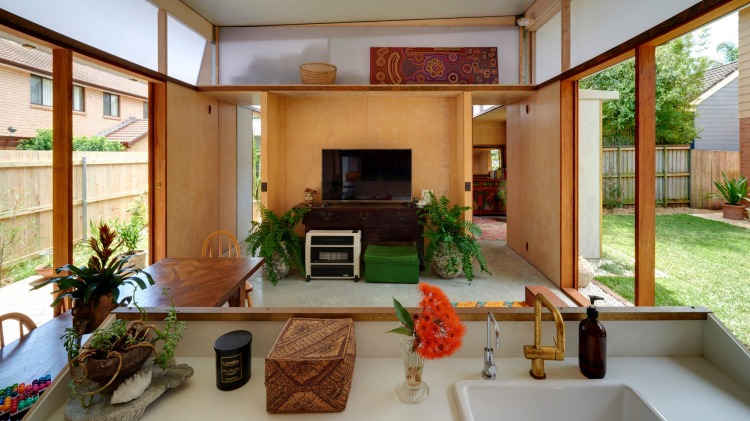
‘Garden pavilion’ in Narrabeen designed by Peter Stutchbury for Shona Veney Photo: Michael Nicholso
A change in legislation in 2009 making granny flat approvals easier to obtain has seen demand for these small-footprint, environmentally sound, flexible buildings increase around 240 per cent over the past six years.
The increase coincides with a boom in construction in NSW generally, with construction valued at $34 billion in the past financial year up from $29 billion a year earlier.
Mr Stutchbury, winner of the architecture profession’s highest honour this year, the 2015 Gold Medal, along with 2010 Gold Medallists Kerry and Lindsay Clare of Clare Design, Brent Dunn and Katharina Hendel of TAKT Studio for Architecture, and Eoghan Lewis, are among a raft of highly respected architects upping the ante.
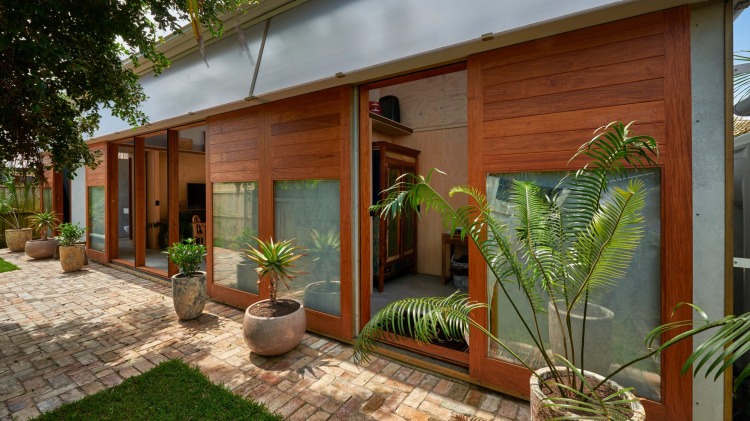
‘Garden pavilion’ in Narrabeen designed by Peter Stutchbury for Shona Veney Photo: Michael Nicholson
As Brent Dunn said: “Designing a successful studio, just like any building, is an art.”
This way of thinking marks a long overdue evolution of the humble granny flat, once (and too often still today) treated with little more respect and refinement than a DIY upmarket garden shed – a sweat box in summer, cool room in winter and just plain unappealing to look at.
It’s vital these increasingly popular buildings – now often referred to as studios, pods, retreats, pavilions or flexible multi-function spaces – are designed respectfully and appropriately, Shaun Carter of carterwilliamson architects, and NSW president of the Australian Institute of Architects, said
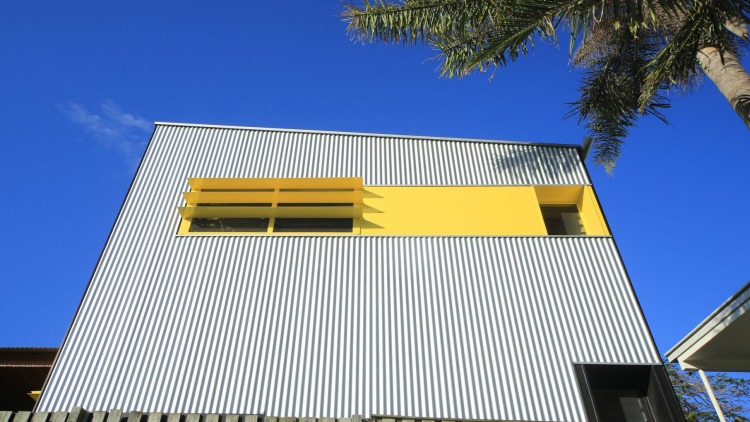
The corrugated-iron, steel-framed granny flat has a beachy vibe. Photo: Peter Hyatt.
Powerfully designed studios have become an effective way to provide for the extended family in areas with high land and housing costs, Mr Carter said. An ageing demographic, the return to intergenerational living and the tendency for young adults to live longer at home, the potential for rental income, increased resale appeal and interest in expanding life/work opportunities are influencing the trend.
Ways to enhance intergenerational living were recently explored by Clare Design during the creation of a successful two-storey “box” at the rear of an east coast beach shack. The space was designed to allow an extended family of grandparents, married children and grandchildren to happily and easily live together within two dwellings on a 400-square-metre suburban lot originally intended for one home.
Placing the new home six metres behind the 1950s shack on a long and narrow site, the Clares then connected both buildings by a roofed deck, using battened doors for privacy or openness as required.
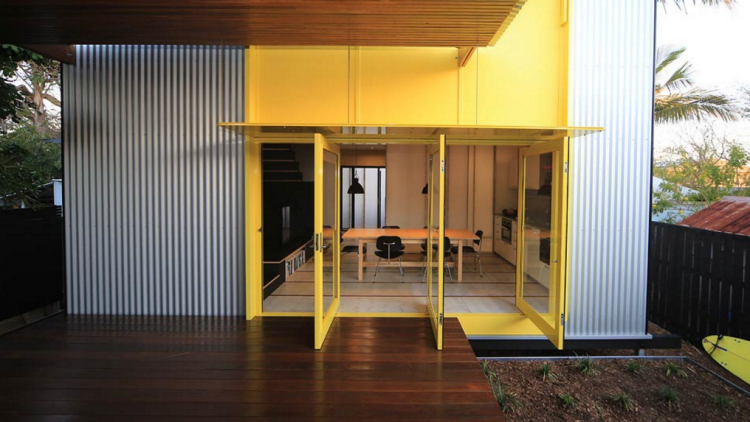
The corrugated-iron, steel-framed granny flat by Clare Design. Photo: Peter Hyatt.
“The benefits are environmental, there is a better use of resources, cost effectiveness and better social outcomes from increased density and mutual family support,” Kerry Clare said.
The benefits of a thoughtful, well-designed studio or “shedio” as his clients refer to it, even on the tightest or grittiest of inner-city sites, can be far-reaching, Mr Lewis of Eoghan Lewis Architects said.
“In a recent project at Tempe, the studio bookended the backyard, and ticked many other boxes. It screened an unsightly neighbour, separated work from play, created outdoor storage as well as being a dedicated place to work and be creative.
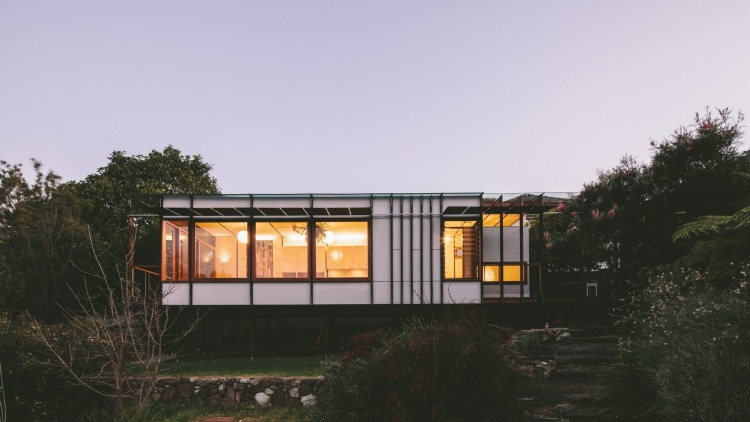
The Pod by Takt Studio for Architecture. Photo: Shantanu Starick
“It’s great for parties, sets up another activity in the backyard and is a beautiful object to look at from the house.”
A thoughtful studio near Wollongong, known as The Pod, and the Copper House in Coogee, winner of the 2015 Small Project Architecture Award – both by TAKT Studio for Architecture – have proven equally flexible.
“Built as an intergenerational collaboration to provide accommodation for the annual visit from grandparents from Europe, the Pod effectively turns into an extension of the original house in the off season, providing the yoga room, teenager retreat and living area,” Mr Dunn said.
“We have seen an ever increasing demand for innovative secondary dwellings / backyard studios,” the architects said. They said the secondary dwelling SEPP [State Environmental Planning Policy (Affordable Rental Housing) 2009] offers a relatively straightforward approval process for buildings up to 60m2 on many sites.
“We find that initially most clients consider them valuable in terms of rental income, but often discover that they become the ideal space to start long dreamed of artistic endeavours, provide much wanted gathering space or support new living for the extended family.”
Back in Narrabeen, Ms Veney was a single mum, happily returning to live at home with her parents, while wanting to provide the best environment for her children . As they approached adolescence, she recognised their need for not just shared but separate places to retreat to. With a budget of less than $300,000, a granny flat was the most viable option.
But with deeply individual, personal needs, tastes and aspirations, it was important this space not just be a generic, cookie-cutter, garden shed – it should reflect the family, their life’s journey and hopes for the road ahead.
“Everyone told me not to waste fees on an architect. But I didn’t listen.
“I wasn’t worldly about everything to do with architecture, but I knew I couldn’t and shouldn’t design this by myself. I know it sounds wanky to say it’s changed my life, but it has. It’s so powerful.”
Have you ever wondered if you can build a granny flat in your own backyard, or your investment property?
You could check with your local council. Ask Ipswich City Council about their Granny Flat Regulations, or even a private certifier to see if it’s possible.
Or you could call us
Ipswich Granny Flats
We Can Work it Out for You !
Just give us a call
Sonia 0403 309 136
Building Boom Taking Place In Backyards
Ipswich Granny Flats, the largest builder and supplier of granny flats in SE Qld – the true Granny Flat Experts bring to you an interesting article about the change taking place in people’s backyard.
Of interest is the fact that about 3,650 flats were approved last year in NSW, a growth of about 20 per cent. Here in Ipswich SE Qld, we have found that for our granny flat projects, about 1 in 4 are for the older generation ie. mum and dad building in the backyard of either their own home or selling their existing family home and building in the kids backyard.
A Growing Phenomena, Australia wide…
Enjoy…
Building boom taking place in backyards
James Robertson and Samuel Roberts
http://www.brisbanetimes.com.au
21 December 2015
Construction in NSW is reaching new records and more of it is happening in people’s backyards, as they build on their own land in response to a tight housing market.
About 75 per cent more people are building on their blocks of land, as subdivisions or granny flats, than five years ago, according to government statistics released today.
The new statistics show that the increase occurs alongside a boom in construction generally. The value of construction in the state rose last financial year to $34 billion from $29 billion a year earlier.
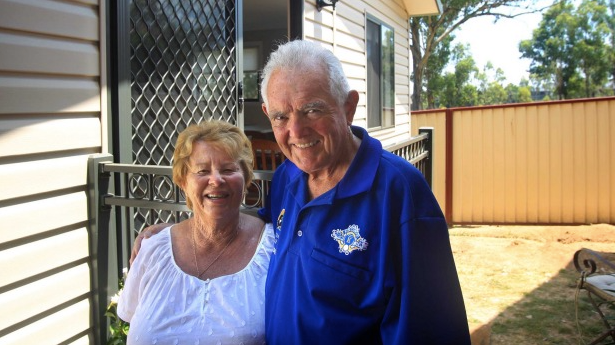 Trend Setters: Val and Paul Buckley who live in a granny flat on a property owned by their daughter. Photo: James Alcock
Peter Phibbs a professor of Urban Planning and Policy at Sydney University subdivisions on larger blocks could become a substantial source of housing supply as Sydney residents seek to make use of wealth tied up in their land.
“People are trying to use their lots to turn one into two, it’s their superannuation for later life, or a start for their kids in the housing markets,” said Professor Phibbs. “I can see a growth model: gentrification on bigger lots and more dual occupancy. Sydney could easily achieve its [housing] targets [that way]”.
About 4500 subdivision certificates were issued in the last financial year, a growth of about 10 per cent on the previous financial year.
Professor Phibbs said that subdividing would appeal to people in Sydney’s middle suburbs on larger blocks and those looking for an option between apartment living and a detached home.
Granny flat approvals have also surged. About 3650 flats were approved last year, a growth of about 20 per cent.
That may reflect the number of young people staying in their parents’ homes. The number of people under-25 moving out has fallen about 20 per cent in the past five years, data from the ABS has shown.
“It makes sense that a way of dealing with that would be to have a separate dwelling on the property with a separate entrance,” said UNSW Professor Lyn Craig. “Perhaps ‘granny flats’ are something of a misnomer.”
Val and Paul Buckley have joined the trend after purchasing a granny flat so that they may live on their daughters’ property.
“It’s cheaper than moving into an aged-care residence, and this way we are close to family,” Mrs Buckley said.
Robert Bird, a licensed builder for High Tech, the company that built the Buckley’s flat has said there are three categories of granny flat investors.
“It essentially boils down to three groups: parents building for kids, kids building for parents, and pure investment properties,” Mr Bird said.
These investment properties are an expanding market.
Rich Harvey, a buyer’s agent and real estate writer, said that investors can still reap rental returns of six per cent on granny flats, which are relatively cheap to construct. He agreed that the growth of short-term rental websites such as Air B’n’B may be prompting growth in their construction.
The state government recently released a discussion paper that canvassed encouraging greater use of medium-density homes, such as terraces, dual occupancies and town houses.
Chris Johnson, from the Urban Taskforce, a lobby that represents property developers, disputed whether sub-divisions alone could ever make a serious contribution to housing supply.
Sydney needs about 500,000 new dwellings by 2030, according to the state government’s metropolitan strategy.
Planning Minister Rob Stokes said the growth in construction activity reflected reforms to the planning system.
“We set out to make the planning system simpler and easier to use, so people can build and renovate their homes without getting stuck in a web of complex planning regulations,” he said.
*************************************************