
The Granny Flat Comes of Age
Ipswich Granny Flats, your granny flat experts bring to you another snippet of what’s happening in the Australian Granny Flat world, part of a world wide growing phenomena.
Read on and Enjoy:
The granny flat comes of age
Maureen Eppen
News.yahoo.com
02 December 2015
New planning legislation, housing affordability issues and the potential for rental income are all contributing to a growing demand for granny flats in Perth backyards.
And they’re not just being built as independent accommodation for elderly residents. In 2013, WA Government planning legislation allowed for granny flats up to 70sqm to be built in suburbs across Perth and to be leased for rental return, rather than limited to occupation by a relative of the owner.
Dominique Travers, managing director of Addstyle Constructions and West Coast Granny Flats, said while there had always been a steady demand for quality, customised detached or attached granny flats, homeowners now recognised the investment opportunities of ancillary accommodation.
“Students, FIFO workers and young couples starting out are all ideal granny flat tenants, who are willing to pay $300-$400 a week for accommodation,” Ms Travers said.
“Many property owners are providing tenant access via rear lanes or erecting fencing and installing separate utility meters to create an informal division for independent rental accommodation in their own backyard.”
Ms Travers said loan repayments on a custom-built granny flat costing about $110,000 were about $150 a week, with expected rental return of $250-$400 per week, for an ideal positively geared investment.
“In a city where the median house price has risen above $500,000, it’s more difficult than ever to enter the property market and many homeowners are adding granny flats to their properties for their young adult children to occupy,” she said.
“Our ageing population has also resulted in added demand for granny flat accommodation as the ideal ‘lock and leave’ home for retirees while they travel.”
Ms Travers said granny flats made ideal home offices or studios, with one of her clients recently adding a granny flat for a family day care business.
Dale Alcock Home Improvement general manager Steve Grehan said an initial spike in demand for granny flats in response to the planning changes had led to ongoing steady numbers for the company.
Mr Grehan said DAHI had built five to 10 ancillary accommodation projects a year before the R Code changes in 2013 but would build 30 double-brick customised granny flats this year.
“We are still seeing a strong demand as a solution for extended families, and investors see granny flats as a great way to increase rental yields on existing investment properties,” he said.
Two-bedroom designs were most popular but DAHI also had a range of one and three-bedroom designs from 50-70sqm, with options for raised ceilings and alfresco areas. Prices started at $99,000.
The company was also exploring different shapes to suit tight blocks and recently launched a two-bedroom, two-bathroom option.
“Granny flats have had a revival in the last few years and they can serve a variety of purposes and offer a range of benefits,” Mr Grehan said.
“We expect they’ll continue to be part of the housing mix, whether people are building them as independent living for grandparents or teenagers, using them as a home office, or creating a studio-style home for rent-paying tenants.”
Summit Granny Flats, established in the wake of the legislative changes, has capped the number of its projects at 50 for 2015, to maintain quality in service and construction in response to overwhelming demand, according to general manager Chris Johnston.
 “This change in laws has attracted a vast majority of people who would not have considered building a granny flat before,” Mr Johnston said.
“Granny flats aren’t just for grannies any more — pretty much anyone at any stage of the home-buying cycle can benefit from this style of home.”
The builder has options for lightweight framing with Masterwall, for speed of construction and thermal qualities, or standard double brick construction. Summit also offered the option of a “move-in ready” granny flat, with painting, floor coverings and window treatments included in the contract price.
“Designs that optimise independent living are driving a new range of granny flats that incorporate fully enclosed single car garages and alfresco areas as standard,” Mr Johnston said.
“With multi-generational living continuing to grow in popularity, the boomerang generation leaving home and then returning, and the affordability of granny flats as an investment option, we foresee demand will significantly grow into the future.”
Who might a granny flat suit?
Granny flats are no longer limited to elderly relatives seeking a place to live with a degree of independence while maintaining family ties.
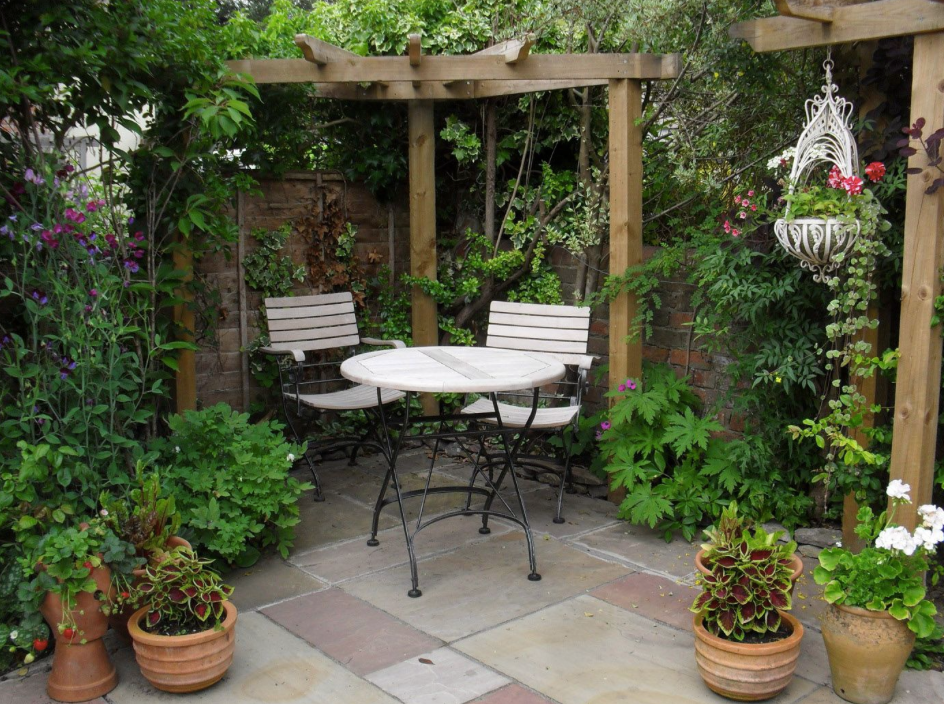 Many other people are embracing the concept of self-contained living in a compact, backyard residence. Such as: Students seeking affordable rental accommodation close to university or college; FIFO workers wanting a secure, easy-care home for the weeks in between work shifts; adult children keen to stay close to the family; young couples starting out; investors looking to attract tenants in accommodation behind an existing rental to increase income; artists, writers and others working creatively from home; and people keen to run a home-based business away from the main house.
Amazing Design: A Granny Flat that is Anything BUT Ordinary
Here at Ipswich Granny Flats, your local granny flat experts and the largest supplier of granny flats in Brisbane, Ipswich, Logan, Moreton Bay and SE Qld – we pride ourselves in having an architect as part of our team. Our granny flats are designed site specific per property, no cookie cutter approach here. No Donga or transportable house craned over the top of your property – but designed by a well respected architect of nearly 45 years in the industry.
Check out the article below – it’s all about good design!
Enjoy…
Amazing Design: A granny flat that is anything but ordinary
Trisha Croaker
domain.com.au
29 November 2015
The term “granny flat” is such a misnomer, isn’t it?
A belittling descriptor, in fact, for spaces increasingly synonymous with dynamic architecture; for spaces servicing a growing, diverse and critical range of purposes; for humble places now speaking loudly of recent trends in residential occupation – of a return to intergenerational living, of increased opportunities to work from home, of a desire for joyous small footprint retreats for work, play, study, and life.
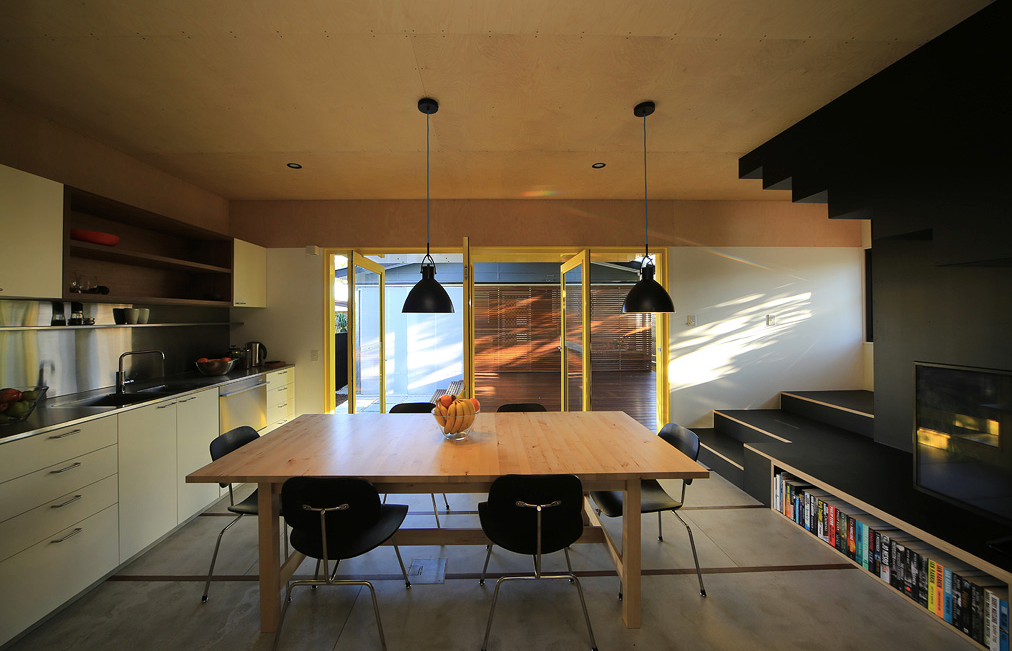
One such thoughtful and rather unjustly tagged “granny flat” near the NSW-Queensland border, designed by Kerry and Lindsay Clare of Clare Design, provides a great example of the new wave of innovative home-away-from-homes now populating our suburb backyards.
Brief
Having purchased a classic 1950s fibro beach house on a suburban block about 10 years ago, the owners now needed to accommodate a growing family and regular visiting baby-boomer parents requiring a home office.
They sought a simple, adaptable granny flat that could comfortably meet a variety of disparate needs.
It had to be climatically suitable for the tropics and not need cleaning. To maximise privacy for both the main house and studio, it needed to be visually and physically separable if and when necessary.
“The spaces should allow people to live and work the way they wanted in a relaxed way,” Lindsay Clare says. “The nicest thing about beach houses is when they allow you to come down a few notches.”
Challenges
Located squarely in the suburbs, the long, narrow block was overlooked (like so many) by “all the neighbours”, resulting in a backyard that wasn’t used at all. And, again like so many, budget was an issue.
Response
Keeping the design deliberately simple to best respond to the site, budget, and client’s needs, the Clares’ created a two-storey, steel-framed “seven by seven by seven metre” pavilion “with not much in and out”.
Responding to the existing beach shack, they used a simple palette of corrugated iron, plywood and glass, with splashes of bright yellow because “it’s a little building, and that’s a little fun”.
“This is not an overworked piece,” Lindsay says. “It’s not precious, not jewel-like, it’s considered but not laboured over. It feels easy to deal with and a space in which you can genuinely relax and step back a few paces.”
To best address issues of “closeness” and privacy, the studio was positioned at the rear of the block, six metres behind the existing house – resolving issues of overlooking along the southern elevation.
A simple covered timber deck was used to connect both structures emotionally, physically and visually, allowing both families to come together or retreat as and when required. Internally, living spaces and guest sleeping and bathing were positioned downstairs, with an additional bathroom, home office, sitting and sleeping spaces upstairs. Large pivot doors and louvred windows were positioned to capture sea breezes and maximise cross ventilation.
Councils need to more actively encourage the building of such structures, which provide much needed support for generations – from the elderly to working parents and young children, Kerry says.
“Granny flats don’t need to be seen as second-rate accommodation, or as a second-rate caravan out the back,” Kerry says. “They can be designed to maintain a contemporary pattern of living.”

******************************************************************
We agree whole heartedly – it is all about good design.
And it doesn’t have to be second rate accommodation at all.
Checkout our Case Studies section on our website https://www.ipswichgrannyflats.com.au
or
Ring Sonia 0403 309 136
How to Give Property to your Kids and Keep the Age Pension
Ipswich Granny Flats bring to you a well written article about things you need to consider if you are approaching retirement and maybe considering downsizing.
Interesting statistics: We have found that approximately 1 in 4 granny flats that we are building are for parents wanting to downsize and hand over the family home to the kids that by now have their own families. In some instances this is the only way this next generation can afford to own their own home, as home ownership becomes harder to achieve…
Enjoy!
How to give property to your kids and keep the age pension
Kate Cowling
Personal Finance Report
24 November 2015
With property prices higher than ever, many older home owners are keen to help their children into the market.
As far as Centrelink is concerned, there are three ways you can transfer property to your kids, and one way you can’t, if you want to stay eligible for the age pension.
Enter the increasingly popular granny flat arrangement.
 Illustration: Michael Mucci
Granny flats may conjure up images of box-like sheds in the backyard, but more frequently it’s a room in a house, maybe even the master bedroom.
The main adjustment is a financial one. The parent or parents are no longer the owners; they’ve transferred the home into their child’s name.
In return, the adult child agrees to look after their parent into old age and provide them with a home. The next generation takes on the responsibility for bills and home maintenance, while grandma or grandpa may look after the grandkids as part of the bargain.
Centrelink is OK with this arrangement, says information officer Justin Bott. It means the former home owner would still qualify for the pension and public aged care if it is needed later on (they have no assets, after all).
Granny flat arrangements are not connected with the tightening of the eligibility rules for the age pension. However, they may become more popular if superannuation means tests eventually include the family home, and Prime Minister Malcolm Turnbull has said all options are on the table.
Three ways you can granny flat …
1. Complete transfer of title
In this scenario, mum or dad puts the home into the name of their adult child in order to pay for a “granny flat interest”, which means they have the right to live there for the rest of their life. There may be a formal legal requirement.
This strategy is particularly effective if the elderly parent can no longer afford to look after the house and wants to give their child a bit of a leg up in the property market, while keeping the pension.
So long as the exchange of assets is deemed fair by Centrelink, it should not affect pension payments. However, if Centrelink considers the arrangement to be an uneven exchange – for instance, if it thinks the parent “overpaid” – they could be penalised based on a “reasonableness test”.
For a 65-year-old, the top reasonable amount for board and care would be around $600,000, according to financial planner Adam Faulkner, of Sentinel Wealth, but for a 75-year-old it would drop to around $400,000.
2. Constructing a new property
Many people think of this as the traditional granny flat arrangement. Ageing mum may have an enormous home and yard, but is too frail to look after the lawn and garden. So instead, she pays to construct a second property on her land to live in, while her daughter or son and their family take over the house.
3. Everyone sells
One way of bringing adult kids and their parents geographically closer together is by each selling up and buying something together, but putting it into the child’s name.
Say you own a house in Parramatta but your mum’s in Avalon, or you’re in Meadow Heights and your dad’s in Toorak; you could theoretically buy a bigger home for all of you to live in at a halfway point, without sacrificing your pension. Again, Centrelink must perceive your purchase as reasonable.
… and one way you can’t
Blindly handing over your home as a “gift” to the next generation is a big no-no by Centrelink if you want to keep your pension. It is deemed to be very different to the three granny flat arrangements listed above, because it’s not seen as a fair deal for either the older party or the public purse.
“The key to the granny flat arrangement is it’s an exchange and not a gift,” says Bott.
You are currently allowed to gift just $10,000 a year – or $30,000 over five financial years – without affecting your pension payments. Any more and Centrelink may think you are trying to dilute your wealth to keep your government entitlements.
Where it can all go wrong
While it may sound like the perfect arrangement, there are some definite red flags around granny flatting.
If you’ve got multiple children, it’s worth keeping in mind you are essentially putting their inheritance into the name of one child only. What will happen after you die? You could keep a portion of the property to bequeath to your other children, but would that mean your co-dwelling child has to sell the home when they die? These questions need to be resolved before you proceed.
“Speak to a solicitor and include your siblings in the conversation,” advises Faulkner.
What happens if you or the family doesn’t love living with mum or dad, or vice versa? It’s worth factoring in an exit clause in case things go awry.
The other thing to be mindful of is you and your family would have limited say in aged care, should that become a reality. Because you have no assets to meet the aged care accommodation payment, you could end up last on the list for location preferences.
Granny flatting may be great for some families, but it’s certainly not a one-size-fits-all solution.
“Ask yourself, are we doing this for the right long-term reasons, or doing it as a means to an end? Debt is a short-term problem, but a life interest can be a 30-year commitment,” says Faulkner.
This article was brought to you by
Ipswich Granny Flats
Your Granny Flat Experts
Investors Slapped with Increased Rates
Investors slapped with increased rates
Jack Needham
http://www.smartpropertyinvestment.com.au/
Monday, 23 November 2015
 Investors and homeowners alike are going to be feeling a little worse off this week, following the introduction of a new round of rate hikes – but is there anything they can do to beat the changes?
Although 13 banks enacted increases to their variable rate home loan products on Friday, three property experts have warned investors looking to counter the changes against passing on the pain to their tenants at this stage.
Instead, they should use the opportunity to reassess their home loan products and contemplate value upgrades to their property.
Cate Bakos, director of Cate Bakos Property, explained that the rental market is far too precarious to justify a rental increase purely on the grounds of absorbing the rate rise.
“In terms of passing on the cost to the tenants – an investor can’t do that. You are facing the market conditions that are in front of you, you’ve got to take the rent that you can get for your property and, particularly with vacancy rates being a little bit higher in some cities, we can’t really afford to go putting our rents up because we risk losing a good tenant,” she said.
It’s a sentiment echoed by Deborah West, principal of SydneySlice, who warned that raising rents at this time of year poses a particularly high risk.
“You need to be careful about balancing an increase in rent with the risk of losing a tenant, because that could end up being a lot more expensive than a moderate rate increase. Especially coming intro Christmas – December, January, February – you don’t want to have vacancy or tenants turning over during these next few months,” she explained.
However, the rate rise may represent an opportunity to assess other aspects of an investor’s portfolio.
“Look at things like whether you’re getting the best rates from your property manager – whether you can negotiate a better management fee. Look across your portfolio and see whether there’s anywhere else you can get a saving,” Ms West advised.
It’s also a good opportunity for investor to reassess their lending situation, according to both Ms West and Ms Bakos.
 “The other thing I think investors don’t do enough is to review their loan. Look to see whether they’re getting the best rates. There’s been quite a lot of competition between the banks over the past 12 months,” Ms West said.
“They should also consider fixing their loan if they’re sensitive to any further rate increases – they should have a look at what fixed rates are out there and whether in the long term if they’re better insulated,” Ms Bakos said.
If an investor believes that a rental increase is necessary to absorb the long-term costs of a rate increase, Ms Bakos explained that undertaking a value-adding project on an investment property may be a cost-effective way of justifying such an increase.
“If people do feel that they need to put their rent up, they should take advantage of the opportunity to make some improvements or additions to their property that they feel could attract a higher rent for the right reasons, and they should chat to their property manager about what they could do. For example, coming into summer, putting in a split system air conditioner might give them a rental increase that equates to more than the ongoing cost of their repayments. If they’re using a line of credit to finance the improvement, the ongoing cost of the improvement would be minuscule.”
While a fan of consistent, incremental rent increases, Cam McLellan, director of OpenCorp, said that the onus is on the landlord to make personal sacrifices if they need to make up for any reduced earnings inflicted by the rate rises.
“I put up rent every time there’s a lease renewal, regardless of whether the market needs it or not because tenants need to get in the mindset that rents will continually go up, so someone needs to be looking at rental increases every single time regardless of what’s happening externally. But investors need to tighten the belt and make some small sacrifices to make up the difference. Realistically, in today’s society people live very lavish lifestyles. Today it’s a very disposable lifestyle we live – we spend too much money on unnecessary things.”
Design Important as Granny Flats Make a Comeback
Design Important as Granny Flats Make a Comeback
Phil McCarroll
yourinvestmentpropertymag.com.au
04 November 2015
The idea of a granny flat as just a re-purposed shed in the back yard or something thrown up in or week or two seems to be a thing of the past, with one person in the industry saying more and more people are utilising a second residence on their property as an investment strategy.
Whether it’s using a granny flat to increase the capital value of their property or renting one out as a means of improving cash flow, Wally Gebrael, design manager at Granny Flat Solutions, says he has seen a change in attitude towards granny flats in recent years.
“There’s definitely been a shift over the last few years away from the idea of just turning a garage into a bedroom or just putting in a pre-fab kit,” Gebrael said.
“It’s actually quite exciting to see what people are coming up with, and we’re really seeing some people think outside the square when it comes to how and what they’re designing,” he said.
While a custom-designed granny flat may be more expensive than a pre-fab or conversion, Gebrael said the extra cost will deliver better returns.
“These days you’re probably looking at around $100,000 for a standard granny flat. That’s going to get you a brick building on a concrete slab if you’ve got a block with easy access and on a gentle slope.
“From the research I’ve done if you sell the property after building a granny flat, you’re going to get your money back and you’re going to put up to another 10% of value on the property as well.
“We’re also finding that people that are renting them out are getting the same weekly rent as an equivalent unit in the area, which is a pretty good return on that level of investment.”
While Gebrael said most granny flats these days include facilities such as full kitchen and living areas, one of the biggest things people need to consider is ensuring the second residence fits with the rest of property.
“You obviously have to make sure you pick a design that suits your block, but there are other important design factors you need to consider,” he said.
“One of the biggest things you need to consider is matching the design with what other buildings are on the property. You want something that compliments them, so make sure you have the same finishes and same style of building.”
As a New South Wales based firm, Gebrael said the legislation in the state is also helping the popularity of granny flats.
“The Affordable Rental Housing legislation in NSW covers granny flats, and that pretty much sets out the same rules that all councils need to follow in terms of approval.
“As you get closer to inner city areas where the blocks are smaller, it can be hard to get approval. The same can go for high bushfire risk areas, but besides that you’re generally right to go.”
In NSW granny flats can be built on blocks that are at least 450 square metres and the flat can be no bigger than 60 square metres. The idea of a granny flat as just a re-purposed shed in the back yard or something thrown up in or week or two seems to be a thing of the past, with one person in the industry saying more and more people are utilising a second residence on their property as an investment strategy.
******************************************
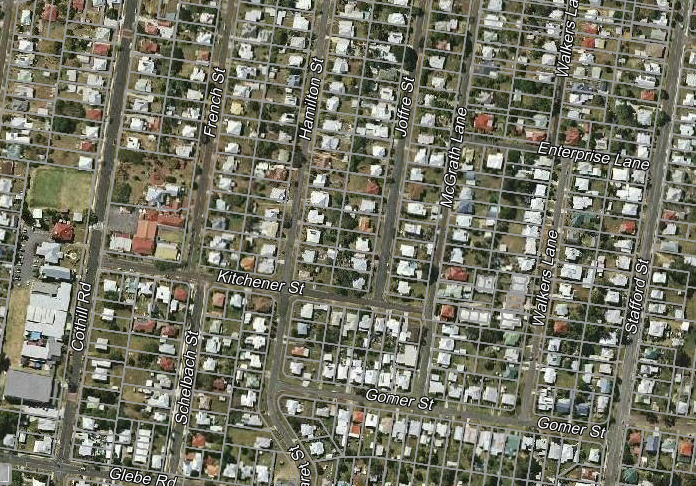
Brought to you by Ipswich Granny Flats, the largest supplier and builder of granny flats in Brisbane and SE Queensland.
0403 309 136
London to Debate Granny Flat Demand
Another interesting snippet brought to you by Ipswich Granny Flats, the largest builder and supplier of granny flats in the Brisbane and SE Qld area.
The granny flat phenomena – it’s a growing thing worldwide. London City is now also debating the issue – this is a good example of what the city’s town planners are putting to public consultation. Some of the recommendations are no second storey homes popping up in backyards, maximum of one bedroom only, they are proposing rules as well surrounding parking and driveways, entrances to houses, homeowners not going over the existing five-bedroom maximum for houses in the city.
All of the above will result in an almost an invisible level of intensification. You’re not going to see second-storey homes pop up in backyards. The whole idea from their city planning point of view is that you should be able to drive down the street and not see any secondary dwelling units or granny flats.
Personally, I think is a smart approach to inner city living.
Read on – Enjoy:
London to debate granny flat demand
Randy Richmond
The London Free Press
It could be a young couple who can’t afford a home on their own.
Or an older couple who wants to help their adult child live at home, and keep their sanity.
Or someone who wants to give granny a flat.
Londoners would get the chance to create additional living units in their own homes under a city staff proposal heading to politicians next week.
“Anecdotally, I think there is a demand out there for this,” Gregg Barrett, the manager of long term planning for the city, said.
In any case, the city has to make changes under provincial legislation passed four years ago requiring municipalities to allow what’s officially called secondary dwelling units.
The units can only be one-bedroom, either inside an existing home or on the property. And only a homeowner who lives on the property can create one.
In London, that policy ties in nicely with the city’s aim to create more homes without creating more sprawl, and provide more affordable housing and rental units.
But in this city, the policy is also complicated by concerns over student neighbourhoods deemed already too densely populated.
“The issue and the debate will be around allowing granny flats in the near campus areas,” said Ward 6 Coun. and planning committee member Phil Squire. “It will be an interesting debate.”
Community groups and city staff don’t want the secondary dwelling units allowed in areas near Western University and Fanshawe College, already home to higher levels of rental units.
But Squire said he’s also heard from people who think it’s discriminatory to allow the units in some parts of the city but not others.
City planners support the units in the rest of the city, aside from the need to meet provincial legislation.
“What this does is provide the opportunity for homeowners to generate some income to help them afford a house,” Barrett said.
“These units also increase the supply of rental units and they are affordable housing units.”
Allowing homeowners to create rental units follows the principles of The London Plan, the city’s long-range planning guide that calls for the city to grow more up than out.
But it’s not the kind of intensification that Londoners need fear clogging up their residential neighbourhoods, Barrett said.
“This is almost an invisible level of intensification. You’re not going to see second-storey homes pop up in backyards.”
Each unit could be a maximum of one-bedroom and homeowners could not go over the existing five-bedroom maximum for houses in the city, Barrett says.
There are rules as well surrounding parking and driveways, entrances to houses and the size of a separate unit.
“You should be able to drive down the street and not see any secondary dwelling units,” Barrett said.
The planning staff recommendation to create secondary dwelling unit policies heads to planning committee Nov. 26.