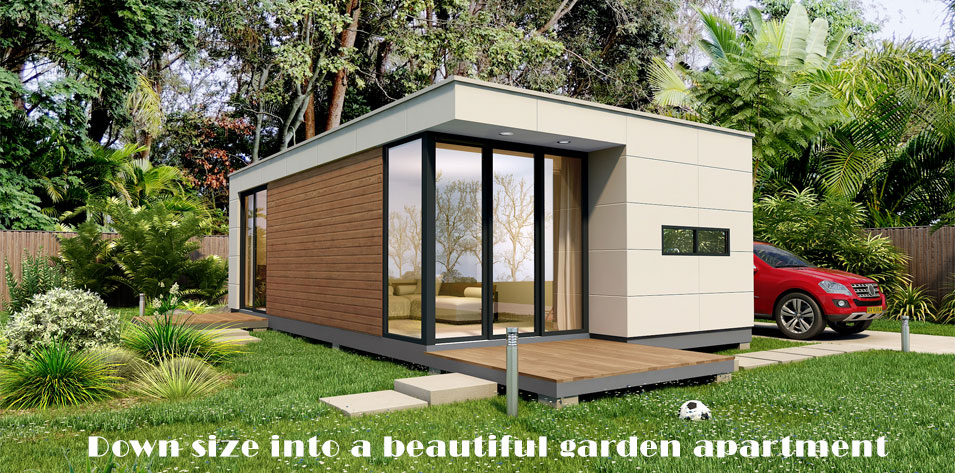
Why I Love Living in a Granny Flat
Ipswich Granny Flats, your local Granny Flat Experts, bring to you another interesting snippet :
Madeleine Wedesweiler
Domain Reporter
3 September 2015
For the last eight months I have lived in a granny flat out the back of my aunt and uncle’s house, forking out just $100 per week.
I’m not the only Aussie embracing these daggy dwellings. The Department of Planning and Environment reports there were 4818 granny flats and dual occupancies approved in 2013/14; an increase of 68 per cent in a year.
People use them for home offices and art studios, extra storage and for housing their teenage children or elderly parents (close enough to keep an eye on them, enough distance to keep the peace).
Indeed, if family folklore is correct my own granny flat once served as an office to sell the display homes on our street.
In a world of million-dollar medians I’m likely to be calling my little pad home for quite some time to come, which is perfectly fine by me – a granny flat is a bit like all the other types of dwellings, only better. And here’s why.
While similar to apartment living, there’s the bonus of not having to share a building with other pesky residents. Not once have I had to deal with noise coming from the apartment above or below me.
A granny flat is a bit like a Tiny House but it has a more humble reputation; people don’t make Pinterest accounts and write blogs about the #journey of their granny flat and how it has transformed them.
My granny flat is minimalist, but not in a cool Scandinavian way. I’m not even one of those people who is passionate about downsizing; it’s just that I haven’t had much time to accumulate a lot of things.
Then there’s the name. Saying you live in a granny flat definitely does not sound cool, but it does kinda sounds hip in an ironic way.
It looks like a miniature house. The reason people like babies so much is that they’re tiny humans and they like cats so much because they look like tiny lions. This principle can also be applied to granny flats.
There are two types of granny-flat residents; those who spend time with their landlords up in the normal-sized house, and those who don’t. I’m grateful to belong to the former category.
For me, renting a granny flat from my super cool (assuming they’re reading this) family members in the house adjacent means I benefit from the good parts of living with other people. I get to eat dinner with them (and not cook), and watch ‘quality’ shows with them at night. Sometimes, they even pick me up from the bus stop when it’s raining. It is also brilliant because we don’t have to have social interactions before midday – my peak time for brooding, caused by my hatred of mornings.
It’s also mostly like living by myself. I can stay up as late as I want because no one tells me not to watch Netflix.
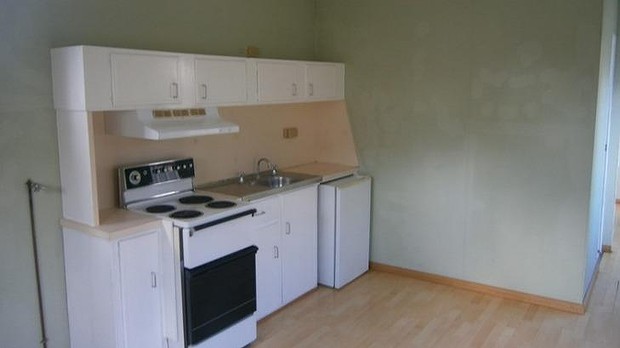
Sure, life in a granny flat isn’t perfect. I don’t do a lot of cooking but if I did I would probably feel disappointed by my “kitchen” (a bench top with a little camp oven, sink, toaster and kettle). There’s also the issue of the smell of brewed coffee hanging around for two days, which feels inappropriate when I’m trying to sleep.
My granny flat is the right size for me. I’ve grown so much over the last year but it’s still just the right size. All the words from all the stories I’ve read, all the songs I’ve listened to, all the hopeless meals I’ve eaten, all the long-winded phone calls I’ve made, they all fit perfectly inside my little flat. All the things that belong to me – tangible and intangible – are there.
Granny flats definitely aren’t suited to everyone, but they are perfect for grandparents, young couples, or for a sentimental individual like myself.
Sydney Granny Flat Rents at Record Highs
Ipswich Granny Flats, your local Granny Flat Experts, bring to you another interesting snippet :
Jennifer Duke
Domain Review Editor
12 August 2015
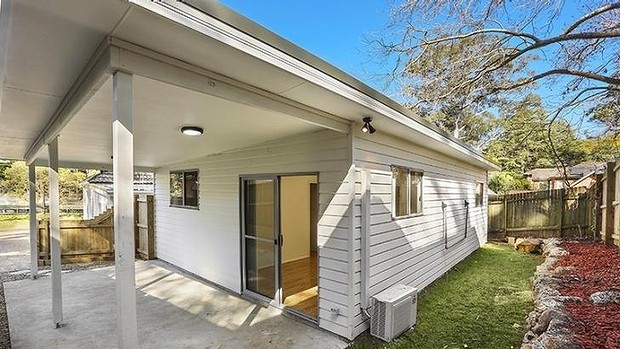
Some landlords are charging thousands of dollars a month for granny flats, as asking rents for Sydney’s granny flats jump to their highest price on record.
The weekly asking rent for a granny flat increased 5.95 per cent over 2014/2015, according to Flatmates.com.au data. This was a higher rate of growth than houses (3.9 per cent) and apartments (1 per cent).
Those wanting to rent this affordable housing option should expect to pay an average of $292.46 per week – the highest in the country, followed by Perth at $251.25 which remained flat over the year.
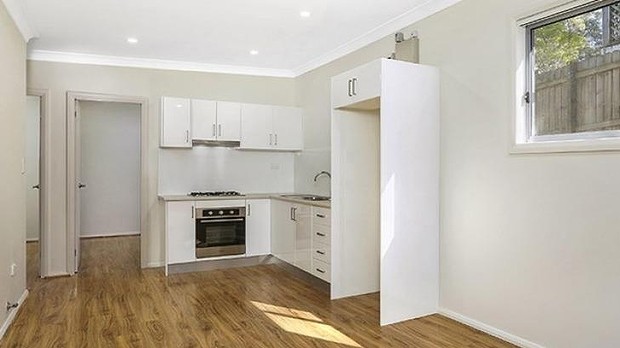
Yet some granny flats are securing far more than the average.
A brand new three-bedroom granny flat at 63A Ryde Road, Pymble is available for $650 per week, with Savills Cordeau Marshall Gordon senior property manager Helen Hovey.
“It has only been up for a week and has already had some inquiry,” Hovey said. The main residence and the granny flat are up for rent separately.
Granny flats are also asking thousands of dollars a month in Frenchs Forest, Dee Why, Wheeler Heights and North Manly.
The tight rental market, low first home buyer numbers and steady levels of migration are behind the increase, said Domain Group senior economist Dr Andrew Wilson.
“The vacancy rate has tightened again and we are still seeing supply struggle to keep up with demand for rental accommodation,” Wilson said.
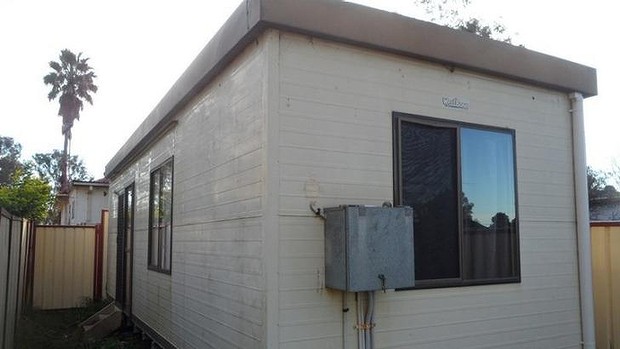
The vacancy rate dropped 0.1 per cent over the month to July 2015, according to Domain Group data.
Tenants are showing strong demand for this type of cheaper rental, said Edwin Almeida, principal of agency ‘Just Think Real Estate’.
“They do rent well and quickly,” he said.
He warned that in some suburbs there is a “glut” of granny flats, such as in the western suburbs, which would limit the amount of rent that could be charged.
A spokeswoman for the Department of Planning and Environment confirmed there had been a 68 per cent increase in granny flat and dual occupancies approved in NSW, up to 4818 approved in 2013/2014.
General manager of flatmates.com.au Thomas Clement said granny flats do exist in the inner-city areas, however it’s usually homes with larger land in the suburbs that offer these rentals.
“Places like the upper north shore, northern beaches and western suburbs are popular for granny flats, as home owners have more land to accommodate them,” Clement said.
The priciest granny flat suburbs on average in Sydney are North Ryde ($371.25), Avalon Beach ($370), North Curl Curl ($365), Frenchs Forest ($364.73) and Kingsford ($360).
The cheapest options are West Ryde ($206.75), Rockdale ($205), Arncliffe ($205), South Hurstville ($202.85) and Liverpool ($192.50).
The lowest-price granny flat in Sydney currently available for rent is in Cambridge Park , asking $190 per week.
Ipswich Granny Flats Sparks Investment in Own Backyard
Ipswich Granny Flats sparks investment in own backyard
www.qt.com.au
Chris Owen
5 August 2015
IPSWICH business owner Sonia Woolley is a woman who is building success in one of the most male-dominated industries in Australia.
Ms Woolley is the co-director of Ipswich Granny Flats, an enterprise which gives home owners the opportunity to turn their backyards into goldmines.
She – and her business partner Julie Adams – develop a householder’s empty lawn space with granny flats so that the owners can rent them out and pocket the cash.
Their business was created after a reform by the Ipswich City Council suddenly allowed home owners to use a granny flat as a rental for an unrelated party.
Prior to the reform, legislation required that only a dependant relative could live in a granny flat.
The business recently expanded to Logan, after the city’s council also adopted similar changes to their planning scheme this year.
Ms Woolley, who is the principal and director of Vision Property Group, said granny flats had become an increasingly popular option for investors.
As a testament to her success, Ms Woolley has been recognised as one of the top women in Queensland’s building industry.
She was recently named a state finalist in The Housing Industry Association’s Recognition of Women in the Industry awards.
The awards were created to showcase women who inspire, motivate, achieve results and lead by example in the building industry.
“More and more women are playing a bigger and crucial role within the building industry these days,” Ms Woolley said.
“Women are very driven by whatever careers they are passionate about.
“I have a lot of passion for the work I do and although I didn’t win, I was honoured to be a finalist for this award”.
HIA executive director Warwick Temby said HIA was keen to demonstrate how women were operating in leadership roles in what was still a very male dominated industry.
“The industry must do everything it can to encourage women into the industry at all levels to ensure that there is an adequate supply of skills to meet the future demand for housing in the state,” he said.
Queensland Most Popular State For Property Investors: MRD
Ipswich Granny Flats, your local Granny Flat Experts, bring to you another interesting snippet :
http://www.theurbandeveloper.com
Staff Writer
27 July 2015
Queensland Most Popular State For Property Investors: MRD
Queensland is by far the state of choice for property investors looking to buy, according to new research by property investment advisers MRD Partners.
More than half of respondents to MRD’s Australian Property Investor Survey indicated the Sunshine State was where their next investment would be.
Queensland outstripped its rival states of New South Wales, Victoria and Western Australia in popularity by four to one, South Australia by 6 to 1, Tasmania by 32 to 1, and the Northern Territory and the Australian Capital Territory by 48 to 1.
WA was the second choice behind Queensland, but it was a distant second, with only 13.61 per cent of respondents indicating the state was their preferred investment location.
Nick Lockhart, MRD Partners’ Managing Director, said it was no surprise Queensland was the focus for investors going forward.
He said there had been plenty of speculation over the past 18 months pointing to South East Queensland in particular as the place to invest, largely because it was long overdue for an upturn.
“Investors know all markets go through what we call a ‘property cycle’, where there is typically a boom, followed by a flat market and some price correction before it lifts again, and Brisbane is the only capital not to have experienced a substantial lift since the GFC,” Mr Lockhart said. “The Brisbane market has moved from recovery to growth but has not yet entered what we could call a ‘boom’ market, so there is plenty of opportunity for people to get in now and buy before that growth comes.”
Survey respondents indicated they believed the Queensland market was ‘on the comeback’, along with the Australian Capital Territory, South Australia and Tasmania.
New South Wales and Victoria were considered to be at the top of the cycle, while the property market in Western Australia and the Northern Territory were labelled as ‘in a slump’.
Mr Lockhart noted that the WA property market had recently stagnated – or fallen in some instances – due to the slowdown in mining, which was creating opportunities in the state for investors.
But he also noted the majority of investors who indicated a desire to buy in WA were those from the state, which was evidence of a preference to buy “in their own backyard”.
“Alongside Western Australia, New South Wales and Victoria were also high on the shopping list for investors, which was to be expected,” he added. “Even though these states have experienced significant growth recently, they will always be popular markets as they have a history of strong growth.”
MRD’s survey found the majority of property investors were positive about the market, with more than 51 per cent of respondents indicating they would buy over the coming year and 50 per cent indicating they believed negative gearing would remain despite recent political debate about its possible removal.
Investors from the Australian Capital Territory expressed the highest sentiment, with 89 per cent wanting to buy in the next year, followed by those from NSW at 66 per cent.
Western Australia, South Australia and Tasmania were the only states where the majority of investors indicated they did not want to buy over the next 12 months.
Investors surveyed preferred to buy a house and land (62.8 per cent) as opposed to townhouses (15.46 per cent) and units/apartments (14.01 per cent), and were almost equally split on whether they preferred to buy in the inner city (47.34%) or in areas further from CBDs (45.41%).
“People still believe the value of a property investment is in the land,” Mr Lockhart said. “As medium density has given way to higher density – that is, as bigger apartment blocks and townhouse complexes are being built – there has been a shift back to single-dwelling homes. In the past two decades master-planned housing estates have sprung up making housing further from our CBDs more appealing. With them comes a mixture of retail and commercial facilities, as well as residential housing, usually with lakes, parks, community facilities, schools, hospitals and bikeways.”
Granny Flats are the Hottest Property in Sydney
Ipswich Granny Flats, the largest provider of granny flats in SE Qld bring this article as it happens, about just how hot granny flats are in some areas. Any properties that have a granny flat or even just a granny flat potential will become premium properties in the future. Read on…
Stephen Nicholls
11 July 2015
Granny Flats are the Hottest Property in Sydney
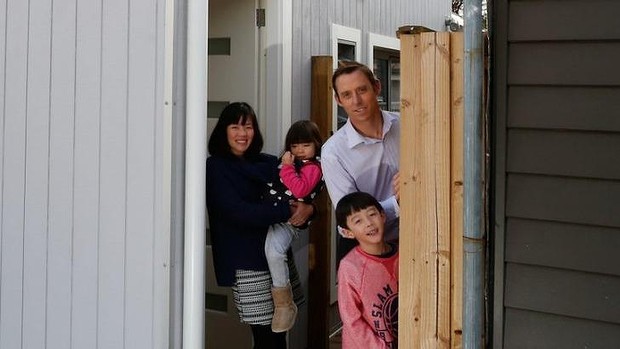 Arturo Norbury and Jessica Lim with their children, Zoe and Mitchell at the entrance to their Randwick granny flat at the back of their home. Photo: Peter Rae
It was the standout auction result from last weekend: a simple three-bedroom home at Asquith near Hornsby sold for $1.48 million, a massive $480,000 over reserve.
“I knew it was going to be a bomb because we had 70 contracts out and 42 registered on the day,” said Ray White Hornsby agent Jaime Garrick.
What was the appeal? The mere potential for a granny flat out the back because it was a 1033-square-metre block.
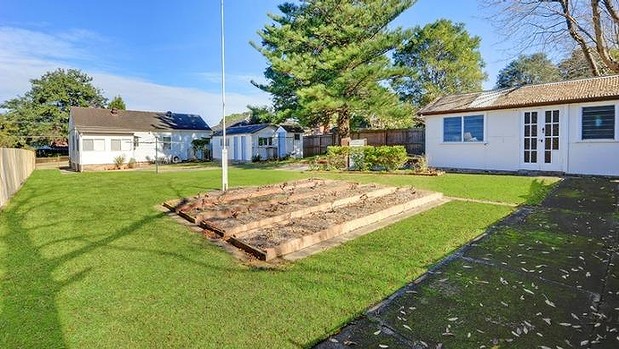 Potential: This house at 7 Baldwin Avenue, Asquith sold for a suburb record of $1.48 million on Saturday because the buyer wanted a home where he could build granny flat. Photo: Grahame Horne
Granny flats – or properties that could have one – are among the hottest in Sydney, for both investors keen to double their rental yields and homeowners wanting to have family within reach.
The state government revealed to Domain this week that over a four-year period more than 7500 secondary dwellings – most of them granny flats – had been been approved. That followed the introduction of laws in 2009 that allowed a granny flat to be approved in just 10 days.
Mr Garrick said more than a quarter of the buyers interested in the Asquith property had a granny flat in mind. “They can get an extra $450 or $500 week in rent if they build it right,” he said. “And they’d spend between $120,000 and $150,000 building it.”
The successful bidder last Saturday, 70-year-old Raymond Leung, who admitted to paying “a little bit more” than he hoped, is going to live in the granny flat with his wife, Eva, with his 34-year-old son and grandson in the main house.
“It’s good that three generations can live together, but it’s better to have a little distance between us all,” Mr Leung said, laughing. “There is a bit of a generation gap.”
Granny-flat builders have sprung up across the city to cope with the demand. “We’re doing about four or five jobs per week,” says Wally Gebrael of Granny Flat Solutions.
Robert Daoud of Master Granny Flats says business is booming. “There’s just huge demand at the moment.”
Although most are being built in larger backyards from in the west, north and south of the city, some are appearing in the east.
Qantas HR manager Atura Norbury, 40, and web designer Jessica Lim, 37, finished their granny flat above a garage in Randwick in February for $250,000. They’re already collecting a cool $500 a week in rent.
And there’s still enough room for Mitchell, six, and Zoe, three, to play in the courtyard.
“It’s compact, but it’s working really well,” Mr Norbury said.
“And there’s potential for parents to move in at some stage.”
Family flat (Granny flat)
Ipswich Granny Flats, your local Granny Flat Experts, bring to you another interesting snippet :
Christchurch City Council
6 May 2015
The requirements for a family flat on a property.
Under the Christchurch City Plan
A family flat or ‘granny flat’ means self-contained living accommodation which is occupied by a family member who is dependent in some way on the household living in the residence. The flat can be either contained within a residential unit, or located in another building separate to the main residential unit on the site.
To ensure that the use of the family flat is limited to dependent family members of the household living in the residential unit, the City Plan requires that a legal encumbrance be placed on the certificate of title.
Under the City Plan the maximum gross floor area permitted for a family flat is 65m2 excluding terraces, garages, sundecks and verandas. When the building is no longer needed as a family flat, if it does not comply with all the rules for a residential unit the building is required to be relocated from the site, or the kitchen removed so that the building is no longer self-contained.
When a family flat is no longer needed and the necessary work has been carried out the owner can request the removal (discharge) of the encumbrance from the certificate of title using this form: Request for Discharge of Encumbrance: Family Flat Conversion (Form P-014b) [PDF 241KB or Doc 278KB]
Please note: a sleepout that is not self-contained (i.e. no kitchen) is not defined as a family flat and is covered by different rules.
Under the Banks Peninsula District Plan
The Banks Peninsula District Plan provides for a family flat as an accessory building. It is recommended that you speak to the Duty Planner on 941 8999 to find out the rules for your particular property if you are thinking of constructing a family flat in the Banks Peninsula area.
Family flat encumbrance
A family flat encumbrance is essentially a promise to remove the flat or its kitchen if the flat is no longer required for a dependent relative.
The Council arranges for preparation and registration of the encumbrance on the certificate of title for the property, together with your own solicitor. To request an encumbrance for a family flat, please fill out the application form: Request for encumbrance (Form P-010) [Doc 217KB or PDF 33KB]
Building work is unable to commence until the encumbrance is registered on the title, so to avoid delays, it is recommended that you submit the request for encumbrance form and the fee either before or when you submit any application for building consent.
Encumbrance fees
Refer to the Resource Management schedule of fees for registration and discharge of encumbrances. Please note that these fees do not include your own solicitor’s fees. The preparation of the encumbrance or discharge document is done in consultation with your solicitor, as it is a legal document.
Conversion of family flats for general occupation
A family flat that was existing on 6 December 2013 can be converted into a residential unit that can be occupied by anyone, if certain requirements are met. This is one of the housing intensification measures introduced by the Land Use Recovery Plan (LURP), which was approved by the Minister for Canterbury Earthquake Recovery in December 2013.
The requirements for converting a family flat are outlined in this information sheet: LURP Housing Intensification Provisions: Converting a Family Flat into a residential unit in the Living 1, 2 and H zones [PDF 64KB]
After a family flat has been converted, the owner can request the removal (discharge) of the encumbrance from the Certificate of Title using: Request for Discharge of Encumbrance: Family Flat Conversion (Form P-014b) [PDF 241KB or Doc 278KB]
Removal of a family flat when it is no longer needed
If a family flat (or its kitchen) has been removed because it is no longer required for a dependent family member, or if the flat becomes a permitted activity under the City Plan rules, you can request the removal (discharge) of the encumbrance from the Certificate of Title using: Request for Discharge of Encumbrance forms P-014b [Doc 278KB] and P-014c [Doc 242KB]
A Council Officer may inspect your property to be satisfied that it is appropriate for the encumbrance to be released. In addition, a building consent will be required to remove the flat or services, i.e. kitchen and plumbing.