
Swapping Assets for Care and Accommodation – What Are The Risks?
It may seem like the easiest and most obvious solution to many…as time passes and you need a little extra support in life, you should be able to turn to your family for that, right? Unfortunately, it’s not always that simple, there are many things that can go wrong. It’s super important that anything involving money or real estate is agreed upon – by all parties – in a transparent, legal agreement.
Elderly people at risk of homelessness when ‘granny flat’ agreements fail
Caitlin Fitzsimmons, Brisbane Times
22 February 2020
Family care arrangements where elderly parents give their assets to adult children in exchange for accommodation and care are becoming more common, sometimes with dire consequences.
Macquarie University associate law lecturer and PhD student Teresa Somes said the trend was likely to continue given the ageing population and concerns about the cost and quality of aged care, likely to be exacerbated by the royal commission.
Another driver is poor housing affordability in the big cities, with family members seeing an exchange of assets for care as win-win.

“A lot of these arrangements are entered into after some sort of crisis, whether it’s the death of a spouse or some health crisis,” Ms Somes said. “They’re not thinking about the legal analysis of what happens down the line, they’re just thinking ‘oh my goodness, we need to sort this out’.”
In a typical scenario, a parent might transfer ownership of their home to their adult child and build a granny flat in the yard, or sell their home and contribute the proceeds to their child’s property in exchange for accommodation or care. Services Australia calls these arrangements a “granny flat interest” or a “granny flat right”, and they can count in the assets test for the age pension.
Ms Somes’ research shows if the agreement fails and the adult child is unable or unwilling to repay the money, the elderly person risks becoming homeless, reliant on social housing or the generosity of friends.
In one recent case in the NSW Supreme Court, a pensioner in her late 60s wound up couch-surfing with friends after her relationship with her daughter and son-in-law soured and she was asked to leave the home in which she had contributed nearly $170,000.
Ms Somes said judges across all jurisdictions have commented they are seeing more cases of this type and she plans further research on the prevalence of these arrangements. There are no official figures, though census data looks at multi-generational households.
Council on the Ageing Australia chief executive Ian Yates said there are many cases of elder abuse where the older person “gets done out of their rights” but unexpected problems could occur in any family.
“You might say ‘I know my son or daughter loves me’ but what if their marriage splits up and it gets complicated and you no longer have formal equity?” Mr Yates said.
“It needs to be done properly in real estate ownership terms. Family should have no issue with that because it just makes it never an issue any more.”
Ms Somes said agreements also fail when the elderly parent requires a higher level of care than the adult child can provide or the adult child becomes incapacitated themselves. In some cases, the adult child died before their parent, leaving the elderly person living with their son-in-law or daughter-in-law who might then remarry.
A lot of elderly people do not take matters to court because of the financial and emotional cost.
“In the Supreme Court, [each side is] looking at between $90,000 and $120,000 for a three-day trial because you need to brief barristers, and it is quite a high bar to get Legal Aid,” Ms Somes said.
With the right consideration and legal agreement by all parties, a Granny Flat is still an ideal solution for many families.
Talk to us today if you think it might be right for your family!
Sonia Woolley
0403 309 136
The Big Tiny House Movement – Is It Really Going to Solve Our Housing Affordability Issues?
While the popularity of Tiny Homes continues to grow throughout Australia, there are still many factors to take into consideration when deciding if this lifestyle is right for you. Dr Laura Crommelin of the UNSW City Futures Research Centre, gives her views on some of the pros and cons.
Some big reasons to choose tiny houses, but buyer beware
Branko Miletic, Architecture & Design
12 February 2020
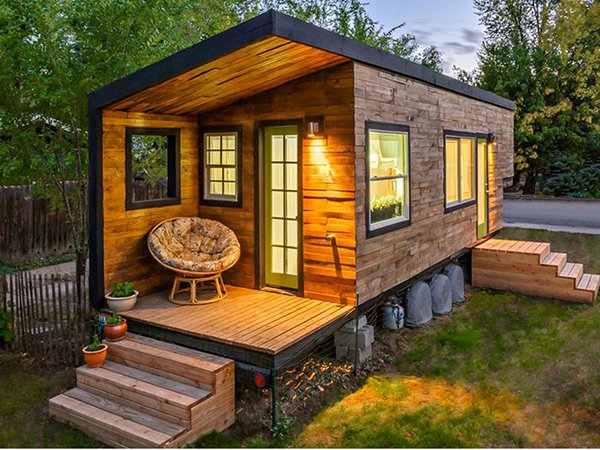
There has been significant growth in small house living, but that doesn’t mean Australia should go in big on them, say UNSW researchers.
Don’t let their sizes fool you – the tiny house movement is big. These micro-scaled homes are populating Instagram feeds and, even have a Netflix series aptly named Tiny House Nation. Championing a simple-living alternative to habitation – an antidote perhaps to the mansion and mortgages – could they be the answer to the housing affordability crisis?
While tiny houses are certainly about more than their cost, Dr Laura Crommelin from the UNSW City Futures Research Centre sees some challenges.
The urban and housing policy researcher believes that while tiny houses may look great on paper or Instagram, the reality is not so simple.
“The challenge with housing affordability is not just the cost or size of the house itself. The price is [mainly] in the land,” Crommelin says. “If it’s a [genuine] house, presumably, you need some land to put it on, and that has to come from somewhere and be paid for somehow. You don’t solve the land problem by replacing a different type of house with a smaller, tiny house.”
The researcher also argues that apartments are still likely to be a more economical use of space than a tiny house.
“You can fit more apartments on a piece of land than you could tiny houses,” she says.
“Apartments aren’t right for everyone, but we should try to do a fair assessment of what it means to live in an apartment and the pros and cons of that. I think there are some benefits to apartment living that people don’t always appreciate.”
Subdivisions and minimum block sizes would also be among the planning issues needing careful consideration.
“If we were to see a really big uptake in tiny houses, we would need to think through all the planning implications in a way that hasn’t happened at this stage, and how a model would work,” she says.
“Fragmented land ownership is something we already grapple with, so it would be risky to subdivide. And much like apartments too, if people are going to be living in tiny homes, they’re going to need other infrastructure to support them as an add on to their smaller personal space like parks, shops, community spaces, libraries, and public services.
“That is very much a part of how people live in smaller spaces…but it’s not often factored into the discussion.”
While some tiny houses are mobile, the researcher says that they might be considered “more like a caravan, which would have its own set of regulations.”
The researcher also has concerns about the equity issues that come with tiny houses.
“If it’s made such that a certain segment of the population …that’s all they can aspire to; you’re essentially saying that they don’t deserve normal-sized housing like everyone else. That’s a real concern because there’s no reason why we couldn’t have decent-sized housing for everyone.”
Crommelin says that changing the current investment model of housing would be a more sensible approach and would directly address the housing affordability issue.
“We have built a housing model built around speculative investment, mum and dad investors, and all of that contributes significantly to inflating the housing affordability issue,” she says.
“We could eliminate the tax breaks that support housing investment so that it might become more affordable to enter the owner-occupier market.”
Other changes to our housing system could also help. The researcher says there is ‘missing middle’ for different living arrangements that we just haven’t invested in that would allow people to own a house, but also accommodate more density.
“Also, if we saw a big investment in public housing, you could change the nature of the housing affordability issue. It wouldn’t happen overnight, but it would make a huge difference – it’s just not as fun or ‘sexy’ as a tiny home.”
The researcher says that there will always be reasons why people want to own their home, and while tiny houses might not be the silver bullet, they do provide value in rethinking the way we plan and build our cities.
“There are lots of socio-cultural reasons attached to the tiny house movement…I think we still have an emotional attachment to the idea of owning your own home, with a front garden, garage and a backyard. But I think the dream of homeownership, in that form, is one we need to be more conscious of.”
Crommelin says tiny houses potentially change mindsets “about how much we use and how much we need”.
“Maybe if we see people living happily in them, it helps to recalibrate our thinking in terms of how much space we need to live a comfortable life and maybe we reconsider how much we live in our homes, and how much we live in other spaces that are external.”
What are your thoughts? Is the Tiny House lifestyle for you??
Sonia Woolley
0403 309 136
First Home-Buyers Taking a Different Approach to Home Ownership
We realise that everyone’s circumstances are unique and that not everyone is fortunate enough to have the Bank of Mum and Dad available to help them kick-start their property journey… however this article shows that a property portfolio is achievable for just about anyone – it’s all about thinking outside the square, making changes to your living/spending where you can… and of course, two of our favourite topics – building Granny Flats and Investing in Ipswich!!!
Couple’s trick to get six homes
Aidan Devine, Sunshine Coast Daily
12 October 2019
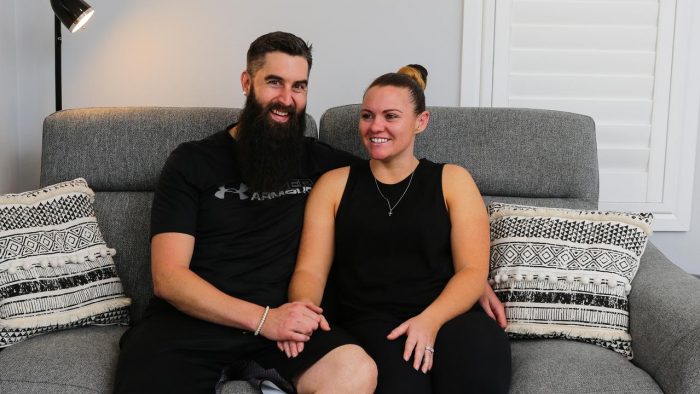
Megan Andrews and Jeremy Craig own multiple properties after originally thinking they’d struggle to own any.
A PENRITH couple who returned to Sydney broke after a world-trip and overseas wedding have turned their ailing finances around in just under three years and now own six homes.
The property portfolio of Megan Andrews, 32, and Jeremy Craig, 37, nets them almost $80,000 a year in gross rental income and is worth about $1.5 million.
And they’ve built it on average incomes and with what they say is a “different” approach to the housing market that saw them let go of more traditional notions of home ownership.
“We were once saving for a home close to where we live and it was taking a long time. We worried we’d never get there,” Ms Andrews said.
A chance encounter with a financial planner changed the couple’s view on the Aussie housing market and they decided to abandon the search for their “dream house” and snap up investment properties instead.
But first they had to claw their way out of debt. The couple had a lavish overseas wedding in South Africa and racked up additional debts on multiple travels around the world.
“We had to get rid of all our wasteful expenditure,” Mr Craig said. “A lot of our money was going to things we didn’t need.”
With a strict savings plan locked into place, the couple then received invaluable help from Mr Craig’s parents, who offered to let them draw equity from their mortgage as a loan to help fund their first deposit.
The couple used this to purchase a home in Ipswich in southeast Queensland, followed by another home in Toowoomba a few months later – both for about $420,000 each.
Both properties were dual occupancy, allowing the couple to get four homes for the price of two, along with four sources of rental income.
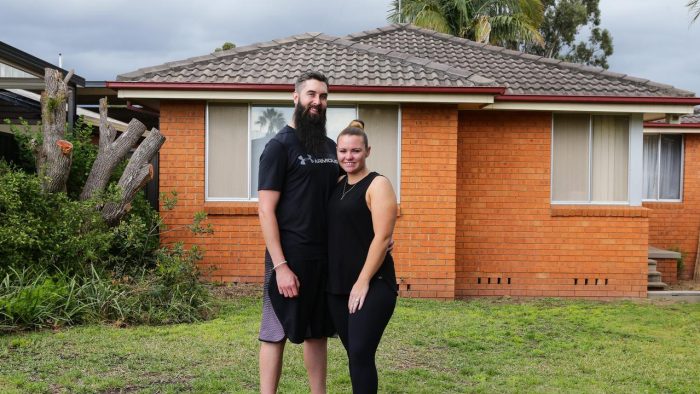
The couple built a granny flat at the back of their parents’ home.
They sorted out accommodation for their own needs by buying and building a granny flat on Mr Craig’s parents’ property.
This allowed them to save even faster and they recently signed the paperwork on another dual occupancy property, this time in Redbank, an area between Ipswich and Brisbane.
The property includes two homes with a combined rental income of nearly $600 per week.
“We realised Queensland was a much better place to buy than Sydney,” Mr Craig said. “There’s more development and infrastructure coming. It was just better for growth.”
Purchasing investment properties rather than a permanent home made the process of scaling the Aussie housing market considerably easier, the couple said.
“We were stuck in an old mentality. You work hard and eventually you pay off a house,” Ms Andrews said. “We’re not doing that anymore and the way we did it was so much easier than we expected.”
The couple’s financial mentor Graeme Holm of Infinity Group said most people in their 20s and 30s had an overly negative view of the housing market and had bought into the idea they would never be able to afford property.
“All that stuff about smashed avo, it’s a load of rubbish,” Mr Holm said. “All it takes is old fashioned budgeting. You’ve got to go back to basics, save hard, and delay gratification a bit.
“A lot of people struggle with that today because we live in a society of instant gratification and no one wants to put money aside.”
Mr Holm added that younger buyers needed to get realistic expectations.
“You may feel trapped out of the market if your expectations were not all that realistic. If you aspire to live in Bondi by the water, you might feel pushed out of a home but you’re better off starting with what you can afford.”
Ready to talk to us about building your own Granny Flat
and/or Investing in Ipswich? Call the experts!!
Sonia Woolley
0403 309 136
Hardship and Homelessness: The Increase of Ageing Women Needing Help
Domestic violence, divorce, death of a partner, pay inequality, less Super at retirement… all of these things contribute to women experiencing hardship later in life, and the number of women needing assistance is increasing across the nation.
‘Bricks for chicks’: how to combat ageing female homelessness
Helen Pitt, The Sydney Morning Herald
April 4, 2019
Dorothy Collins, Margaret Lane and Tess Sievers have been friends since they met at teachers’ college in 1948, all turn 90 this year and all lost their husbands in recent years.
Two are still living at the homes they bought with their husbands while Mrs Collins lives in retirement village accommodation bought with the proceeds from the sale of their family home.
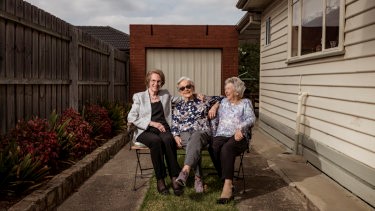
Dorothy Collins, Margaret Lane and Tess Sievers at Mrs Lane’s Melbourne home in Niddrie.
But according to an Australian Human Rights Commission report released on Thursday, an increasing number of older women are not so fortunate.
Older women were the fastest growing cohort of homeless people between 2011 and 2016 the report found, increasing by over 30 per cent in that period to nearly 7000 across the nation. The number of older women accessing homelessness services is also increasing, with over 13,800 older women accessing specialist homeless services in 2017-18, a 63 per cent increase in five years.
The report authors found issues such as the death of a partner, divorce, domestic violence and the gender pay gap, contributed to the high rate of homelessness in Australia’s over-55 female age group, which in 2012 totalled 2.9 million but was projected to grow to 6 million in 2050.
Older Women’s Risk of Homelessness: Background Paper found one in five (18 per cent) of single older women were renting, and on average their superannuation at retirement was significantly less (around $157,050) compared to men (around $270,710).
Age Discrimination Commissioner Dr Kay Patterson, one of the three report authors, said Australia was at risk of human rights violations if it did not introduce policies to address the availability of affordable housing for older women.
“We have an ageing population, a high cost of housing, and a significant gap in wealth accumulation between men and women across their lifetimes. Without innovative solutions this problem will continue to increase,” Dr Patterson said.
“While I am concerned about all women who are homeless or at risk of homelessness, I am focusing on preventive solutions to assist this cohort of women.”
The paper suggests a number of innovative funding solutions, such as affordable housing bonds or housing funds, social enterprises and equity funds. Some in the housing industry are referring to these schemes to reduce female homelessness as “bricks for chicks” programs.
It canvassed shared equity schemes, where a purchaser and equity partner share the costs to purchase a home, so the buyer needs only a small deposit, and called on local governments to review planning laws to encourage co-housing and dual occupancy.
The report cited a number of innovative housing projects as potential models to ease the crisis facing older women. They included a YWCA pop-up shelter for older women in what was previously a nursing home waiting for redevelopment and Victoria’s Harris Transportable Housing Project which is building a number of transportable houses that will be located on land leased from Victorian roads.
Women’s Property Initiatives (WPI) is in the process of establishing a pilot model for single older women where they continue to pay rent, based on their income and WPI will take care of ongoing maintenance costs such as rates.
“Mainstream housing support is available to older women,” Dr Patterson said. “However, many older women fall between the cracks.”
Sonia Woolley
0403 309 136
Housing Shortage – Illegal or Informal Housing the Only Option For Some
Worth a read! This is mainly referencing the Sydney housing shortage, but makes you wonder how other areas will be affected in years to come?
Informal and illegal housing on the rise as our cities fail to offer affordable places to live
Nicole Gurran, Madeleine Pill and Sophia Maalsen, University of Sydney
30 April 2019
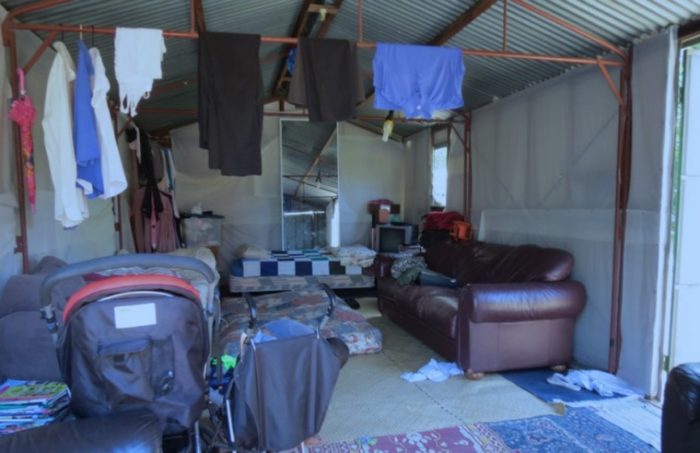
This shed has been illegally converted into housing. Two prams and three mattresses are visible. Informal Accommodation and Vulnerable Households, author provided courtesy of Fairfield City Council
Despite the cooling property market, affordable rental housing remains in critically short supply across Australia. Unable to get a private rental unit or social housing, many low-income renters must resort to informal and insecure accommodation. These range from share homes or rooms, to dwellings that breach planning or building regulations.
Our newly released study sought to shed light on this problem. We found more people are living in shared rooms or dwellings, often in uncrowded and unsuitable conditions. And illegal dwellings are on the rise in Sydney.
What is informal housing?
“Informal housing” usually costs less because it breaches planning, building or tenancy rules, or offers residents few protections under these rules. Examples include unauthorised or illegally constructed dwellings, as well as informal rental agreements, like share housing or room rentals.
Wherever there is a shortage of affordable housing or barriers to access, a market for informal alternatives will emerge.
In Australia’s major cities, low-income earners, recent migrants and international students face particular barriers to getting affordable rental housing. These groups often face discrimination, lack rental references or may fall prey to international agents who offer inadequate accommodation at inflated costs.
In England, illegal “beds in sheds” are a well-recognised problem. In parts of the United States such as California, unauthorised dwellings may contribute around 5% of new housing supply.
No similar estimates exist in Australia. Our standard housing indicators – new dwelling completions, rent and sales data, as well as five-yearly Census changes in tenure – conceal the informal and illegal arrangements that proliferate in unaffordable markets.
More are resorting to informal arrangements
Informal arrangements like renting a room in someone’s home or sharing with friends have always been part of Australia’s housing system.
Living in a share house might well be a rite of passage for young people. Sharing well into adulthood and into retirement is a different matter.
Share housing in the Greater Sydney region increased across all age groups above 24 years old between 2011 and 2016, according to the ABS Census. Those aged over 45 now amount to 20% of sharers. In particular, many more older women are sharing because they lack the means to own their own home or rent independently.
Greater Sydney share households (persons) by age group, 2011 and 2016, and % female 2016
For our study, we interviewed council building inspectors and tenant support workers serving inner and southwestern Sydney. We also examined informal housing types emerging within suburban neighbourhoods.
Our study found the types of share accommodation are changing. As well as few legal protections, sharers often live in uncrowded and unsuitable conditions, where conflict between residents becomes more likely. Tenants informally renting rooms or secondary dwellings from onsite owners report uncomfortable feelings of surveillance and insecurity.
Secondary dwellings, or “granny flats”, are often viewed as a flexible or informal housing type. Unlike other states, New South Wales planning law encourages these developments as a form of affordable rental supply. This offers a sensible relief valve in Sydney’s tight housing market.
But in some areas – such as Fairfield – granny flats have come to dominate new housing development.
Secondary dwelling development and proportion of all dwelling approvals in Fairfield
This is because “codification” – fast, often privately certified approval for compliant applications – has made granny flats a low-cost option for home owners who want to increase the utility of their properties. Landlords see secondary dwellings as a low-cost, high-yield investment.
But it’s unclear whether these secondary dwellings are being rented out as lower-cost accommodation and, if so, whether they are an appropriate and secure rental housing option in the long term.
Illegal dwellings on the rise
One problem our study focused on was the growing incidence of illegal dwellings in Sydney. These include secondary dwellings that are built, or converted from a garage or shed, without planning permission.
These arrangements can be very dangerous. Unsound construction, inadequate or absent insulation, ad hoc electrical wiring, and poorly drained sites expose occupants to serious health and safety risks. The invisible nature of informal housing increases fire risks – with emergency response staff less likely to suspect people are living in a garage or outbuilding.
Illegal dwellings may be more accessible for lower-income earners and others facing rental discrimination. But they are not necessarily low cost. Our study found evidence of illegal granny flats being advertised for over $300 a week. A building inspector commented: “There’s nothing affordable about paying good money for rubbish.”
A lot of resources are needed to identify and remove illegal dwellings. Building inspectors usually become aware of illegal dwellings through complaints from neighbouring residents. Participants in our study described the problem as endemic, as local government lacks the resources for proactive enforcement strategies.
Informal housing solutions?
Informal housing is not necessarily exploitative or dangerous. In fact, it can offer solutions beyond prevailing models of private or public housing provision. For instance, self-organised housing cooperatives or “deliberative” developments are promising alternatives to private rental or ownership. But these remain niche options in Australia.
The message from our study is that the informal housing sector needs to be recognised and monitored within the wider housing system. Measures to improve security and living conditions for occupants, and to ensure informal dwellings comply with planning rules, are critical.
Structurally, it’s essential to remove the barriers to private rental experienced by lower-income and vulnerable groups. As many others have argued, this means adequate funding for social and affordable housing, inclusionary planning to ensure affordable homes are included in new developments, adequate resourcing for tenant advice and crisis services, and further tenancy reform.
Sonia Woolley
0403 309 136
Considering Downsizing? There’s a Lot to Think About First
It’s a decision that many of us need to make at some point in our lives… but there are so many things to take into consideration before the For Sale sign goes up in the front yard!
on that many of us need to make at some point in our lives… but there are so many things to take into consideration before the For Sale sign goes up in the front yard!
Why downsizing is a tougher emotional decision than policymakers think
Starts at 60
April 11, 2019
When your home of decades holds many happy memories of times with your children and grandchildren, the decision to sell is often never just a financial one.
Do you love where you live? Most people do.
In fact, research shows a majority of retirees and near-retirees have a strong desire to remain living in their own home for as long as possible – and they’re doing just that. The 2016 census that 99 percent of people aged 67-74 lived in a private dwelling, and even in the 85-plus age group, three-quarters of Aussies still lived at home.
There are perfectly sensible reasons for this choice; the security and comforting familiarity of your own bricks-and-mortar, the life you’ve established in your neighbourhood and the importance of staying close to friends and support networks are just some of them.
Then, there are the financial benefits, such as the ability to use some of the equity in your home to lend or gift money to your children or the potential to leave your home as a tax-free inheritance.
But sometimes, having a mortgage-free home in a place you love to live isn’t enough to ensure a worry-free retirement. The Age Pension provides a basic income but Australians are living increasingly long and healthy lives and if your superannuation balance isn’t substantial or your lifestyle aspirations are more ambitious than a basic existence, your home equity (for those who are eligible) may be necessary to help fund your retirement.
This is where the conversation usually turns to what’s commonly called downsizing – the idea that selling your large or valuable family home and purchasing a smaller or cheaper property can free up money to be used to increase your retirement income.
There are several common downsized housing options for 60-pluses, from taking a tree- or sea-change in a lower-cost location to doing the grey nomad thing, building a granny flat, choosing one of the thousands of inner-city apartments springing up or heading for a retirement village.
And there’s no shortage of encouragement for older Australians to downsize. The current federal government, for one, is keen that you do. The 2017-18 budget included a relaxation of the limits on superannuation contributions for 65-pluses who wished to sell their family home and contribute some of the proceeds to their super account.
The relaxed limits would, then-treasurer Scott Morrison said at the time, remove a barrier for older Australians who wanted to contribute more to super but had hit the non-concessional contribution cap or the $1.6 million balance threshold, while also freeing up larger homes for younger, growing families.
But downsizing isn’t as easy as deciding you’d like a bigger income and whacking a for sale sign on the front lawn. For many Australians, property is loaded with emotional ties, closely held beliefs and financial implications, that must be weighed against the potential benefits if you’re going to be happy with your decision to downsize.
Brian Herd, a partner at CRH Law, calls the decision a “clash of the titans of later life” that, even when the numbers stack up favourably, isn’t easy to settle because of what their ‘castle’ means to most Aussies.
If your beloved home represents years of hard yakka and financial discipline, and feels like a true representation of you, letting it go isn’t easy; after all, the great Australian dream has so long been to own a patch of land, surrounded by a picket fence. And there can also be unspoken pressure from your family to hold on to it.
“Moving from your home of many years can be a clash of the titans of later life – your heart and your head – your head says move, your heart says stay,” Herd notes. “Some say it is a cleavage between preserving your memories or facing your realities. Some older people even think they should also consider their children’s hearts, those children who want the family home kept to go home to (or inherit), both for themselves and their children.”
The difficulty of letting go of memories is familiar to many Starts at 60 readers. Community blogger Carole Leskin wrote in March 2018 of how she’s clinging tenaciously to the items in her home she cherishes, even as she acknowledges that she needs to move to a dwelling that’s easier to maintain.
“Each item is a memory. Every task that has become a lifelong habit gives me pleasure,” she wrote of bringing down her winter linens from the top of the closet for what may be the last time. “This year, it has also made me incredibly sad as I begin to come to terms with the fact that I will have to move soon – sooner than I thought.”
Meanwhile, there’s our fervent belief in property as an asset, as Bryan Ashenden, the head of financial literacy and advocacy at BT, points out. But he adds that it’s important to remember that that belief can sometimes be misguided.
“Australians love property – you can see it, you can touch it, you can look at it, and you always think that property’s always going to go up,” he says. “But there’s enough evidence in recent times to suggest property markets are going backwards. That doesn’t mean it’s the right time to sell. But the recent experience shows that property does not always go up in value – it can definitely go backwards.”
The trouble is, doldrums in the property market can add to what’s already a fraught decision. If there’s a fine line in your particular case between benefitting financially from downsizing or not, a drop in the value of your property can have a big impact on the choice you make. And, as Starts at 60 Money Club member Linda Gibson found, downsizing isn’t always cheaper – it depends very much on your downsizing destination.
“Over the past 10 years, we’ve looked into retirement villages and visited quite a number,” she said. “Recently, we looked at a village close to our area that seemed to be the place we needed, but after other viewings and doing the most crucial thing, the financial number crunching, we realised we would be giving up a great deal of independence without much monetary gain at all.”
Rachel Lane, the founder and principal of Aged Care Gurus, a consultancy that advises older Australians on their residential choices in later life, says that this number crunching is vital if a retirement village is one of the downsized options you’re considering. She suggests a simple way of working out whether it’s the right choice.
“One of the biggest mistakes people make when they are comparing one retirement community with another is to just look at the purchase price – the conclusion? The one that’s lower is more affordable. Big mistake!“ Lane explains.
“There’s a simple method I use for breaking down retirement community costs. You take a blank piece of paper and divide it into thirds. In the top box you write ‘ingoing’, in the middle ‘ongoing’ and in the bottom ‘outgoing’. If you are comparing two villages, then draw a line down the middle of the page and you can compare side-by-side.
“What you will find is that they will have different costs in each box, different impacts on your pension entitlement and eligibility for rent assistance and possibly the biggest difference will be in the amount you get back after you leave. Viewed side by side, the differences of one over another may not be tens of thousands but hundreds of thousands of dollars. So, crunch the numbers!”
It’s this impact on their Age Pension entitlement that deters many people from downsizing. That’s because an increased income from a downsizing-boosted super balance or even holding the cash from the sale in the bank will likely impact how much pension you receive – an impact that veteran financial commentator Noel Whittaker puts in stark terms.
“When people downsize physically, they normally downsize financially too; they pay less for their new house than they get for their old one. This can be great for putting some extra money in your investments or buying a new car, boat or caravan,” he says. “But if you’re a pensioner, you need to be careful of going too far. The asset test for the pension is essentially a negative 7.8 percent return – for every $100,000 you go over the asset test limit, you lose $7,800 a year of pension, so make sure you know how your move will affect it.”
The Australian Securities and Investments Commission’s MoneySmart site advises anyone considering downsizing to consult a financial adviser on the pension and taxation implications before selling up due to the complexity of some of the calculations required.
MoneySmart also offers a few potential alternatives to selling your home to create additional income. It says that converting your home to dual occupancy so you can live in one half and rent the other, renting out some rooms or looking into reverse mortgages are options with exploring, though they too may have pension or tax impacts.
There are, of course, plenty of 60-pluses who crunch the numbers and decide that downsizing is the right decision for them. One of them is Starts at 60 blogger Ann Rolfe, who wrote last year that that her impending move from her three-level family home to a smaller residence in a lifestyle village would help make up for her low super balance. She emphasised the level of thought that had gone into her choice.
“This is the biggest decision of my life,” she wrote. “Because it affects the rest of my life.”
Lawyer Brian Herd recommends going even one step further, though, by thinking about where you will move after you’ve downsized. “If your decision is to move, then, at the same time, have an exit strategy for where your next move will be, after the first move,” he says.