
2015 IPSWICH PROPERTY INVESTMENT : PRICES UP, IPSWICH REAL ESTATE MARKET HOTTEST IN QLD
Another useful snippet from Ipswich Granny Flats, your local Granny Flat Expert.
The median house price for Ipswich has just hit 320,000 – a 6.7% jump, whilst Brisbane experienced a 3.4% increase.
Ipswich has topped the state in house price growth during this past quarter. And demand for land has seen a huge increase with Ipswich City Council approving more than 560 residential lots in the past 3 weeks.
The following is an excerpt from the QT – great reading!
IPSWICH HITS TOP SPOT IN HOUSE PRICE GAINS
http://www.qt.com.au/
Brian Bennion
18 March 15
IPSWICH is officially the state’s property hot spot, recording a 6.7% jump in the last quarter.
The latest data from the Real Estate Institute of Queensland reveals Ipswich’s median house price was $320,000.
Ipswich’s gain was the largest gain recorded by any area across Queensland.
Mackay and the Gold Coast were the closest gains at 5.4% and 5.1%.
Brisbane’s median house price smashed the $600,000 barrier for the first time, a 3.4% change.
The figures from the REIQ’s Queensland Market Monitor for the December quarter 2014 also show the southeast continues to enjoy a strong affordability edge over Sydney.
Sydney’s median house price is $800,000, an explanation for the demand from interstate investors.
REIQ Ipswich Zone chairman Darren Boettcher said the data backed up his belief Ipswich would see serious capital growth on property prices in the next three to five years.
“We’ve got the most industrial land available in Queensland, we’ve got a masterplanned community underway at Ripley Valley,” Mr Boettcher said.
“People realise Ipswich is the sleeping giant of the southeast corner because there’s plenty of room here for people and there’s a lot of growth.”
And Mr Boettcher said there was plenty of room to move yet.
“I still think we’re undervalued by about $80,000 average,” Mr Boettcher said.
“Brisbane’s cracked the $600,000; if you go back five years you’d probably find the gap between Brisbane and Ipswich was about $150,000 to $180,000.
“Where average prices in Brisbane were $400,000 we were $250,000.
“We should be $380,000 to $400,000 average. I think it’s going to continue to climb.”
He said Ipswich had the infrastructure with electric rail and the Ipswich Mwy, proximity to Brisbane CBD and Gold and Sunshine coasts.
Great news for the local Ipswich area!
Are you an investor looking to purchase in 2015?
What about the Ipswich area?
Call Sonia, Vision Property Group (Qld) / Ipswich Granny Flats – 0403 309 136
To help you make your investment property cash-flow positive!
Next Door Divorcees: Out-of-love Couples Can’t Afford to Move
http://www.perthnow.com.au/
Annabel Hennessey
17 May 2015
PERTH’S property market is so unaffordable divorced couples are choosing to continue living together rather than selling their homes.
Despite a softening in the rental market, a growing number of couples who have called it quits are sticking together because of tough economic conditions.
As the divorce capital of Australia, WA’s high rate of marriage breakdowns has seen the construction industry get an unexpected boost.
Some divorcees are choosing to build granny flats or make alterations and additions to their homes to accommodate a split, according to building industry figures.
Granny Flats WA managing director Mike Nichols has worked with a number of divorcees who had moved into granny flats on their existing family properties.
“They no longer love each other and want to live separate lives, but still are able to get along and don’t necessarily want to leave their homes,” Mr Nicholls said. “We’ve also built granny flats for divorcees who have wanted to remain living on the same property because their children are very young. They might not tell them they had separated, but simply say, ‘Dad is living in the flat because he snores’.”
New Generation Homes sales manager Chris Hopkin said the company had added extra floors and extensions for separated couples wishing to remain on the same property.
Mr Hopkin said while affordability was a big factor, there were also those who wanted to avoid “ferrying children” back and forth.
“We’ve built a specific two-in-one home in Perth before for a divorced couple, the house had separate entries, separate kitchens and separate master bedrooms, but was split by a dividing wall. The only common rooms were those for the children,” Mr Hopkin said.
Kavanagh Lawyers principal Marty Kavanagh said as Perth’s real estate market faced a downturn, more divorced couples could end up living together to avoid selling their homes at a loss.
“When you divide your assets in a divorce you do end up in a reduced financial situation. If housing prices start to drop more couples might remain living together because they don’t want to lose value in their home,” Mr Kavanagh said.
O’Sullivan Davies divorce lawyer Nick Rodda agreed it was not uncommon for couples in Perth to remain living together for some time after the initial separation because of economic stress.
Mr Rodda said some divorcees were also subdividing their properties as a way to ease the division of assets.
“Normally one will stay in the home and the other will sell the land they’ve subdivided off, but I have seen an example where one party built a new house next door,” Mr Rodda said.
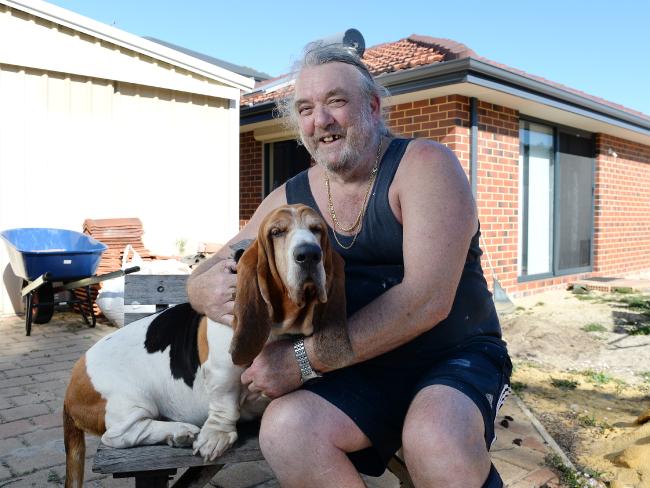
Separated but sharing
ALAN Kuret would rather live in his ex-wife’s backyard than face today’s property market.
The 67-year-old has been living in a granny flat he built at his family home in Bedford after separating from his wife.
Mr Kuret said the flat, which cost about $140,000 through Dale Alcock Homes, had allowed him to stay in his suburb of choice.
“Were we to sell our home, there’s no way I’d be able to afford living close to the city,” Mr Kuret said. “A two-bedroom home around the Inglewood border is well over $400,000. I’ve lived near the city my whole life and I plan to keep living here. I don’t want to be forced into the outer suburbs because that’s the only place I could buy an affordable home.”
Mr Kuret, who worked hard to maintain the family unit, said he had an amicable separation from his wife and was continuing to get along with his new neighbour.
He said his two adult children were supportive of the living situation.
“We live separate lives, but are still friends,” Mr Kuret said. “I actually recently gave her a lift to the airport when she went on a holiday to Japan. I think you’d have to get along with your ex for the situation to work. But when you’ve had children with someone it’s wrong to ever start hating them.”
House Prices Ignite Boom in Granny Flats across NSW
Ipswich Granny Flats, your Granny Flat experts have brought to you a copy of the action happening in NSW :
news.com.au
28 April 2015
The humble granny flat has come a long way from its days as a quick garage or shed conversion. These days it’s not uncommon to find granny flats so lavishly built they could pass as a standard home.
In the last five years, their popularity has skyrocketed as homeowners capitalise on their properties for investment or accommodating family.
NSW Department of Planning and Environment data shows that 4818 new granny flats were built last year, nearly double the 2867 built the previous year and three times more than the 1511 built in 2010.
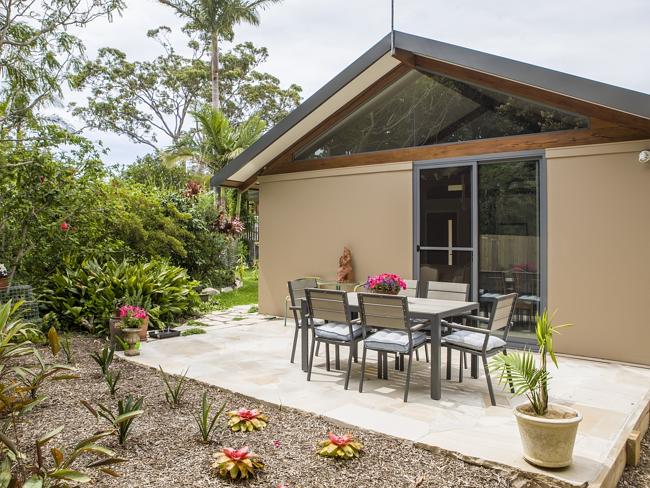
Western Sydney has led the charge with Bankstown, Fairfield, Auburn and Penrith councils recording the most granny flat approvals. Warringah in the north was also strong.
NSW is the epicentre of the granny flat boom. Granny Flat Finder data found that 58.7 per cent of national web traffic came from NSW, which also contributed 65.9 per cent of national inquiries.
Founder Harry Laos said a factor driving the rise was the lack of affordable housing.
“Granny flats are an excellent property investment vehicle for young couples and first-home buyers, families, elderly and of course property investors looking to pay off their mortgage and outright own their properties sooner,” Mr Laos said. “Sydney rentals for granny flats can be between $300 to $700-plus per week depending on regions.”
Another factor has been the growth of intergenerational family living in Australia, he added.
Paul Mathias, owner of Multidwell, has seen his business flourish on the back off granny flat demand.
“We started five years ago and a lot of people didn’t understand how it could be a compliant development,” he said. “We’ve noticed a major increase in the last 12 months and that’s in line with the house prices increasing,”
To build a granny flat in NSW, homeowners need to lodge a development application with their local council which assesses whether it meets the NSW Government’s State Environmental Planning Policy (Affordable Rental Housing). The process can take 10 to 20 days.
There are a number of considerations but minimum requirements include having a property size of 450sq m and a maximum size of 60sq m for a granny flat.

If you’re planning to build a granny flat, it’s important to do your research by comparing different designs, prices and builders.
“Don’t always go for the lowest price nor the highest,” Mr Laos said. “Get a detailed on-site inspection first prior to any builder’s quote. A lot of builders will throw any price out there to win your business without completely understanding the customers’ needs, site associated costs or council associated costs.”
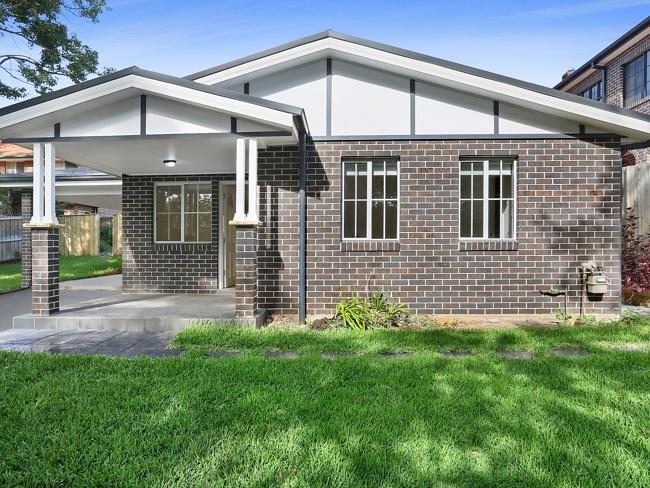
Multidwell granny flats typically have an open-plan kitchen and lounge, two bedrooms and one bathroom. Some add a second bathroom for guests and incorporate high ceilings and a split-roof to enhance space and light.
“We start at $132,000 and go up to $149,000. The average contract price is somewhere in the middle,” Mr Mathias said.
Granny flat gives independence
Living in a granny flat on her sister’s Carlingford property has allowed Liz Slade to live independently, yet be close to her family at the same time.
Sister Fran first raised the idea of building a granny flat last year. At the time Ms Slade was renting a unit in North Ryde.
“I’ve been unwell so I haven’t been able to work and I was sick of paying rent. I said to her I’ll help build the granny flat if I can live there and she said yes,” Ms Slade said.
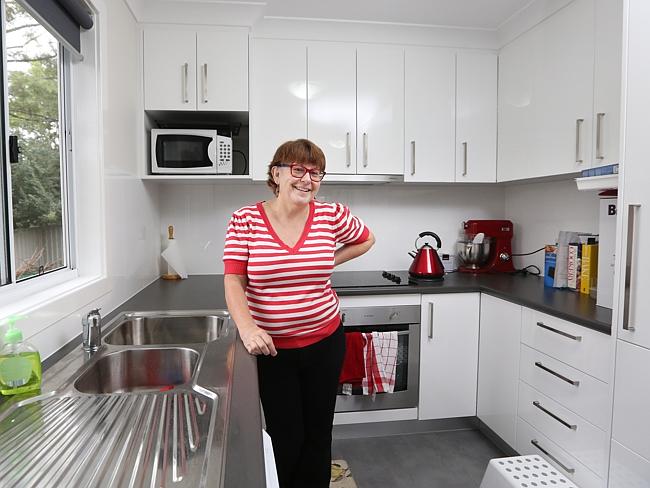
Ms Slade spent about five months researching builders and designs before settling with Granny Flat Solutions.
“I visited a lot of their open homes and I was very impressed with the standard of their building,” she said. “I knew what I wanted so I created my own design.” Construction started in mid-September and took three months to be completed.
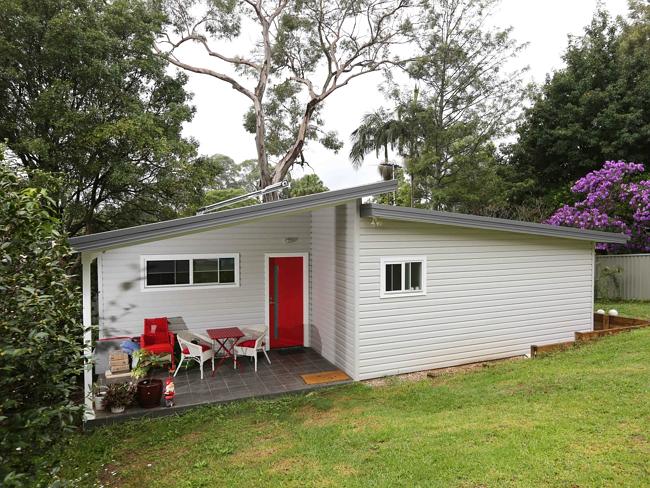
The two-bedroom dwelling offers all the comforts of a normal house: a lounge and dining room, a kitchen, bathroom and a porch at the front.
“It’s been built in such a way that it makes good use of the breeze and the sun,” Ms Slade said.
Since moving in just before Christmas, the living arrangement has worked out well for the two sisters.
“It took a while to get used to creating our own space but it’s been good. I help her out with looking after the kids so it works both ways,” Ms Slade said.
DO YOU HAVE A LARGE BACKYARD ?
PERHAPS AN INVESTMENT PROPERTY IN THE LOCAL IPSWICH AREA ?
WANT TO HOUSE GRANNY IN HER OWN INDEPENDENT LIVING SPACE ?
Whatever your need
Give Us a Call
Sonia – Ipswich Granny Flats
0403 309 136
Home Loan Demand Reaches 6yr High
Ipswich Granny Flats, the granny flat experts bring you another interesting snippet – this time about the demand for home loans reaching a 6 year high …
Home loan demand reaches 6yr high
15 May 2015
Terry Ryder
Hotspotting.com.au
Loans to home-buyers have hit their highest level since September 2009. The ABS says there were 54,686 mortgage commitments in March, up 5.1% in annual terms.
That included a 7.1% rise in loan approvals for established homes to 46,105 and a 3.4% increase in loan approvals to buy new homes to 2,777. However, loan approvals to build new homes fell 7.4% to 5,804.
The average mortgage for an owner-occupier grew 7.3% to $342,500, while the average mortgage for a first home buyer rose 7.8% to $326,300. Overall, property buyers made $31.6 billion in housing finance commitments in March, up 15.6% on last year.
The owner-occupied share rose 12.4% to $18.7 billion, while the investor share jumped 20.6% to $12.9 billion. Over the year, investors increased their share of loans from 39.1% to 40.8%.
Without Affordable Housing, We Won’t Have a Society Worth Living in
http://www.architectureanddesign.com.au/
Peter Walters – Lecturer in Sociology at The University of Queensland
2 June 2015
Home ownership, the Australian Dream, is becoming a fading hope for those without an existing foothold in the market. For increasing numbers of younger Australians, the dream will give way to a future as tenants. This will have far-reaching negative impacts on how people live together in both the inner city and the suburbs unless housing, planning and investment policies come to terms with this shift.
Robert Menzies’ Australian Dream of home ownership is beyond the reach of increasing numbers of young Australians. This is due to a multitude of factors, including the tax treatment of property and our attractiveness as a haven for foreign investment. If we are to become a “nation of renters”, how are our cities equipped to deal with this?
Changing the way we live
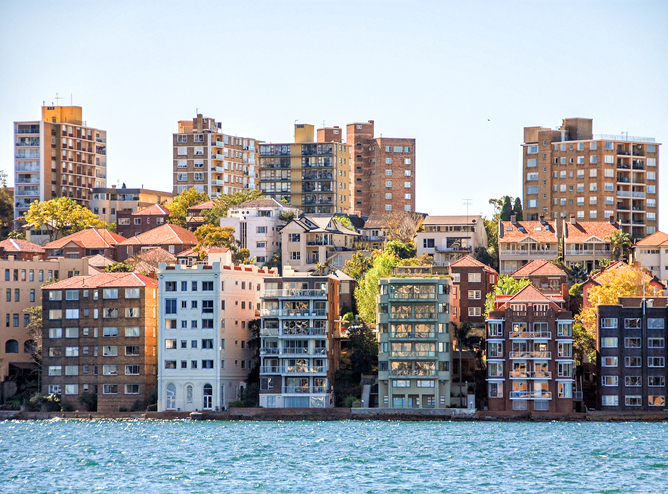
The inner cities of our capitals are seeing the results of the “compact city” growth model. According to this model, former industrial sites are being re-purposed for high-density residential developments. These developments are heavily marketed to overseas and domestic investors and are already disproportionately occupied by renters – 60-70% in the three biggest capitals. These renters tend to be young professionals or international students, affluent, without families and with high occupancy turnover.
These apartment developments are high-security and impersonal. Inner-city developments tend to be expensive privatised fortresses creating barren “anti-neighbourhoods”, which are unattractive to those wishing to rent over the course of their lives. Little attention is given to a strong public realm where a diversity of lifestyles, age groups, ethnicities and economic statuses can interact daily on vibrant, activated streets with adequate local green spaces.
Without a strong independent planning vision from local authorities, developers will continue to build according to this same model in the belief it provides the highest return on investment. The prospects for change are not encouraging.
In Brisbane late last year, the Brisbane City Council and state government announced the Kurilpa Riverfront Renewal project. This was a master planning process to incorporate the conversion of 25 hectares of inner-city river-front land from its current outdated industrial use. The project was announced not to the people of Brisbane but to the property industry of Brisbane at a sold-out A$150-a-head launch.
The council wanted to:
“… optimise the commercial potential of the site and provide developer certainty.”
Initial land sales were priced on the expectation of a high-density per square metre development, rather than a more imaginative use of land in the interests of creating enduring, diverse inner-city neighbourhoods. A subsequent change in state government and general community outrage meant that the new Labour government has called in this development from the LNP-dominated council, but to what end is uncertain.
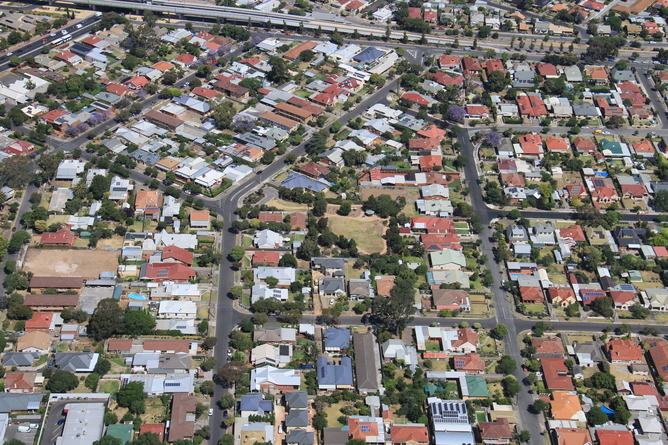
In the suburbs, renters face different challenges. In Australia, suburban communities, when they exist, have traditionally been dependent on a certain sameness in life stage and tenure. Home owners and renters have been an uneasy mix in the suburbs.
Renters are seen as transient, untrustworthy and aesthetically undesirable. Many homeowners see renters as threatening their property values because of the perception that they are not as concerned with the appearance of their homes. Whether renting in the suburbs becomes less stigmatised than it is now will depend to a large extent on the level of certainty and dignity that long-term renters are afforded.
What does the future hold?
In a less-stigmatised scenario we will mature as a nation of renters and become more like the Dutch, the Germans or the Swiss. In these countries, 40-60% of the population live in either social or private-sector rental accommodation. They enjoy security of tenure, underwritten by strong consumer protections and tenancy terms, including indefinite rental contracts.
To achieve this outcome, governments would need to take a leadership role in planning decisions and tenancy laws. They would need to compel property developers to build diverse, accessible housing incorporating a strong public realm where renters can build lives rather than transit.
Both inner-city and suburban renters would need to have political representation by governments willing to take on the powerful vested interests represented by property ownership. This scenario would require a great deal of political will and leadership. It would need an effective winding back of that part of the neoliberal project that allows homes to be treated as speculative investment vehicles.
Provided renters have competent political representation, the sheer weight of renter numbers may in time be sufficient to drive some of these changes.
The alternative more dystopian scenario is that the property-owning classes respond to their basest instincts and retreat into high-security enclaves and gated estates. This will further privatise the public realm and polarise our cities socially and economically. Until now, this undesirable outcome has been something that happened only in other countries.
When is a House a Home?
Advisers need to be aware of the meaning of the ‘family home’ under the Social Security Act and the various uses it can be put to.
http://www.ifa.com.au/
Mark Teale – Centrepoint Alliance
20 April 2015
There has been much commentary in the media recently that the value of a person’s family home should be taken into account when applying for the Government age pension.
Currently the family home, even if it is worth millions, is not taken into account when determining a person’s age pension entitlements.
Before anyone becomes overly concerned, it is important to point out that neither the Government nor the Opposition have indicated that they believe this to be a good idea.
Let’s start by considering how your principal place of residence is defined under the current Social Security Act: “The principal home is generally the home in which the single income support recipient or couple lives for the greatest amount of time each year.
The principal home includes an area of adjacent land (5 acres) on the same title document”.
However it can be so much more. If you have retired and decide to sell your home and purchase a $300,000 yacht to sail around the world, or to just live on, this is your principal place of residence and therefore is an exempt asset.
The plus is that depending on the mooring fees, you may also be eligible for rent assistance.
The same principal applies to the $250,000 Winnebago you purchase after selling your home, if you want to become a “grey nomad”.
The motor home becomes your principal place of residence and is an exempt asset.
You may also be eligible for rent assistance depending on the site fees that you pay.
For those retirees who happen to own two properties and live in both at various times of the year, both homes cannot be classified as your ‘principal place of residence’ but you certainly can nominate the most expensive property as your home, therefore exempting it from the assets test.
If your home happens to sit on two blocks of land, in other words two titles, provided your home straddles both titles, the second block of land is not assessable.
The strangest example I have seen is where a person bought two older homes side by side in the same street and turned them into one house with an adjoining covered courtyard.
Not that I would recommend this as a strategy. Generally, up to a maximum of 5 acres (2 hectares) of land surrounding the home would also be an exempt asset.
However the ‘Extended Land Use Test’ will allow a person who has resided for over 20 years on a larger property, where the adjacent land is greater than 5 acres and they are making effective use of the land (e.g. farming it) to have the value of this land exempt from the assets test.
These arrangements can get quite complex.
The exemption of a person’s home under the assets test is an attractive strategy for some people who think why not upgrade my home to a more expensive abode and be entitled to more pension?”
Looks easy however the number of people who do take this road inevitably find that after a couple of years the costs associated with owning a larger more expensive home, including rates, energy and maintenance, are not sustainable on an age pension.
And really, who wants to spend all their time in retirement cleaning? Some people in retirement may contemplate living in a granny flat.
Most of us think of a granny flat as a small structure or extension built onto a current dwelling to accommodate someone’s mother, father or a grandparent.
But again a granny flat under the Social Security Act can be so much more! The Social Security Act definition of a granny flat recognises it as “family arrangements that provide support for elderly people”.
A very broad interpretation I am sure you would agree.
What does this mean? It means that if you want to turn your three bedroom house into a four bedroom home with an extra bathroom, living and dining area and have Gran pay for it, that is fine as long as Gran is going to live in it.
If Gran wants to give her house to you in exchange for a life interest, that is fine and if Gran wants to buy you a house in exchange for a life interest that is also fine.
But under the Social Security Act, isn’t Gran only allowed to give away a maximum of $10,000 per financial year, or a total of $30,000 over five years, before the excess is assessed as deprivation?
Under the general rules this is certainly true.
However, the following is a direct quote from the guide to the Social Security Act.
“The value of a granny flat interest is GENERALLY the same as the amount paid for the interest.
This means there is NO deprivation amount.”
Warning – before you go off and talk to Gran, or Gran decides she is going to give away the house, like all legislation which relates to a person’s entitlement to an age pension, it does come with an additional ‘test of reasonableness’.
This test looks at the value of the assets or assets which have been transferred in exchange for the life interest or the construction of the granny flat.
If you are contemplating such an arrangement within your family talk to someone who understands what you can and can’t do…remember, if you do it after the fact and Gran’s age pension is affected, it can be all too difficult and expensive to reverse it.
So as you can see, a person’s home under the “Social Security Act” can be a lot more than just a three bedroom brick veneer house on a 600 square metre block of land.