
Granny Flats on the Rise as Property Prices Increase
Soaring property prices are prompting some home owners to be a little more creative to maximise their land value.
Ricardo Goncalves
1 May 2015
All over suburban Australia, granny flats are popping up. The New South Wales Planning Department says at least 2,000 granny flats – or secondary dwellings – were approved to be built last financial year in the state, about double the previous year.
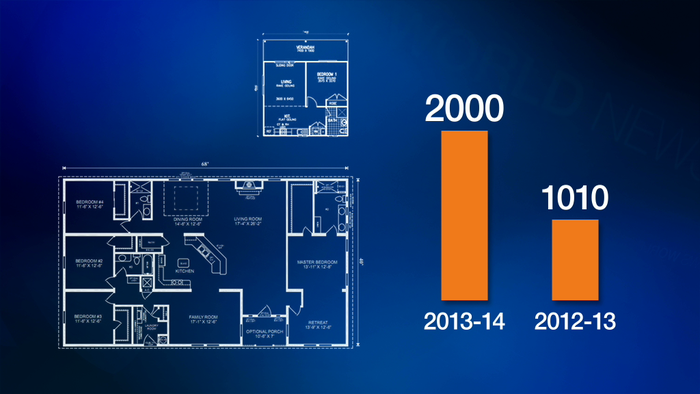
Tim Lawless, Research Director at RP Data CoreLogic, said higher property prices were encouraging home owners to look to build value. “When you find affordability so pressing, people are looking for different strategies to maximise, their investment and also maximise their landholdings and renters are looking for different options that might be more affordable,” he said.
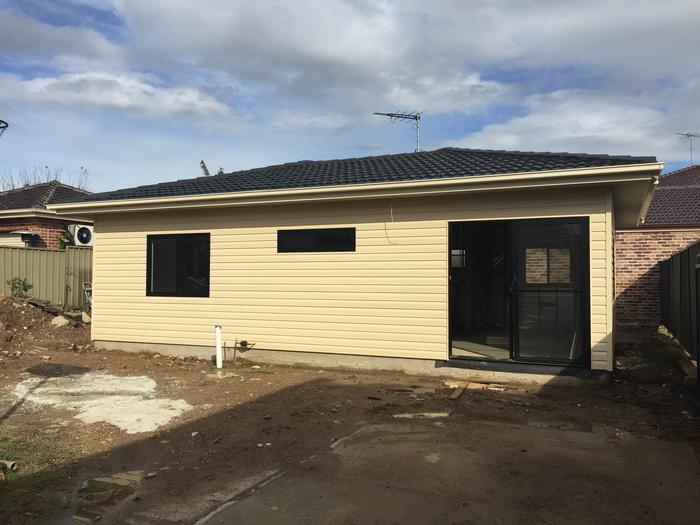
Abdurrahman Crossingham is one such owner making better use of his land in Western Sydney, and is in the process of completing a two bedroom granny flat. “Where the granny flat is now, used to be an 11 metre by 4.5 metre concrete in ground swimming pool,” he said. “Because we are both pensioners, it’s a bit of an income.”
Builder William de Martrin Donos, from Blue Gum Granny Flats, said it is a story he’s familiar with. “Ninety-five per cent of the people that we deal with are actually there for a second income, as an investment property,” he said.
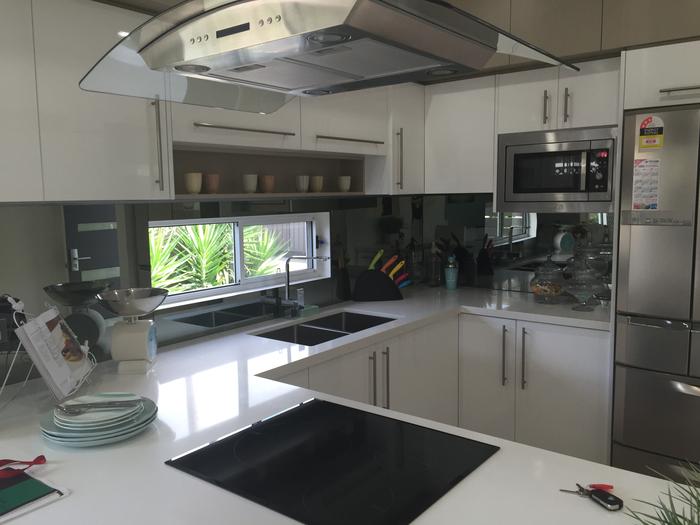
Mr de Martrin Donos showed SBS around his display granny flat in the Sydney suburb of Panania and said more customers are demanding high end finishings like caesar stone bench tops and LED lighting.
He said anyone considering a granny flat should consult their local council. “Your frontage has to be a minimum of 12 metres, and the block has to be a minimum of 450 square metres,” he said.
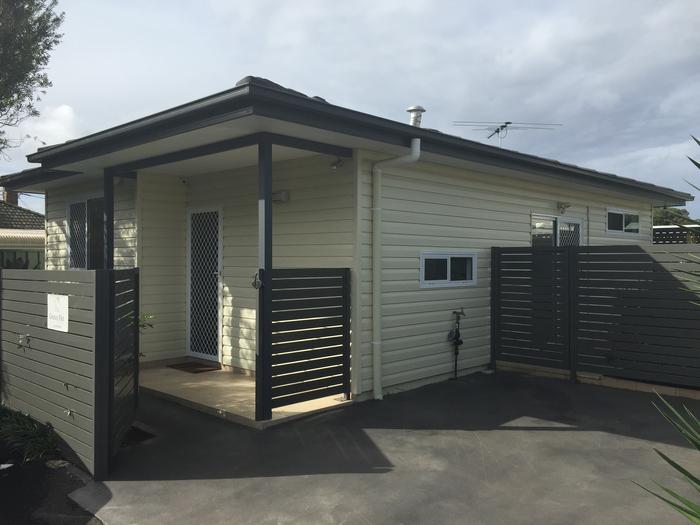
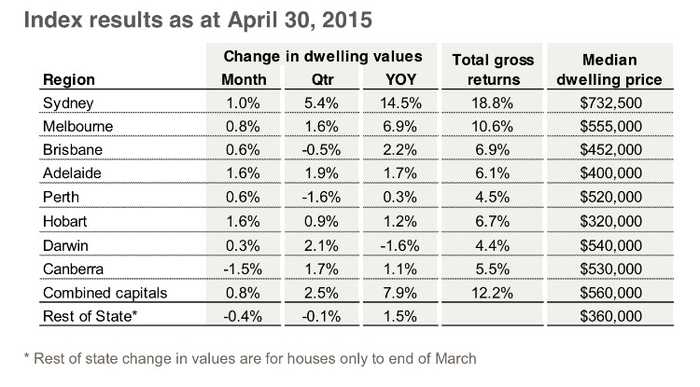
This particular home, pictured above, took around 10 days to build and cost around $140,000. The median dwelling price nationally for a capital city home is $560,000 according to RP Data CoreLogic.
Sydney remains the most expensive, and saw a 14.5 per cent increase in the last 12 months. Adelaide and Hobart saw the biggest gains in April.
Next week, the Reserve Bank meets to discuss interest rates. Tim Lawless said a reduction may impact prices. “The next interest rate cut we see potentially next week, might add some more fuel to the fire,” he said.
Most of our Granny Flat builds are also for investors, although we have also completed projects for Mums and Dads wanting to downsize.
Do you have an investment property and want to learn how to double your rent return?
Call Sonia 0403 309 136 – Ipswich Granny Flats
Your local Granny Flat Experts
Queensland Leads Pack in New Home Sales
Ipswich Granny Flat, the granny flat experts in SE Queensland bring you another interesting snippet supporting what we have been saying for some time now – Queensland is on the move up !
2015 – Wondering where to invest this year? Check out the news from HIA – Queensland leading the pack, and watch that space …
Queensland Leads Pack in New Home Sales
theurbandeveloper.com
Staff Writer
31 March 2015
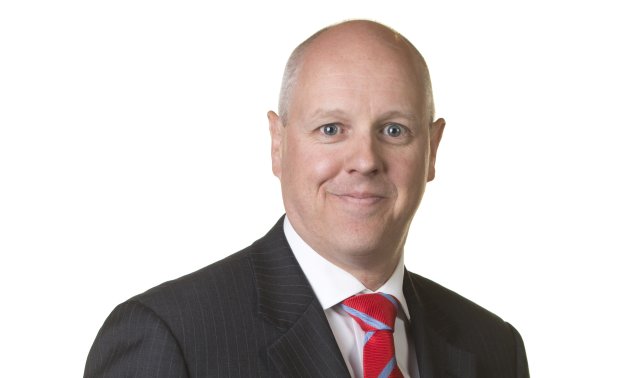 HIA Chief Economist, Dr Harley Dale
Queensland had the strongest growth in new dwelling sales for the three months to February, according to the latest HIA statistics.
The HIA New Home Sales Report, a survey of Australia’s largest volume builders, revealed that Queensland sales increased by 9.0 per cent compared to the previous quarter, compared to 3.8 per cent growth in Victoria, and contractions in the other states.
NSW fell by -6.9 per cent, South Australia by -2.8 per cent and Western Australia by -1.3 per cent.
HIA Chief Economist, Dr Harley Dale (pictured) said that apartment sales had increased in the month of January nationwide from the previous month, while sales of detached homes fell.
“The headlines for the national new housing sector continue to dazzle in early 2015,” Dr Dale said.
“Total seasonally adjusted new home sales increased by 1.1 per cent in February following a gain of 1.8 per cent in January, and the volume of sales is now just above the previous peak of April 2014.”
“The February new home sales result reflected a jump of 11.1 per cent in ‘multi-unit’ sales, while detached house sales fell by 1.3 per cent,” he said.
Dr Dale said the apartment market looked to continue its strong growth.
“The signal from both HIA new home sales and ABS building approvals is for further upward momentum to multi-unit dwelling construction in 2015, but a consolidation in detached house building at volumes above the long term average,” Dr Dale said.
“New home building conditions vary greatly around the country once you dig below the national surface, as is the case with residential property prices.”
“Detached house sales are easing in New South Wales and Western Australia, previously key drivers of growth, and have fallen significantly in South Australia.
“The modest growth in new house sales in Queensland and Victoria is not enough to offset these declines.”
In February 2015 detached house sales increased by 1.5 per cent in Victoria and by 0.2 per cent in Queensland.
Detached house sales declined by 4.8 per cent in New South Wales, 2.0 per cent in South Australia and 2.9 per cent in Western Australia.
Small Spaces – Micro Apartments
As housing affordability continues to be an issue, Micro Apartments across the nation and the world become increasingly popular. Below is an interesting article from a great website – archictureanddesign.com.au
Life in Small Rooms : 5 Micro Apartments and How they Fit It All In
www.architectureanddesign.com.au
Geraldine Chua
4 March 2015
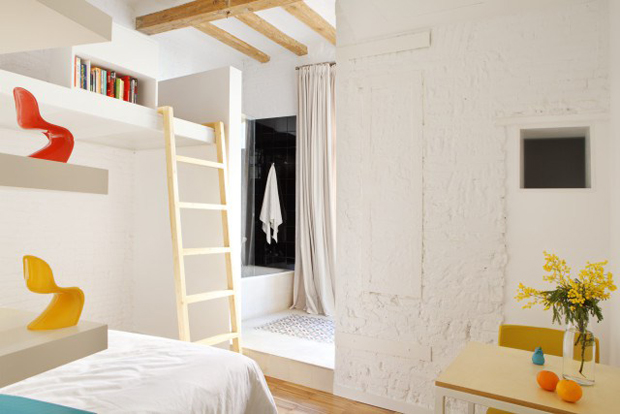
The micro apartment is no stranger to cities where space is a premium, such as Tokyo and Hong Kong, although the concept has really taken off in the last decade when downsizing became trendy. Yet, the creation of smaller and smaller units continues to divide opinions. Life in Small Rooms : 5 Micro Apartments and How they Fit It All In.
The micro apartment is no stranger to cities where space is a premium, such as Tokyo and Hong Kong, although the concept has really taken off in the last decade when downsizing became trendy. Yet, the creation of smaller and smaller units continues to divide opinions.
On one side of the ring, advocates like NYC Mayor Michael Bloomberg believe micro units could open up more reasonably priced living options, with the New York Times reporting that more apartments dedicated to singles “could eventually bring down rent prices across the city, as more two- to four-bedroom apartments would then open up to families”.
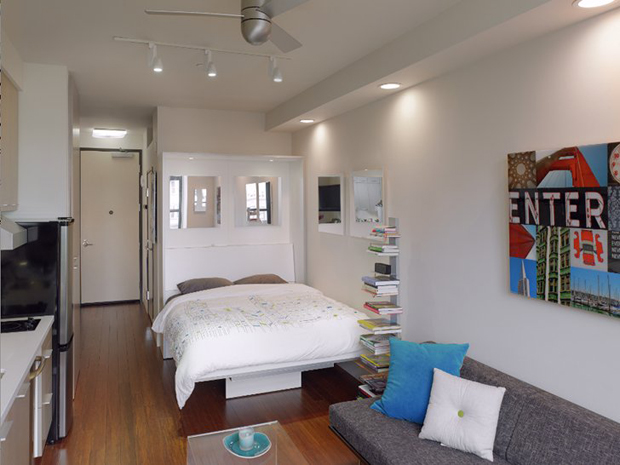
The article pointed specifically to My Micro NY, a new prefab micro apartment by nARCHITECTS that will come with kitchenettes, wheelchair-accessible bathrooms, ceilings over nine feet high and big windows – all within the span of just 24 to 33sqm.
However, others believe that compact apartments could compromise amenity and living standards. An article by The Age in 2013 noted that studio flats as small as 15sqm on sale in Melbourne, each with a single small window and a kitchenette “the size of a broom cupboard”, would negatively impact residents’ quality of life.
“Often the bedrooms have no direct sunlight,” said RMIT planning professor, Michael Buxton. “Developers make money by such cramming but also by not providing car parking and other facilities. People who buy such small spaces don’t live in them.”
Although the median size of one bedroom apartments in Australia has decreased from 52sqm to 44sqm in the last five years, states like NSW continue to have a restriction of 50sqm being the minimum area of an apartment.
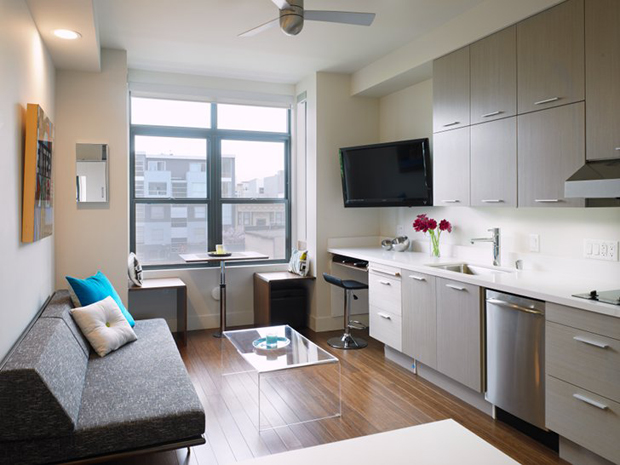
While Australians are not yet lining up to live in matchbox sized apartments – a two-storey house with a backyard and double garage is the dream after all – smaller units that focus on efficient floor plans and making spaces work harder are undeniably a part of the future of higher density living.
As Nigel Hobart, principal of ROTHELOWMAN, once said to The Financial Review, a well-designed 40sqm apartment can have a greater amenity than a poorly designed 60sqm apartment.
Here are five international examples of micro apartments…
How the Ipswich region stacks up
Ipswich Granny Flats, your Granny Flat experts bring to you another national story item, this time from The Property Observer : all about our great Ipswich region! Read on …
The Property Observer
Simon Pressley
16 February 2015
How the Ipswich region stacks up:
Ipswich has one of the fastest growing populations in Australia over the last decade.
When a few marketing jazz words are combined with a low entry price and above-average rental yields, it’s never been difficult for the so-called property guru to attract property investors to Ipswich. But does the region really stack up?
With its vast amounts of developable, cheap land available, Ipswich plays a key role in the state government’s strategy to try and direct population growth away from the coast.
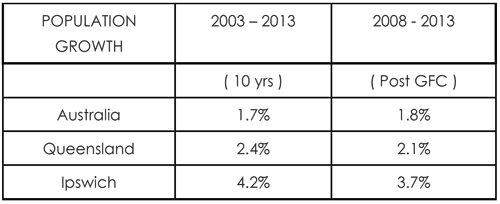
The impact of a relatively large volume of sales of new properties in a developing region creates a distortion between the data for changes in median property values and the real change in property values.
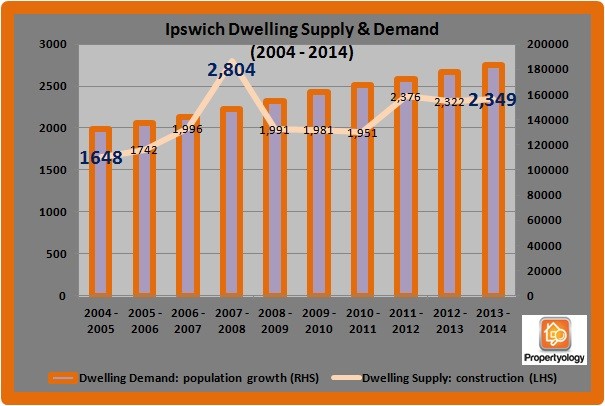
As the graphic below illustrates, dwelling supply and population growth have kept pace with each other. In spite of the regular hotspot rhetoric that Ipswich cops from time to time, its property market performance has in fact been quite underwhelming.
With a traditional blue-collar demographic, successive state governments and the Ipswich City Council have had to work hard to create sufficient jobs for its growing population.
The award-winning Springfield masterplanned community has been developed over the last decade as a satellite city – Brisbane’s version of Parramatta.
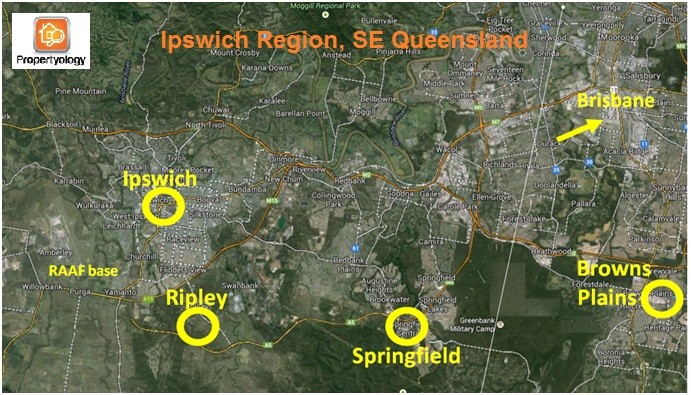
Already with a new hospital, business park, and railway line, Springfield currently has several good projects in the pipeline. These include a $50 million expansion of the University of Southern Queensland, $70 million headquarters for GE, $80 million Mater hospital, $100 million Brookwater resort and plans to further extend the Orion shopping centre.
The existing Amberley RAAF base has also been spoken about as an anchor tenant for a potential aeronautical precinct.
Investors could do worse than Ipswich, although it is far from our first preference. With so much land flagged for development, expect to see significant new supply, mostly concentrated around Springfield, Ripley, and Redbank Plains.
There is currently in the vicinity of $275 million in house and land packages currently under construction. The Springfield Land Corporation has also just announced a proposal to develop 10,000 new apartments.
—————————-
From a local real estate point of view, land is becoming increasingly scarce in the area. Everyone wants to buy land in Ipswich to build a new house + granny flat, and the property spruikers and wealth creation groups are out there in full force!
And good available land is not so cheap anymore – have a look to find a flat level block that’s not compromised in some way, that is cheap. You’ll be hard pushed to find one – supply and demand? The demand is here, but supply is becoming increasingly short.
If you own an existing property in the Ipswich area which may have sub division potential, give us a call – we’d love to talk to you.
We have builders and active investors that are looking for urban in-fill lots NOW!
Call : Sonia 0403 309 136
Ipswich Granny Flats
Queensland Housing Recovery Changing Direction
Ipswich Granny Flats, your Granny Flat experts – current media release from the HIA. Great news for the building and property industry, particularly in Queensland!
Queensland Housing Recovery Changing Direction
HIA Media Release
11 February 2015
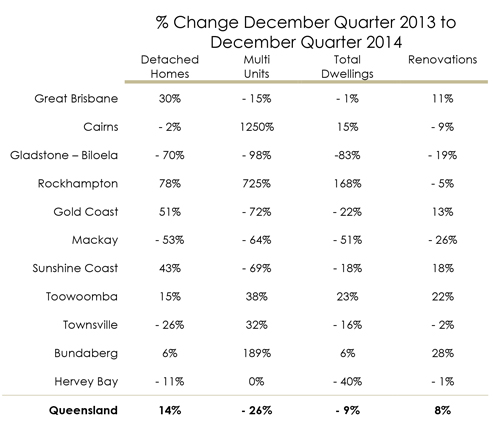
Detached homes have overtaken multi-unit developments as the driver of housing recovery in Queensland according to Housing Industry Association. Warwick Temby, HIA’s Executive Director for Queensland said “The home building recovery in Queensland began with a surge in multi-unit approvals. But the ABS figures for the December quarter 2014 show that detached homes are now the growth area.
“Detached home approvals are up 14% in the year to the December quarter 2014 while multi-unit approvals have fallen by 26%. The important home renovation market is also showing signs of improvement with 8% growth in approvals. This part of the home building market has been sluggish for several years.
“There remain strong regional differences in the home building recovery: it is still centred on the South East of the State as shown in the table below. In Brisbane detached home approvals are up 30% and over 50% on the Gold Coast. Sunshine Coast is up 43%.
“All these figures mean that the home building industry in Queensland is set for a busy 2015. HIA expects around 40,000 new homes will be started in Queensland in 2015.
“It was pleasing to see prior to the Election both the major political parties committing to maintaining the $15,000 Great Start Grant for first home buyers. This, combined with lower interest rates, will help to maintain home building as one of the bright lights in Queensland economy for some time yet”, Mr Temby concluded.

If you want to be part of the great building things happening here in Queensland, call…
Sonia from Vision Property Group (Qld) and
Ipswich Granny Flats on
0403 309 136 to talk about what we can do for you!
High-Density Residential Development For Ipswich
$40 Million High-Density Residential Development For Ipswich
theurbandeveloper.com
1.12.14
A new $40-million residential precinct has been approved for Ipswich, which is expected to begin the start of an independent city, giving Brisbane a run for its money.
The new Ellenborough precinct includes two residential towers, 108 new apartments and 2100 square meters for retail and business space with allowances for cafes, wine bars and fresh food market spaces.
Mayor of Ipswich, Paul Pisasale, has big plans to continue the growth of the city, which is currently one of the most affordable places to live in Brisbane.
“The precinct will be directly opposite the future stages of the ICON Ipswich development, a $1 billion CBD revitalisation.
“We see a bright future for Ipswich, we will continue to support jobs and invest in infrastructure to support the continual residential growth of Ipswich,” Mr Pisasale said.
According to news.com.au, the population for Ipswich was expected to hit 435,000 by 2031, with only one other apartment building in it’s major area.
Ipswich Developments Queensland chief executive Dean Pegg says Ipswich always had what was required for good investments to be made.
“With a strong economy, affordable land and the development of major infrastructure, Ipswich is becoming an excellent place to buy,” Mr Pegg said.
“The population of Ipswich has seen continual growth and there is demand in the market for more living options.”
Property marketing company Superior Properties chief executive Paul Rubin has said that the new Ipswich apartment block will be affordable, unlike those in Brisbane.
“The precinct will be a continuation of everything that is great about Brisbane, with shops, professional services, literally everything you need at your doorstep,” Mr Rubin said.
******************
With the population for Ipswich expected to hit 435,000 by 2031, it’s one of the fastest growing areas in Queensland. All good things for the local Ipswich market – and with developments such as this in the CBD, a sign of a moving market …