
Unit High Rise for Ipswich CBD
Want to Invest in the Ipswich area ? See the following extract from the local Queensland Times (QT)
108 Unit High Rise for Ipswich CBD
QT – Peter Foley
26.11.14
A $40 MILLION Top of Town Ipswich development will feature two residential towers, 108 apartments with more than 2100sq m of retail/business space, with cafes, wine bar and fresh food markets.
The Precinct, on Ellenborough St, has been given the green light by Ipswich City Council and its developers predict the project will revolutionise the residential unit market in Ipswich.
Ipswich Developments Queensland chief executive Dean Pegg boasted Ellenborough Precinct was “the first apartment development of its calibre for Ipswich City and is expected to be the pioneer for similar ventures”.
Mr Pegg said: “With a strong economy, affordable land and the development of major infrastructure, Ipswich is becoming an excellent place to buy.
“The population of Ipswich has seen continual growth and there is demand in the market for more living options,” he said.
“Staying true to its part heritage listing, The Precinct will preserve the rich history of Ipswich by blending traditional building forms and industrial materials with contemporary design, throughout both the residential and retail spaces.”
Superior Properties chief executive Paul Rubin said: “This is the start of urban gentrification for Ipswich’s top of town.
“While you could pay through the roof for an apartment in the heart of Brisbane, Ellenborough Towers provides an opportunity to secure an affordable investment, without compromising lifestyle or amenity.”
“The precinct will be a continuation of everything that is great about Brisbane, with shops, professional services; literally everything you need at your doorstep.”
Mayor Paul Pisasale said people were making the move to Ipswich due to “liveability factors and existing and future infrastructure upgrades that supported residential and commercial growth”.
“Ellenborough Precinct and apartment towers are just one of many examples where Ipswich can accommodate new developments and retain our built heritage,” he said.
“We want to keep up with the demands of new infrastructure and improved services.”
Stage one of construction is expected to begin mid next year (2015), with the project scheduled to be completed within 18-24 months from then.
* * * * * * * * * * * * * * * * * *
With the population for Ipswich expected to hit 435,000 by 2031, it’s one of the fastest growing areas in Queensland. All good things for the local Ipswich market – and with developments such as this in the CBD, a sign of a moving market …
Want to buy an investment property in Ipswich ?
Call Sonia, Ipswich Granny Flats
0403 309 136
Wondering Where to Buy Your Next Investment Property? Listen to What the Experts are Saying …
So you’re in a position now to buy your first investment property – where to start …
Why, I’d naturally say Ipswich of Course – because I live and breathe the area. But don’t just take my word for it – do your homework! Listen to what the Property Experts are saying – they’re saying the same thing.
Extract realestatetalk.com.au
13 September 2014
Michael Matusik turns the spotlight on a South East Queensland market offering bonus returns right now.
Kevin Turner: Michael Matusik, who is a regular on our show has just launched his new website. You must have a look at it, it’s a huge amount of information on there. Just go to matusik.com.au, this is m-a-t-u-s-i-k. Michael joins me. Good morning Michael.
Michael Matusik: Hi, how are you?
Kevin Turner: Good mate. Congratulations on the new site. I was particularly enthralled with the market outlooks that you’ve got there. I think Brisbane, Gold Coast, I know, it’s growing all the time, Sunshine Coast to Toowoomba Gladstone are the ones that I can see straight away. But you’re building another one for the Ipswich market.
Michael Matusik: Yeah, we intend to do one every fortnight or so. Focusing on those areas that I think are often not looked at, so not Brisbane, Gold Coast, Brisbane, Sydney, Melbourne but those areas which we know which is largely Queensland and really down a small area, we’ll be covering quite a few of those in the future.
Kevin Turner: Good. What are you learning about the Ipswich market that you can pass on to us?
Michael Matusik: Ipswich is quite well positioned in one, its cycle. There is a cycle and in these reports we have long term evidence of that. A range of indicators. It’s just entered a recovery. It is being spoken about a lot, particularly in blogs and conversations and even presentations across Australia, especially Sydney and Melbourne, as those investors are looking for better yields and cheaper property. So Ipswich is in that spotlight so to speak.
Kevin Turner: Has it got much to do with affordability market?
Michael Matusik: Everything to do with affordability. That’s one of the things that there is a connection between Ipswich and Parramatta a believe. I’m a Parramatta boy, I grew up there. I’ve lived there for a long time but I see similarities between the two. I must confess, I do own Ipswich investment properties. I’m a little biased. But trying to look through that the average price for a property in Ipswich, house or a townhouse type thing is about three hundred thousand dollars. It returns five to five and a half percent in terms of gross rental yield. That’s attractive.
One of the things that’s going to happen in Ipswich is I don’t believe there’ll be lots of price growth into the future. There’s a lot of land supply. It captures probably about twenty five percent of the land supply in southeast Queensland. There will be a lot and already is, infrastructure. There will be a lot of employment. I think forty odd percent of the industrial land available for development is in the Ipswich area. That’s out of southeast Queensland. You’re going to see a lot of growth. You’re going to see strong rental demand and I think investors there should be looking for buying property that yields quite well rather than looking at capital growth. The supply lines are quite high and therefore, you’re probably not going to see really strong capital growth but you’re going to see strong demand for property and strong rental demand.
Kevin Turner: When your market outlook for Ipswich comes out, what can we expect to see in that report?
Michael Matusik: That report will cover the cycle in detail. Then it will cover what to buy, what’s likely to happen next and what prices to pay. Not trying to sell a few reports here, essentially what we’re finding is that dual income property is quite attractive so that’s a duplex or the like. Yields are often over six percent and it caters to the demographics that are emerging in the city. When we do these outlook reports, we spend a lot of time on who lives in the property, what they’ll pay a premium for and what type of work they do so the property suits their storage needs and so forth.
Kevin Turner: Look out for it, it’s M-a-t-u-s-i-k .com.au under the market outlook area and that will be a report coming up on Ipswitch. Michael, thank you very much for your time.
Michael Matusik: Thank you and thanks for the opportunity to talk about the site.
* * * * * * * * * * * * * * * * * * * * * * * * * * * * * * * * *
Want to know more about Dual Income Properties in the Ipswich area ?
Ask the local experts, the ones that were instrumental in developing and building the first !
Ipswich Granny Flats
Call : Sonia 0403 309 136
MINIMUM STANDARDS for MINIMUM SPACE – THE RISE OF THE MICRO APARTMENT
Ipswich Granny Flats bring an interesting article on Minimum Standards for living space …
Minimum Standards For Minimum Space- The Rise Of The Micro Apartment
Theurbandeveloper.com
17 December 2014
As inner-city housing becomes increasingly unaffordable, homeowners are becoming more creative with the space they can afford. However Australian state governments are less than impressed, with many of them implementing minimum standards on apartment sizes.
Nigel Hobart, principal at firm ROTHELOWMAN, told The Financial Review that a well-designed 40-square-metre apartment can have greater amenity than a poorly designed 60-square-metre apartment.
“Good natural light, acoustic performance and ventilation are all important parts of amenity.
“But if people want to buy a south-facing apartment in the inner-northern suburbs with city views, then why would we seek to limit that?” Mr Hobart says.
Supply And Demand
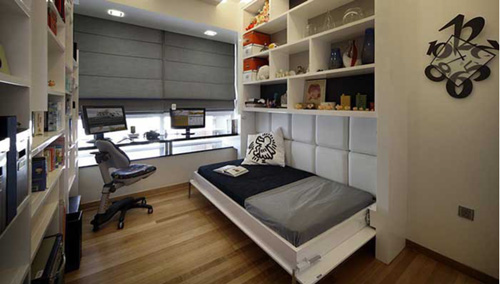 Source: Contemporary Bedroom by Other Metro Interior Designers & Decorators The Interior Place (S) Ptd Ltd
The average micro apartment in Australia has decreased in recent years from 52-square metres to 44-square metres. Most would assume larger spaces is what makes real estate desirable, so why are these match box apartments in high demand?
A study by Slater & Gordon’s Conveyancing Works shows that 18-24 year olds listed proximity to the city when looking for real estate. However, given the current affordable housing crisis, means they have no choice but to opt for smaller apartments.
Affordability is driving development companies to deliver these tiny apartments.
“People look at apartments getting smaller over time and think it’s developers being greedy. We work with developers every day.
“It’s not about that, but about providing a product that is affordable to the market. If we all did what we love to do and created only luscious things, they’d never get built.” Mr Hobart said.
Minimum Standards
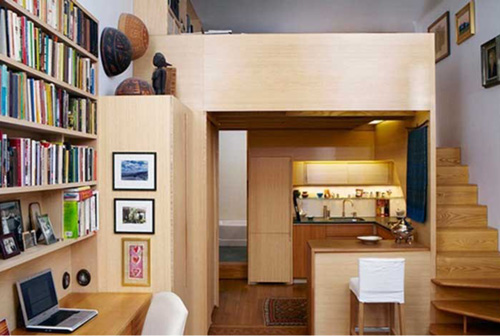 A 22-square metre micro apartment. Source: No Ordinary Home
Legislation may affect who can own inner-city real estate. New South Wales has a restriction of 50-square metres as a minimum area of an apartment.
Those happy to forfeit space for location may be forced out of the market, by the restriction of minimum standards on apartment sizes. Larger micro apartments are sold at a much higher price then what many first home buyers can afford.
Queensland is content on letting the market regulate apartment sizes, with Premier Campbell Newman expressing his trust in architecture to deliver high quality real estate.
“I certainly don’t have a view on us putting constraints on what people can actually build, and I guess I am confident that the industry will deliver product that people want to buy.”
“It’s amazing what you can do with great architecture and great design in terms of getting costs down.
“I believe in the market and the industry being able to deliver, and I am not generally supportive of regulation,” he said.
World Wide
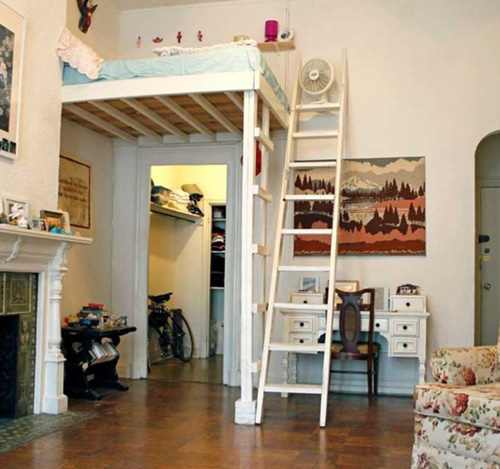 A 42-square metre apartment in New York City
While people might gasp at the thought of living in a 44-square metre apartment, in places like New York City, they have a minimum of 25-28-square metres for a new apartment.
There are many incidences in New York City of people living in apartments as small as 7.2-square metres, and they still carry a hefty price tag of $800 a month.
As one of the world’s densest and most expensive cities, Hong Kong has to offer some of the most minuscule of apartments. With families forced to live in 3.7-square metre apartments.
A Chinese development company, owned by the richest man in Asia is constructing a 1,071 unit project. The development, Mont Vert, has apartment sizes that start at 18-square metres and $250 000 in price.
Overall it appears that many are happy to live in smaller spaces if the location and amenities are available to them. So how much control should the governments have over sizing restrictions for apartments?
__________________________________________
Are you a home owner that has a spare backyard and sick of mowing that awful wasted space ?
Perhaps you’re an investor who’s looking to increase your rent return ?
If you are either one of the above – then Ipswich Granny Flats wants to talk to you !

Call Sonia – 0403 309 136
And let me help you !
Property Investment : The Baton is Passing from Sydney to South East Queensland
Ipswich Granny Flats :
2015 – Not sure where to buy your next investment property? South East Queensland is the place to be, according to a number of experts, including Terry Ryder. Here are his thoughts :
The Baton is Passing from Sydney to South East Queensland
Terry Ryder
1.12.14
There’s a pretty good argument that the hottest property precinct in Australia right now is South East Queensland.
Brisbane, the Gold Coast, the Sunshine Coast: Together they comprise a vast metropolitan area – ongoing urban growth means these three big centres have merged into one big conurbation which starts at the NSW border and extends 250 kilometers north to Noosa.
All three have hot markets. The research conducted by Hotspotting for the latest edition of the Price Predictor Index revealed 254 suburbs across South East Queensland with rising sales activity.
To put that in perspective, the Sydney metropolitan area has 106 growth suburbs. If you add in the Central Coast, which has caught the growth wave from the capital city, there are 120 growth markets.
This shows that, while Sydney is the nation’s hottest big market in terms of price growth, it’s starting to fade (though not markedly, as yet), while South East Queensland is starting to rise.
So when you see headlines suggesting that the boom is fading and price growth is starting to dissipate, remember that it’s Sydney they’re talking about. There are markets elsewhere in Australia that are really just starting their run.
They include Adelaide and Hobart, as well as numerous regional cities in Queensland, New South Wales, Victoria, South Australia and Western Australia.
But the headline event is the rise of South East Queensland. While there has been some price growth in 2014, to date it has been fairly moderate.
The big shift has been in sales volumes and that’s what I mean when I say there are 254 growth suburbs in the region – 254 suburbs throughout Brisbane, the Sunshine Coast and the Gold Coast with distinct patterns of rising sales activity.
The greatest price growth will come in 2015.
I remain hesitant about the Gold Coast. There’s no doubt that the oversupply that has dragged down this market for five years has now been absorbed – and that there is a significant real estate recovery under way.
The heartening thing is that most of the growth suburbs on the Gold Coast at the moment are what I would call genuine housing markets – inland suburbs where houses are being sold, rather than coastal locations where highrise apartments are flogged to investors and speculators.
Unfortunately, that will change. Now that the Gold Coast is back on a growth path, developers are flocking back, intent on creating the next oversupply. Driven more by ego and greed than common sense, developers are competing for the title of biggest project and tallest tower.
And, like their counterparts in Melbourne, it’s all designed for sale to Chinese investors. It won’t end well.
Beyond that cautionary note, the message about Brisbane and South East Queensland looks highly positive at the moment.
The opportunity for investors lies in understanding that the rise in sale volumes we have seen in 2014 is a forerunner to significant price growth.
South East Queensland has more momentum now than does Sydney, but it’s not yet reflected in price growth data.
That is yet to come.
The Good, The Bad and The Ugly : Queensland Real Estate
Ipswich Granny Flats bringing you an up to date article on the east coast property market – see what it says about the Ipswich market!
All serious property investors take note: if you are considering buying another investment property, everyone is saying Queensland in 2014 and 2015 is on the rise…
Terry Ryder
Hotspotting
29.9.14
When the head boffins at the Reserve Bank deliver their sermons about “prices don’t always rise, sometimes they fall”, many Australians who don’t need reminding must wonder what planet they’re from.
People living in many parts of Queensland, for example.
If you’re an apartment owner in Cairns or Townsville, you don’t need a lecture about the reality that prices don’t always rise. The latest edition of Market Monitor from the Real Estate Institute of Queensland shows that median apartment price in Townsville today is 11% lower than it was five years ago. In Cairns, average values remain 15% lower than in 2009.
There are stories like this throughout the state (and throughout the nation). Large parts of Queensland are undoubtedly on an upward trajectory now, but many markets still have price levels lower than five years ago. Click here to learn more about the Top Ten places to buy in Queensland.
The median unit price for the Whitsundays has risen 9% in the past 12 months, but it remains 6% lower than in 2009.
In Noosa, Queensland’s most over-rated market, the median unit price dropped 6% in the past 12 months and remains lower than it was five years ago. (The housing market in Noosa tells a better story, with moderate growth in both the past 12 months and the past five years.)
Despite a little growth in the median unit price in the past year, Gold Coast values are still lower than in 2009.
Ipswich City in the south-west of the Brisbane metropolitan area is back on a growth path, but its median house price is still below former levels.
Owners in locations like these aren’t talking about whether prices sometimes fall. They’re talking about whether they ever rise.
The good news for most of the locations mentioned above is that they are now moving into growth phases. Cairns, the Sunshine Coast, Ipswich and the Gold Coast can all look forward to significant price gains, after five bad years. No doubt commentators will soon be warning us about bubbles.
The people who least need a reality check about the possibility of property values falling are those who live – or own rental properties – in Moranbah, the coal mining town in Central Queensland which has become the quintessential boom-bust story of modern times.
Moranbah’s median house price is down 28% in 12 months, according to the REIQ figures, and is now 15% lower than it was five years ago.
There are some more positive stories in the same combination of numbers from the Queensland Market Monitor report.
There is some comfort for landlords in Gladstone. While the median house price has dropped about 10% in the past 12 months, it remains 12% higher than in 2009. So anyone who bought five years ago remains ahead on value, despite the current decline in that market.
There are similar stories for owners in Emerald and Mackay. If you bought five or more years ago, you’re still in front, despite the recent downturn.
The Market Monitor report reveals Toowoomba to be the state’s success story. Its median house price is up 10% in the past year and is now 24% higher than five years ago. There are almost identical numbers for the Toowoomba unit market.
It also shows the gathering momentum in South East Queensland, where every municipality in the conurbation covering the Gold Coast, Brisbane and the Sunshine Coast has delviered price growth in the past 12 months – still quite moderate, ranging from 2% in Redland City to 8% in Brisbane City, but there is considerable momentum in these markets.
Terry Ryder is the founder of hotspotting.com.au
Love Thy Neighbour …
“In a recent article by Todd Hunter from wHeregroup, Todd discussed some of the goings on in Sydney regarding granny flat investments. We invite you to read Todd’s article “Love Thy Neighbour…” as he raises some concerns we think our audience should be aware of, and then we would like to address some of those concerns from Ipswich Granny Flats’ perspective.
In an article we wrote last year, we informed people that Ipswich City Council (ICC) is the first council in Queensland to now allow “Auxilliary Dwellings” or Granny Flats as they are more commonly called, for investment purposes ie. you can now rent them out to persons other than your immediate family. In fact Ipswich Granny Flats (a division of Vision Property Group Qld) were instrumental in building the first new house + Granny Flat for investment purposes under this relaxation to the planning scheme. View our case study of the process.
Like Todd, we have our finger on the pulse for the property market all over Australia, and have also seen the unfortunate events that have taken place in Western Sydney where “in some streets EVERY house has a granny flat. Turning low density areas into medium density areas with lower income earners.” And unfortunately for Ipswich whilst the changes to secondary dwelling regulations are still fairly new the “Sharks” as Todd calls them, have caught onto these investment opportunities. We too have seen some instances where wealth creation groups have built 15 to 20 new builds + granny flats in a row in some of the lower socio-economic suburbs.
Ipswich Granny Flats however, tend to stick to infill developments where there is a vacant block of land left over in an estate, or a good sized block that is conducive to a second dwelling in the backyard, insulating us and our clients to some degree to these practices.
There is a high percentage of older homes within the local Ipswich area, but many people looking for opportunities to rent newer style homes. They often don’t want a large yard – so the granny flat solution suits them perfectly. New house on a manageable block of land! Ipswich Granny Flats is now in a position where we have different prospective tenants ring us on a regular basis asking when and where the next granny flats will be built, as they are looking for just that – new house, smaller manageable yard! There is certainly demand there …
We encourage people to contact and talk to us direct about different options that may suit their own particular circumstances. We are currently working with a number of clients, all of whom we consider astute investors – that between us all are taking a collaborative approach, taking some considerable time to work out a good fit on the site, in sympathy with their surrounds for their granny flat projects. It may take a little longer to produce the final drawings etc – but it’s worth the effort for a great final result. And when we have a finished product, they are never vacant for very long …
From an investment point of view, 2014 is the year for Queensland so the experts are saying. And Ipswich is ripe for this type of investment for a number of reasons. As part of their Community or Social Planning, Ipswich City Council identified a need within the local area in response to changing demographics and taken a lead role in addressing the social impacts and issues associated with affordable housing. Auxiliary Dwellings or Granny Flats is one way of addressing the issue.

And unfortunately the ‘Sharks’ as Todd calls them have come to the notice of Ipswich City Council, who now as a result of this, have this week have reduced the allowable size of a granny flat from 65m2 to 50m2 and one bedroom as a way of combating the issue!
Yes, there are a few (sharks) here in Queensland as well that have spoilt it for the rest of the nation !