
NZ – Granny Flats the New Hot Sellers
Ipswich Granny Flats bringing you an up date on whats happening in NZ as part of the worldwide Granny Flat phenomena…
Anne Gibson
Property Editor, NZ Herald
24 October 2014
 Low Maintenance Granny Flats Popular with First Time Buyers.
Single-level Auckland brick-and-tile units are fetching record sums, often double the capital values assessed three years ago.
Auckland could have at least 100,000 such properties, a somewhat unloved segment of the market often labelled sausage blocks or granny flats.
Loan-to-value ratios quelling purchases of stand-alone houses are thought to have driven up prices.
So too have the rapidly rising value of the large sites they stand on, banks’ appetite to lend on such properties, lack of weather tightness issues and the enduring nature of the materials they are made of.
Sales of the utilitarian flats, often built in the 1950s and 1960s replacing single older homes on the site, are taking off as they foot it with classy villas, restored bungalows and cute cottages, a target for investors and first-home buyers.
Antonia Baker, director of The Property Market real estate agency, cited six brick and tile and unit sales which she said showed how far the market had moved lately.
“People called them granny flats because older people used to live in them and they called them sausage blocks due to the view from above. They looked like a sausage cut into wedges.
“I do think they’re having their hour. I think it’s that landlords have been attracted to them and where you’re looking at a market where the house-and-land option is out of reach for most buyers, all of a sudden people are looking at cheaper stock.
“This ticks that box and it makes the bank happy because they’re nice and solid, low-risk option for people coming into the market,” Ms Baker said.
Martin Dunn, City Sales managing director, said his firm was desperate for North Shore brick-and-tile two-bedroom units for its new City Sales Investment scheme.
“Fourteen years ago, these places were selling for $80,000 to $110,000 and I’m not at all surprised to hear of one going up $200,000 in two years. We’re struggling to get enough of them. They’re fantastic properties to own. A business set up by two guys in Auckland – Franchi and Ion – built thousands of them in the 60s and 70s. They don’t leak, don’t give problems, are good investments because they tend to be on good, big sites,” Mr Dunn said.
Ms Baker said first-home buyer families might stay only a short time, then shift to something bigger after the first baby arrived.
She sold one two-bedroom unit for $320,000 more than its CV last month. Vendors Samantha and Andrew Ketchin bought it in 2012 for just over $460,000 but had to put in a new bathroom and kitchen, and painted and restored floorboards.
“But they didn’t spend hundreds of thousands of dollars on it. They did do a nice job,” she said of the $200,000-plus gain for the couple, who have now moved to Europe.
The 74sq m place has a single garage but demand was so strong that desperate buyers are being forced to pay the big prices.
“Units have always been the savvy investor’s stepping stone on to the property ladder and in areas like One Tree Hill where the average sale price is around $715,000, they make more sense now than ever,” she said.
“Buyers and banks see them as solid and trustworthy stock and a good all-round investment.
A brick-and-tile unit on Pt Chevalier Rd went for $678,000 despite being on a busy road. Ms Baker said the price showed the popularity of that type of property.
“Maybe only three years ago, bigger places were selling on quiet side streets in the mid-$500,000s,” she said.
Other agents said brick-and-tiles in Mt Eden, Kingsland, Waterview, Pt Chevalier and Sandringham were so popular they couldn’t get enough stock.
But one lawyer said beware. Joanna Pidgeon, a partner at Pidgeon Law in Auckland, said many brick and tiles were on cross-lease sections and she knew of some dreadful situations and court battles between neighbours.
Owners sometimes forgot, or did not know, they needed neighbours’ permission for major building work.
Andrew King, Property Investors’ Federation executive officer, said loan-to-value restrictions locked many young families out of the market for stand-alone houses so they had turned to brick-and-tile units.
“You can do them up in a weekend. Investors love them. They’re wonderful.”
……………………..

Brisbane to Outshine with 17% Growth over next Three Years : QBE
Ipswich Granny Flats bringing you an up to date market report:
Brisbane to Outshine with 17% Growth over next Three Years: QBE
Property Observer
Jennifer Duke
8 October 2014
The QBE Australian Housing Outlook 2014 expects Brisbane to outperform the other capital cities over the next three years, tipping 17% median house price growth on the back of a supply deficiency that will remain over that time.
The forecasts are from research house BIS Shrapnel.
Sydney’s forecast growth from BIS Shrapnel is 9% over the period, while Melbourne is expected to see 5% growth. Adelaide and Hobart are forecasted to see 6% and 5% growth respectively.
Perth can expect a 2% decline over the three years, while Canberra and Darwin will remain stable at 1% and 2% growth.
This will bring Brisbane’s median price to $550,000 by 2017, with Sydney still far surpassing other capital cities at $885,000.
The forecasts expect drops in 2017 for both Melbourne and Sydney, of 0.7% and 3.3% respectively, dropping Sydney down from a median house price high of $915,000 in 2016.
Brisbane will see strong growth of 7.4% next year, almost matched by Sydney’s suggested 7.2% growth. This slowly drops off in Sydney, but continues surging, with Brisbane expecting to record 7.5% growth in 2016 before a further 1.3% in 2017.
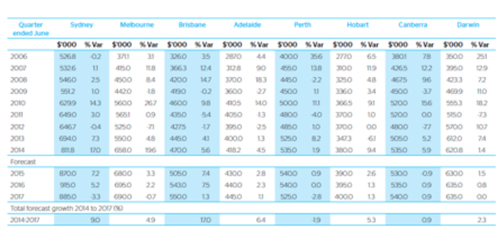 Data source : REIA. Forecast source : BIS Shrapnel
And as we all know, from a property investing point of view, you then have the ripple effect …
It will eventually spread to the outlying areas – Ipswich, Here we Come !
DO YOU HAVE A QUESTION ABOUT PROPERTY INVESTING?
CALL SONIA, IPSWICH GRANNY FLATS
0403 309 136
Granny Flat Designs – Landscaping ?
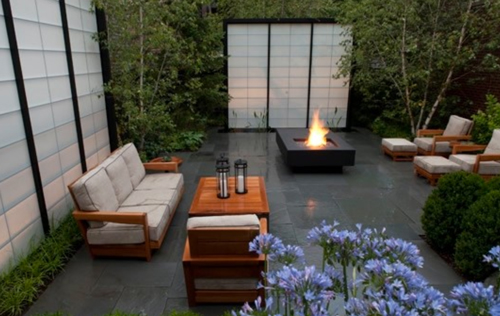
Landscaping is one of the most overlooked components when putting a project together …
And I say this because one of our current Granny Flat projects is investing in some landscaping – and it makes a huge difference to the end product. On completion we believe we will achieve as much rent per week for the 65m2 Granny Flat as we will on the existing post war home on the front of the property !
And we all want our Granny Flats to look fantastic! After having built a quality product with great inclusions eg. down lights and ceiling fans on the covered alfresco dining area, double external power points and other quality external fixtures – it’s the little things that count, and landscaping is no exception.
And we feel to make your new Granny Flat look exceptional, landscaping is the last part of the equation! From an investment point of view, if your property is being built as an investment, tenants feel proud about a great looking house and will make an effort to keep it that way. Even in average areas, if you have a better quality property tenants are more likely to take good care of it. Think of it as a good investment – as investors we all want better quality tenants, and this is one way of achieving it.
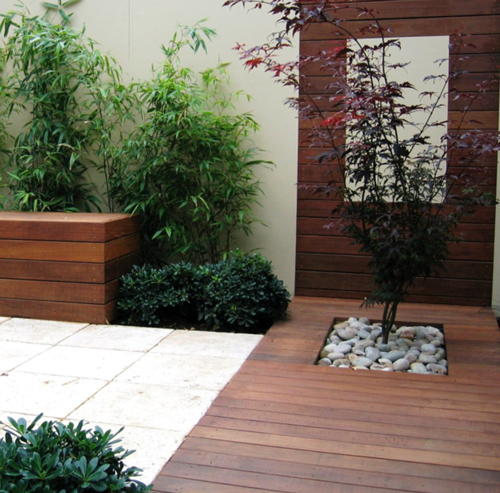
And once again, like good granny flat design – it doesn’t have to cost you the earth (pardon the pun!). It may only cost you good top soil, some turf and a few easy care, low maintenance plantings…
One of the great things about building within Ipswich City Council is their Free Plant Program. This is available at the council’s Queens Park Nursery, Goleby Avenue Ipswich, open three days a week. Click the link for days and opening hours :ICC Nursery – Opening Hours. Take in your rates notice, and this will entitle you to 6 free plants from the nursery per financial year.
ICC also has a Habitat Gardens Partnership Program where you have access to 30 free native plants and a nesting box – once again take in your rates and complete the one page application:ICC Habitat Gardens Partnership Program. These plants are grown locally and require minimal water once established, and great for the nature bird and butterfly population.
Another great incentive by Ipswich City Council!
TURFS …
There are 3 main type of turfs used here in Ipswich:
- Sir Walter Buffalo – prefers the warm climate so well suited to our local area. This is probably the most popular choice, but also the most expensive. It’s easy to maintain, doesn’t need a lot of mowing and will perform well in shade or sunny positions
- Also appealing because it is so hardy, and great for high traffic areas. Does take a little more care than buffalo
- Soft to touch, and everyone loves to lay on it ! Really drought tolerant, which is something to think about as our summers tend to be longer and hotter. Generally needs good sun
AND THE COST …
Generally allow about $2,000 – 2,500 for landscaping. This would include top soil, turf and some native style plantings. We feel it is important to plant the right vegetation for our local area, so let yourself be guided by what the local council nursery staff recommend.
Probably the only other cost that you might consider is what you may allow for the driveway to your new Granny Flat. We have tended to use crushed gravel as this is more cost effective, rather than a full concrete driveway which can be an exhorbitant cost. Generally we would allow $1500 – $2,000 for this, depending on the length and cubic metre measurement of the driveway.
* * * * * * *
The combination of good design principles, plans drawn by an experienced architect well versed in passive solar orientation, drawings produced site specific per property, in conjunction with a properly landscaped granny flat will attract a better quality tenant! Your neighbours will love the new work as well. And, it doesn’t need to cost an arm and a leg…
Truly a WIN / WIN !!
We just want your Granny Flat to look as good on the outside as it does on the inside.
IPSWICH GRANNY FLATS
YOUR LOCAL GRANNY FLAT EXPERTS !
Call Sonia : 0403 309 136
Logan and Ipswich Emerge as SE Qld Rental Hotspots : REIQ
Extract from Property Observer – Brisbane Property Hotspots 2014 : Ipswich in the Headlines Again !
Brought to you by Ipswich Granny Flats …
Property ObserverJennifer Duke
3 November 2014
The most recent Real Estate Institute of Queensland (REIQ) statistics show that rental markets remain tight, with south-east Queensland’s Logan and Ipswich becoming strong rental hotspots for investors.
REIQ CEO, Antonia Mercorella, said that the latest Residential Rental Survey, conducted at the end of September, found that just four of Queensland’s 16 major regions recorded significant changes in vacancy rates.
She noted that this is evidence of a two-tier residential rental market across the state.
“Logan and Ipswich are emerging as the south-east’s rental hotspots as tenants move further afield from inner-Brisbane in search of more affordable rents,” Mercorella said.
“For the rent you’d pay for a three-bedroom house in Brisbane, you can get a four bedroom house in Brisbane’s outlying areas for up to $65 less a week.”
She noted that, for this reason, Logan and Ipswich are now very tight rental markets with the lowest vacancy rates in the Greater Brisbane region.
By the close of September, Brisbane City LGA recorded a 2.3% vacancy rate, relatively stable since the end of June.
“Brisbane’s middle to outer suburbs – those 5-to-20 kilometres from the CBD – recorded a slight easing in vacancy levels, up 0.2% to 2% at the end of September,” she said.
“The city’s inner suburbs, on the other hand, recorded a vacancy level of 2.9%, down from 3.4% at the end of June.”
The Residential Tenancy Authority’s records of median weekly rents for the September quarter also noted relatively steady rents across the LGA, with greater Brisbane returning to a vacancy rate seen 12 months ago – 1.7%.
“Vacancy levels in the Moreton Bay and Redland City council areas remained relatively steady over the three months to September, with both recording 1.8%,” she said.
“While not quite as tight as Logan and Ipswich, strong investor activity and tenant demand are setting the scene for competitive rental markets in both LGAs.”
Logan City’s vacancy rate currently sits at 1.5%, with Ipswich City at 1.6%, both down 1.4%.
* * * * * * * * * * * * * *
Great news for Ipswich ! We have several granny flat projects on the go at the moment, and the rental enquiry has been nothing short of fantastic. There is certainly a good demand for these new builds …
If you are wanting to Rent a Granny Flat
or have a general enquiry about any other upcoming potential
Granny Flats to Rent
Call Sonia on 0403 309 136
or
Julie on 0411 073 747
Your Granny Flat / Dual Living Specialists !
Queensland Property – What Grants are Available for First Time Buyers ?
In this blog, Ipswich Granny Flats looks at what currently affects Queensland properties from a First Time Buyers point of view…
Numerous changes have been made across the country to first home buyer grants (FHOG) and eligibility requirements – in this blog we are looking at what affects Queensland only.
IN SUMMARY
First time buyers in Queensland can receive $15,000 when purchasing a new home, but unfortunately nothing when purchasing an established property.
The Great Start Grant (previously being known as the First Home Owner Construction Grant) has been available for those buying new (or substantially renovated properties) since 12 September 2012.
You’re not eligible if you previously held any interest in residential properties before 1 July 2000, even if it was an investment property. You may be eligible if you have had a property since – but used it solely for investment purposes and did not live in it. You’ll need to give the OFT tax return details, tenancy agreements and current electricity and phone accounts.
Grant applications are processed within 10 days of receiving the information. Buyers must move into the property within one year of completion, and live there for six continuous months.

The extract below is from OFFICE OF FAIR TRADING, QLD
(last updated 23 July 2013)
https://greatstartgrant.osr.qld.gov.au
GREAT START GRANT
A great start to get into your new first home
The Great Start Grant is a Queensland Government initiative to help first home owners to get their new first home sooner. You’ll get $15,000 towards buying or building your new house, unit or townhouse (valued at less than $750,000). You can even buy off the plan or choose to build yourself. It’s a great opportunity to buy or build a new home in our great state.
How a $15,000 Great Start Grant can help you
- If you’re thinking of buying or building a new home, this could be what gets you started
- It could get you something more than you were expecting
- It can get you into your first home sooner
Note: The Great Start Grant is administered under the First Home Owner Grant Act 2000.
FAQs
What is the Great Start Grant?
In 2012, the Queensland Government increased its grant for first home owners who are buying or building a new home. Previously known as the First Home Owner Construction Grant, those eligible will receive a one-off payment of $15,000.
It is available for eligible transactions dated on or after 12 September 2012.
What is a new home?
A new home is a brand new dwelling that has not been previously occupied as a place of residence or sold as a place of residence. This may include a home that is a substantially renovated home (in certain limited circumstances).
Types of dwellings include houses, units, duplexes, townhouses and granny flats built on a relative’s land.
A new home does not include a relocated home (e.g. buying and relocating old house).
What is a substantially renovated home?
See substantially renovated homes for further information.
Can I get the grant if I buy an established home?
No. The $15,000 Great Start grant is only available for newly constructed or substantially renovated homes purchased on or after 12 September 2012.
I have owned or currently own an investment property. Am I eligible for the grant on a subsequent property?
If you held an interest in residential property before 1 July 2000, regardless of how the property was used, you will not be eligible for the grant.
If you have held or currently hold an interest in residential property since 1 July 2000 and the property was or is used solely for investment purposes, you may be eligible for the grant on a subsequent property. You would need to give evidence showing you have not lived in the investment property.
This evidence may include:
- tenancy/lease agreements
- current electricity/phone accounts
- tax return details.
We will review all documentation provided with the application. We will not make a determination without an application and supporting documentation.
When do I have to move into my home?
You must move into your home within 1 year of the completed eligible transaction and you must live there for at least 6 months continuously in order to keep the grant.
What if my circumstances change and I am not able to move into my home, or have to move out before I have lived there for 6 months?
You must tell us within 14 days if you are unable to move into your home or have to move out of your home before you have lived there for 6 continuous months. Depending on your circumstances, you may have to pay back the grant because you are no longer eligible.
If I am applying with another joint applicant, do we both have to live in the home?
Yes. To be eligible for the grant, all applicants must live in the home.
Does my partner have to be included on the application?
Yes. If you have a spouse, they must be included on the application—either as an applicant or non-applicant spouse.
My partner has owned a home before. Am I eligible for the grant?
No. If your spouse has previously owned a home they have lived in, you will not be eligible for the grant. If your spouse has owned a home before 1 July 2000, you will not be eligible for the grant.
I am not a permanent resident; however, my spouse is an Australian citizen. Does this stop us getting the grant?
No. You may still be eligible. Australian citizens, permanent residents, or a joint applicant with an Australian citizen or permanent resident are eligible for the grant, providing other eligibility requirements are met.
What is an off-the-plan purchase?
An off-the-plan purchase is a single contract to purchase a new home and the relevant interest in the land on a proposed lot on an unregistered plan of subdivision of land. In some cases, the property may not have been built yet. You do not have an off-the-plan transaction if you have signed a vacant land purchase contract and a building contract.
Does the Great Start Grant apply to replacement contracts on or after 12 September 2012?
No. An applicant is not eligible for the Great Start Grant if a contract replaces another contract that was made before 12 September 2012.
What is a ‘finalised’ contract?
A finalised contract is an agreement that outlines all of the conditions of the transaction. It must be dated and signed by all parties (vendor and purchaser).
What is an eligible transaction?
An eligible transaction is one of the following:
- a contract made on or after 12 September 2012 for the purchase of a new home in Queensland (including purchases of substantially renovated and off-the-plan homes)
- a comprehensive home building contract made on or after 12 September 2012 by the owner of the land in Queensland or a person who will, on completion of the contract, be the owner of land in Queensland on which the new home will be built
- the building of a new home in Queensland by the owner–builder where the foundations are laid on or after 12 September 2012.
Is the Great Start Grant dependent on the contract date or the settlement date?
The relevant date is the contract date.
How long will it take for my application to be processed?
We will process most applications within 10 working days of receiving all required information.
If you apply through an approved bank or lending institution, you will need to check with them how long it will take them to process the application.
When will payment be made?
See the FAQ When will I get the grant ? for payment timeframes.
What can I do if my application is not approved?
If you are dissatisfied with a decision regarding your application for a grant, you may lodge a written objection with the Commissioner of State Revenue. You must state the grounds of your objection in full and lodge the objection within 60 days of receiving notice of the decision.
How is the total value of the home calculated?
The total value of the home depends on the type of transaction you are entering into.
| Type of transaction | Total Value |
| Buying a new home(includes substantially renovated or off-the-plan homes) |
|
| Contract to build |
|
| Owner-builder |
|
Contact details:
Office of State Revenue
GPO Box 953
Brisbane Qld 4001
Client Contact Centre: 1300 300 734
https://greatstartgrant.osr.qld.gov.au

Queensland Property Investment – The Market Ripple Effect
Ipswich Granny Flats weekly update :
Thinking of investing this year or next ? Queensland IS THE PLACE TO BE BUYING YOUR NEXT INVESTMENT PROPERTY, and here are more reasons as to why… In the big scheme of things, that whole big property clock – Queensland is still at the bottom but now on the rise! You need to get in now before it’s too late!
Which middle and outer ring suburbs will benefit from the market’s ripple effect ?
Terry Ryder, Hotspotting
15 September 2014
As the ripple effect clicks into action, markets in our major cities are shifting.
A standard pattern in property cycles is that an upward movement starts in the Top End suburbs and gradually ripples out to the middle and outer ring suburbs.
We’re seeing this playing out in Sydney and Melbourne as 2014 winds on.
The pattern of activity in Sydney shows that sales levels in many of the millionaire suburbs have tapered off. In the Price Predictor Index, which tracks sales volumes in cities and towns across Australia, many of the Top End suburbs in Sydney have been downgraded.
But several markets in the middle and outer ring areas have been upgraded, because sales activity has picked up.
The Sydney precincts that still have strong growth momentum are mostly in the far west and south-west. The municipalities centred on Parramatta, Blacktown, Penrith, Liverpool, Campbelltown and Camden have numerous suburbs with rising activity levels.
The pattern is similar in Melbourne – where the market with the strongest growth pattern is the Mornington Peninsula.
In Brisbane and Adelaide, which are less advanced in the property cycle from the two biggest cities, we’re also seeing middle ring and outer ring suburbs putting their hands up.
Brisbane’s run, which started with the inner and middle-ring suburbs north of the CBD, as well as the inner-city apartment market, is starting to spread. The Moreton Bay municipality, which encompasses the northern growth corridor heading up towards the Sunshine Coast, has emerged strongly as a growth market.
So too has Logan City, which provides a suburban bridge between Brisbane City and the Gold Coast in the south. Ipswich, in the far south-west, is lagging a little, but starting to show signs of life.
Ask any local real estate here in Ipswich and they will all agree – we are definitely showing signs of positive life !
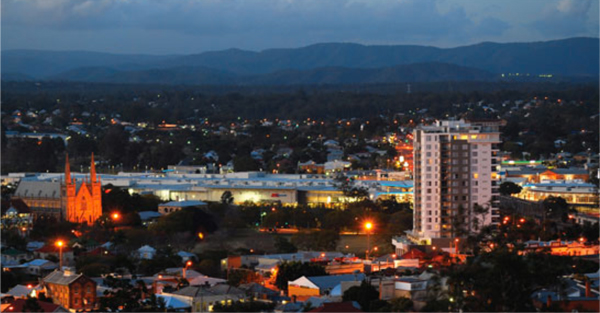
This up to date information brought to you by Ipswich Granny Flats – your local real estate agents and builders, market leaders in their fields !
Do you have a question about investing here in Ipswich ?
Call Sonia 0403 309 136