
Dual Living : What does it actually Mean ?
Dual Living is a term or phrase coined by the growing number of ‘wealth creation groups’ or ‘specialist property investment groups’ that offer house / land packages within the local Ipswich area to investors all over Australia.
In the last 6 months within our local Ipswich area, any available land is being sought by these groups to build a new house, generally a 3 bedroom, 2 bathroom + single car accommodation + an Auxiliary Dwelling usually a 2 bedroom, 1 bathroom + single car accommodation. Sold to investors Australia wide – these groups are calling it Dual Living.
As Directors of Vision Property Group (Qld), both myself (Sonia) and Julie Adams saw this opportunity about 18 months ago – and so Ipswich Granny Flats was born. We have been instrumental in building the first few ‘Auxiliary Dwellings’ here in Ipswich, and have continued to do so ever since …
 The Granny Flat Solution or Dual Living for an investor is a no brainer ! You can have a new house built and have 2 income streams. If one of the properties is vacant for any period of time, you still have an income on the other. You can even live in one and rent out the other. For First Home Owners, you could still be eligible for the Queensland government Great Start Grant of $15,000 – and live in one and rent out the other! What a Bonus …
Added benefits include separate water and electric meters, no body corporate fees and managed as two completely separate tenancies. Ask us about Property Management of the Dual Living properties – we are the local experts on the ground (not a faceless franchise or large impersonal property management group!). We now have potential tenants ring us every week wanting to rent them as they are being built. Ring Julie (0411 073 747) for further information.
Granny Flat construction through these marketing and wealth creation groups often takes 16 – 20 weeks. As builders of in-fill development for investors, our Granny Flat Approval process usually takes 2 – 4 weeks, with our Granny Flat construction taking about 4 weeks once approvals are in place. Checkout examples on our website for Case Studies.
It’s unfortunate what’s happening in some of these estates now. These ‘experts’ are building 15 – 20 of these Dual Living packages in a row – not conducive to a quality investment area. As a result of this, Ipswich City Council is now considering it’s options for the relaxation of the planning scheme and called for Public Comment. They are proposing to reduce the Auxiliary Dwellings, Granny Flats, Dual Living packages – call it what you want, to 50m2 and one bedroom.
What is being produced by the ‘Investment Experts’ is not the spirit with which it was originally intended. Ipswich City Council’s original concept of the Auxiliary Dwelling was their response to social responsible housing, urban infill and affordable housing. Auxiliary Dwellings gave the opportunity for sizeable blocks in the inner areas, especially those adjacent to transport networks to provide a more efficient use of land, providing extra accommodation, affordable for tenants and owners alike whilst supplying a valuable resource at the same time.
Work with Ipswich Granny Flats,
the local business on the ground that kick started the whole
Granny Flat Solution in Ipswich.

Don’t be a sheep and just follow.
Work with leaders, not followers…
Call Ipswich Granny Flats : 0403 309 136
All things Property Management
Why should property Investors look to change their current Property Manager and what to know before selecting a Property Manager.
Owning investment property is an important step in your financial future. Using a Property Manager to manage your investment should help to minimise risk and maximise your returns.
If you choose the right Property Manager it should be utopia, but if you don’t then you could find yourself tracking the performance of your Property Manager rather than the equity and rental gain of your property.
A Property Manager will do more than just collect your rent – they understand the laws and legislation of Real Estate, find and screen suitable tenants, conduct inspections and organise maintenance where required.
A good Property Manager will also provide advice on increasing the value of your investment, ensure any disputes with tenants are dealt with quickly and efficiently, and provide a very high quality service which removes the stress for you. They will regularly review your rent return, have access to comparable rentals and negotiate appropriate increases, while minimising vacancy periods.
 Most importantly, a good Property Manager will assist you to preserve the condition of your property, increase its value and maximise income – that’s ultimately why you are investing in property in the first place!
Property Managers aren’t all the same. Some are super-efficient, they scrutinise every potential tenant and have their finger on the pulse of every property. Others however are a little lazy. They become complacent often ‘skipping’ regular property inspections and they don’t follow up on documents. How often do I hear, ‘I mailed the lease but the tenant didn’t bring it back’. Not good enough!!. This type of Property Manager often costs investors a percentage of the weekly rent, but over the long term can cost a whole lot more …
The long-term costs of a lazy Property Manager can add up. For starters there’s the emergency maintenance, when early detection could’ve meant preventative maintenance, a whole lot cheaper.
To avoid emergency maintenance, routine inspections should be conducted every three or four months, and owners should receive a full written and photographic report on the dwelling condition.
 With tenants it’s not just about paying rent on time, it’s also about maintaining the property to an acceptable standard. This is why routine inspections are crucial. Tenant reference checks with previous Property Managers from the start are important however the definition of ‘acceptable standard’ can vary enormously from one Property Manager to the next. It’s the routine inspections that will provide the real picture.
Then there’s the issue of a good tenant, who is diligently providing feedback to the Property Manager on any dwelling issues starting to rear their ugly heads, for example, a ceiling crack – yet that feedback is being ignored or filed in the ‘let’s not bother the landlord’ drawer.
Often owners don’t even receive this tenant feedback from the Property Manager. A good Property Manager should communicate this feedback to landlords, along with ways to improve the property to maximise capital growth potential and premium returns. This is what we do for landlords as part of our ongoing duty of care.
Our own personal experience gives us the experience and the tools to advise and discuss with our landlords ways to potentially add value, to ensure the property continues to target the ideal rental market, and also improve the equity position when the property is revalued.
Almost daily we are asked by property investors to help them with purchasing either their first or another investment property. If you are keen to find an investment property just ask us how.
We recently assisted some interstate investors to take control of their investment property. For 10 years a large local and well respected agency had managed their property. But after calling and once again being asked whether they were the tenant, a prospective tenant or an owner they had had enough. 10 years of putting up with this ‘you’re just a number mentality’.
These people had relied on their Property Manager to look after the property and to report back with routine inspection reports.
Upon undertaking the client’s portfolio review, we inspected the property and found it to be severely rundown compared to its condition at purchase.
To bring the property back to the original ‘as purchased’ condition, the owner would need to spend $20,000, and this spend wouldn’t be increasing the overall value of the home but just bringing it back to an acceptable standard.
The owner was shocked that his Property Manager, a business and a person he entrusted with his property, would let it fall into such a state of disrepair.
The owner told us that he’s not unreasonable when it comes to property maintenance. He understands that there are upkeep costs. If he was only told about any issues then he could’ve undertaken preventative maintenance and not be left with a lump sum bill of $20,000 to just repair what was the result of the Property Manager’s mismanagement.
 So now I’m sure you understand the importance of a good Property Manager for your investment properties. A well-maintained property doesn’t just help attract a better class of tenant, but when it comes time to revalue your property, the valuer can see a clean, tidy home that compares positively with other properties in the area. This will ultimately achieve you the best possible value.
Not happy with your Property Management ?
Call – Julie Adams 0411 073 747
NZ to consider joining the Granny Flat Revolution
Ipswich Granny Flats keeping you up to date on what’s happening in the bigger, wider world ! Our NZ neighbours are considering the benefits of Granny Flats. News to hand :
More Apartment Blocks would Ease House Prices – expert
Rebecca Quilliam, Senior Reporter
APNZ News, Wellington NZ
27 May 2014
The cost of properties with over-inflated price tags can be brought down with a rapid increase of high rise apartment blocks and granny flats, according to an expert speaking at a property seminar in Wellington tonight.
Local Government New Zealand president Lawrence Yule will lead a panel discussion on housing affordability with Finance Minister Bill English, Auckland Council Deputy Mayor Penny Hulse, economist Arthur Grimes and New Zealand Council for Infrastructure Development chairman John Rae.
A new OECD report shows homes in New Zealand are the second most expensive in the developed world, based on the ratio of price-to-income, and the most-overvalued relative to rents.
Dr Grimes, a senior fellow at Motu Economic and Public Policy Research, said popular cities and towns could bring down house prices by rapidly expanding the number of properties for people who were not just there at the moment, but also those who wanted to come in the future.
If the rate of houses being built was not meeting those numbers then, “it’s going to be expensive”, he said.
If local governments were resistant to more houses being built in their towns and cities, they needed to be explicit with their communities by saying they had decided to be smaller but expensive, Dr Grimes said.
Councils that wanted to increase housing quickly should allow for more apartment buildings and granny flats, he said.
“For instance in Christchurch you can’t (build) a granny flat and keep it there, you have to remove it even though they’re short on houses.
“If you want to allow more people in, you’ve got to allow some of these things to happen.”
Auckland Deputy Mayor Penny Hulse said there was high interest in residents and migrants looking for apartment life in the city.
The council’s proposed Unitary Plan allowed for intensification of housing, such as splitting one house into two, and building granny flats and apartment buildings.
There was demand for new apartment blocks, in areas such as New Lynn, Ms Hulse said.
Migrants and residents aged over 50 were looking for those smaller homes in good areas, she said.
There were some ways other councils around the country could provide “stepping-stone” properties for first-time buyers, she said.
“There aren’t enough choices for first home buyers by the way of good choices in apartments or terraced housing or otherwise houses that allow them to build equity in them themselves.”
Local Government New Zealand president Lawrence Yule said there was an “overheated” housing problem in Auckland, Christchurch, Queenstown and parts of Tauranga.
There needed to be better cooperation between central and local government to accommodate the housing shortage in those areas, he said.
If housing “sprawls out” too much, the cost of the extra infrastructure was not worth it for councils, he said.
“We don’t support a cart blanche expansion.”
Plans to tackle housing problems in cities such as Auckland should have been happening 10 years ago, Mr Yule said.
“But it’s better late than never.”
There needed to be a “proper plan for New Zealand’s growth”, he said.
“The demographic changes in New Zealand are significant; not only the aging population, but in the drift towards urban centres and the northern drift.
“And a balanced growth across New Zealand is probably the most efficient way for the country.”
NZ Herald
How to Maximise Rent – when you are Ready to Rent out your New Granny Flat …
 With an increasing supply of new rental properties hitting the market here in Ipswich (or anywhere for that matter), as Landlords you may need to upt the ante to compete for tenants. Too often I see properties with a For Rent outside the front of the house, often sitting there for 4 weeks or longer. And why ? It looks like a renter …
But a season investor knows that the longer the property sits vacant, the more stale it becomes and the higher the chance no one will want to rent it. With my real estate agents hot on now, the same goes for a house for sale – the longer it sits on the market, the harder it becomes to sell. Everyone says – why hasn’t it sold?
To present a house to market for sale, or a property for rent, you want to attract and keep the best possible tenant with the best possible rent, even if times are tough. We are all in it for the money, so protect your asset well. Here are 9 simple easy things you can do as an investor to maximize your rent return :
- Presentation: first i
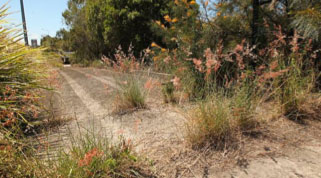 mpressions are lasting impressions. As a prospective tenant is driving up to the property, does it make a good first impression? Sweep, weed, edge, mow and blow – not that hard really! Is it dark inside – open up the curtains; is it musty – put in an air freshener or open up the windows; is it hot – put on the air con. It’s not brain drain stuff …
- Promotion: does your property manager highlight your investment property’s best attributes, and say in their write up why a tenant would want to rent it. Would you rent it just on their words in their advertising of it? If the answer is no, then something needs to change – either the words or your property manager. Property managers tend to be overworked, underpaid and often manage 150 properties or more – unfortunately your investment property is not the only one they manage. How often do we see bad photos, dark dingy interiors, photos of the toilet? A property manager is not a photographer – so pay $150 for professional photos and see what a difference it makes to your promotion
 Clean it: I mean really clean it, not just a half hearted attempt. If you can’t do it yourself, there are plenty of businesses that will do it for you – all tax deductible. If you wouldn’t want to rent the property yourself because it’s not clean, why should anyone else ?
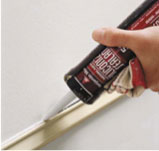 Repair it: when your investment property becomes vacant, it’s a great time to do a complete service – just as you would with your car. Safety should be your biggest priority – loose power points or switches, dodgy pool fences. Don’t leave it until it’s too late
- Replace it: old and worn – get rid of it. Don’t wait for an accident to happen. Yes, I know you only replaced the carpet 5 years ago and your carpet at home is 10 years old. New carpet might mean a new tenant, maybe even more rent. Dirty, old carpet attracts the same sort of tenant
- Paint it: not a lot to say really, bite the bullet, just do it. On average, an investment property should be paint every 3 – 5 years
- Furniture: developers and investors alike are becoming increasingly savvy – furniture packages particularly in units or apartments are becoming the norm. We have a University and large Hospital here in Ipswich – younger tenants, especially those fresh out of home often will look for a property that is furnished. It may not be for all properties, but young single tenants often like fridge, washing machine & dryer. Just be prepared to think outside the square
- Family Friendly: how are the fences, is it fully fenced to keep their family dog in?

- Pet Friendly: this is a biggie! Exclude pets and you reduce your potential tenant pool by about half. And most pet owners are responsible, reasonable people – just make sure there is a good pet bond in place and you have fumigation written into your lease on exit.
When times are tough, you may need to get creative – it could be the difference between having your investment property rented before anyone else’s. So Passive Investors – Take Note of the above …
Should I build my Granny Flat on Piers or on a Concrete Slab ?
I find this is one of the most frequently asked questions for any enquiry we have for building a Granny Flat here in Ipswich. There are a number of things to take into consideration, some of which are listed below, but not necessarily in order of importance :
Mining Influence 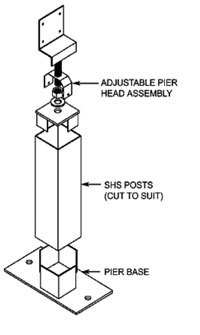
There are a number of properties in Ipswich that have Mining Influence. This seems to be frighten a lot of people, but quite unnecessarily I believe. Historically, Ipswich is an old mining town and remnants can still be seen around the area today. The only active mining in the area now is on the outskirts of Rosewood, some distance away. As part of due diligence with any prospective property looking to build a Granny Flat, you would first need to determine if there is mining influence on the property. If there is, you would need to obtain a Geotechnical Report to qualify what can and can’t be built on the site. In most instances, from a residential building point of view, all it means you can’t build a ‘slab on ground’ construction, but you can build on stumps (piers).
 Termite protection
South East Queensland is renowned for termite activity. Concrete slab construction can be more vulnerable to termite attack and more expensive to protect with chemical or barriers such as ‘Termimesh’ etc. Careful detailing and construction of the slab is essential. Construction on piers (stumps), only need ant cap protection on the top of each pier.
Flooding
After the 2011 floods of SE Queensland, there are now a number of properties in the local Ipswich area that are affected by a Temporary Flood Line determined by the Ipswich Council. Other water issues to be mindful of, are, 1 in 20 flood line, 1 in 100 flood line or Stormwater Overland Flow. In these instances (bar the Stormwater Overland Flow), you would need to build 500mm above the flood line, and pier construction is the only option. No infill between the piers is allowed, so that future flood waters are allowed to flow through the structure. It would be wise in these circumstances to talk to Town Planning or the Private Certifier prior to any purchase of a property that is solely to be used for investment purposes to build a Granny Flat.
Slope of the land
If the land is level, a slab is usually the best option. If the land has some slope on it, then pier construction is the preference. It avoids excavation and the need for retaining walls.
Ipswich City Council Planning Scheme
Ipswich City Council’s Planning Scheme describes setbacks in relation to building heights. If for instance you had piers that brought the Granny Flat to a second storey height, there is a slight increase to your boundary setbacks. It may also affect the placement of windows on a particular side ie minimum window if you are overlooking the existing house or neighbour’s property.
Cost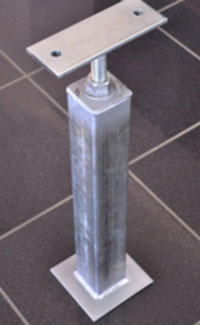
Slab construction is generally cheaper from a building point of view, rather than piering. On a block with some slope where a cut and fill operation maybe necessary, it might be cheaper in this instance to do piers instead. It would be dependent on each individual property and the slope on it. We would determine fairly early on from our initial site inspection what would be the preferred way to go.
Privacy
Raised floor levels could mean more exposure to neighbours as well as additional costs such timber flooring and underfloor insulation.
Disability Access
Building on piers would require additional stairs, ramps, landings and balustrades – which are often prohibitive for people with disabilities. Concrete slab construction is more conducive to easy Disabled Access.
Visual look
Some people prefer to have lowset, slab on ground foundations, as this is the norm in their mind. If you have moved from an area where brick veneer construction is the accepted norm, then you may want the same. Yet others prefer the look of piers over concrete slabs, as this suits many older areas in Ipswich. Piers can be dressed up with infill timber slats, which complement the character look of a property. It really comes down to personal preference. Piers can be either brick, timber or more commonly used here in Ipswich – steel adjustment stumps because of the highly reactive soil types in the local area.
In most instances we build concrete slab on ground for our foundations, but is dependent on each site with it’s own percularities.
 Engineered Concrete Waffle Slab Construction
With our free onsite inspections, having already done our due diligence – we can determine fairly quickly which is the best way to go !
So book your Free Onsite Inspection Now – Call Sonia 0403 309 136 !
NT : Joins the Growing Phenomena : Granny Flats
Territorians can now build a granny flat without as many restrictions
Herald Sun
Dani McDonald
NT News
20 May 2014
Ipswich Granny Flats once again brings you ground breaking news ! Northern Territory is the latest state in Australia to join the growing phenomena : Granny Flats – read on …
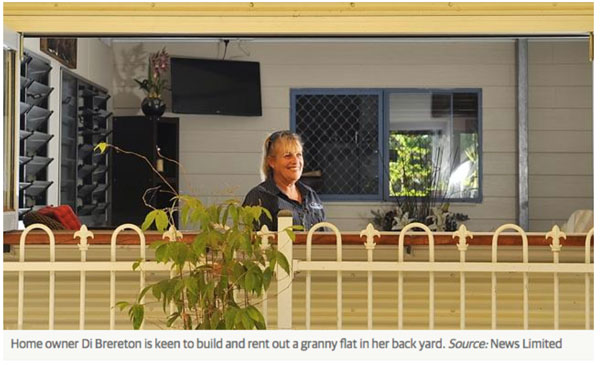
Territorians can now build an independent unit, or a granny flat, on their single-dwelling block with fewer restrictions under changes introduced by the Country Liberals Government.
The changes, released last week, will allow the occupant of an independent unit to be someone other than a dependant of a resident from the primary dwelling while also increasing the size of permitted units in rural areas by 30sq m.
Traditionally, granny flats provided an independent living option for grandparents or older children.
Lands, Planning and the Environment Minister Peter Chandler said it was important the Government explored all available housing options to give Territorians choice.
“That choice is being provided, with around 2000 units in the CBD either under construction or with an approved development application, and our urban infill program is providing greater density in inner suburbs,” Mr Chandler said.
Di Brereton, of Bakewell, can now build her own granny flat and create extra income.
“I can also use it for when family come up, and also extra room for an office,” Ms Brereton said. –article–