
Auxiliary Units in Logan – What You Need to Know
Just announced by Logan City Council, they too are set to tighten laws relating to rentable granny flats. Read below to see how it may affect you…
Logan Tightens Laws for Rentable Granny Flats
Judith Kerr, Quest Newspapers
October 19, 2017
LOGAN CITY Council is set to tighten laws for rentable granny flats, planning to set the minimum lot size at 700sq?m, introduce a minimum road frontage of 18m and infrastructure charges.
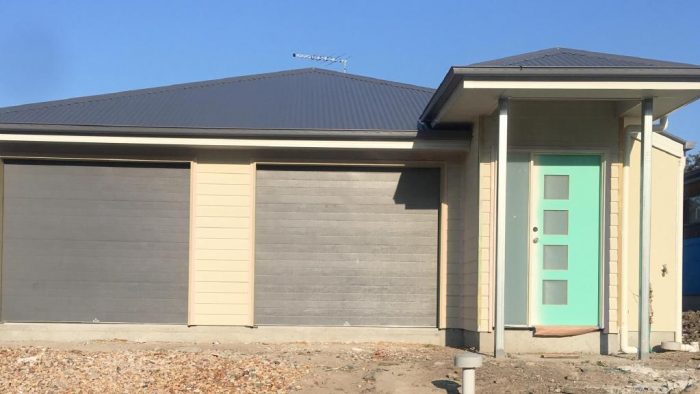
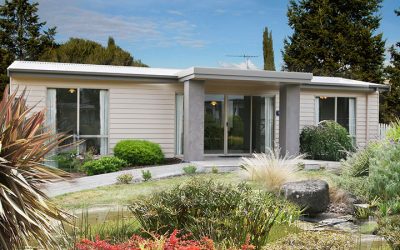
It looks like a normal house from the front but it is actually two homes. Access to the second property is through the side fence.
An officer told last week’s City Growth committee auxiliary units were included in the Planning Scheme two years ago and had successfully provided a mix of housing choices. But his call to extend a 12-month review of the housing style was rejected when the council opted to tighten the laws immediately.
Cr Stacey McIntosh (Div6) said interstate investors were taking advantage having two rentable properties without having to pay infrastructure charges.
“There are real-estate agents going around Bethania asking people to pull down their houses to build these units because it’s such a good investment,” she said. “But there is a social impact with no parking and inaccessible blocks.”
Council will amend its definition of auxiliary units to incorporate the changes, instead of amending the Planning Scheme.
Act NOW before council’s make even more changes!
If you’ve been considering how a granny flat will enhance YOUR property and YOUR income
Call Sonia TODAY on 0403 309 136.
Financial Independence – Are your children ready?
From the moment their cuteness wears off and is replaced by smelly socks, empty fridges and rusty old cars parked on the front lawn, we all start dreaming of the day our beloved offspring will venture out into the world on their own. But with children now staying at home well into their 20’s or even 30’s, what can we do to help give them a gentle nudge (or in some cases an almighty push!) towards independence?
Whether they stay at home or leave the nest, there can be financial repercussions for Mums and Dads…
How to ease your children out of the nest in today’s tough property climate
Vanessa DeGroot, Domain
October 1, 2017
For many cultures, having children stay at home is the norm. It’s also beneficial for some parents as they provide company, especially for single mums and dads, as well as (hopefully) helping, both with household chores and financially. It can even help pay off your home if you’re receiving board.

But many parents do want their children to leave home, despite fears they can’t, or won’t. A recent Galaxy survey done for Stockspot found 74 per cent of parents with children aged under 17 feared they would never leave home and 85 per cent were worried their children wouldn’t be able to afford their own home.
The Bank of Mum and Dad has certainly had a mighty good workout in recent years, with adult children are staying at home for longer.
Many parents want their children to leave home, despite fears they can’t, or won’t.
The most recent figures from the Australian Bureau of Statistics show in 2012-2013, 31 per cent of people aged 18 to 34 had never left home, which had increased from 27 per cent in 2006-07, with the major reason being financial. Chances are, with deteriorating housing affordability, these figures haven’t changed much, with young people staying at home longer to help save a deposit for their own home.
But while house prices are an impediment, interestingly the Galaxy survey found 62 per cent of parents thought spending habits of their offspring were an issue.
Whatever you do to help, consider the financial repercussions for you. Chances are it will affect your future and hinder your retirement.
Research from Canstar has also shockingly found that adult children were borrowing from their parents well into their 30s, not just to buy a home but to pay everyday bills. It found half of over-18s were borrowing money from their parents, with one in five 18 to 37-year-olds borrowing weekly or monthly.
Herein lies one of the answers to getting your offspring to leave the nest – teach them about finances, including the value of money, banking, budgeting and saving, ideally from a very young age.

Setting up a bank account for your children at an early age will help them develop an understanding of budgeting.
You should set up a bank account for them early on, which should be the starting point for saving and could provide the beginnings of a house deposit. If they’re already grown and they haven’t yet been educated, start teaching them how to be financially independent now. It’s never too late.
While housing affordability is an issue, perhaps these adult children are just getting it too good, and there’s no great incentive to leave home. Have them pay you board and contribute to everyday household chores, which will prepare them to fly the coop by becoming more responsible.
But to get them to actually bite the bullet and move out, you can try a few things.
One tactic to get the ball rolling is to set a moving day.
The first is to set a moving day deadline. Life skills coach Michele Jones recently advised parents to kick their children out by the age of 20.

Perhaps 20 is a little harsh, but the idea that they need to be forced to stand on their own two feet absolutely makes sense. There’s no better way to learn how to be responsible and pay your own way, and it will boost their self-esteem.
If you want them to move into a home they own rather than renting, you can wait until they’ve saved enough of a deposit, but if that’s too far into the future you can help them by either giving or lending them money. Maybe you can even sock away the board they’ve been paying you and give it back in a lump sum so they can use it as a deposit.
Another option is also to offer a family guarantee, which is an increasingly common way for parents to help their adult children get into home ownership. It involves allowing them to use the equity in your home to buy their own home.
Whatever you do to help, consider the financial repercussions for you. Chances are it will affect your future and hinder your retirement. But then again, you can always ask the kids to repay the favour in your later years!
Searching for a way to get your home back?
We can help you to find the perfect property, whether it’s for you or the kids!
Call Sonia on 0403 309 136 today!
Buy first? Sell first? It’s a tough decision …
It’s a question we get asked frequently when homeowners are looking at selling their family home … should you search for your dream home before you sell? Or should you sell up first, so that you’re ready for action the moment you come across the perfect home? There are a lot of “what if’s” and “maybe’s”, and you need to take advice from the right people – those with local expertise, knowledge and experience …
How to know whether to sell your home before buying a new one
Nicola Powell, Domain
September 22, 2017
Deciding whether to sell your current home or buy a new home first is the eternal real estate question. It’s similar to which came first, the chicken or the egg? There is no defining answer. When it comes to property, your best bet is to be as strategic as possible.
It is a stressful time when it comes to selling your biggest asset and moving to new pastures. For any move on the property ladder, whether upsizing or downsizing, the aim is for the process to be smooth.

Ideally, the two transactions will occur in the same property cycle.
In a perfect world, the buying and selling aspects would be as close together as possible. But, like anything, the perfect scenario is hard to create.
Ultimately, it depends on whether it is a buyer’s or seller’s market. Ideally the two transactions would occur in the same property cycle.
In a seller’s market, it is assumed you should be able to quickly sell… Under this market dynamic, buying a home first should be less risky.
Rewind a couple of years. In the June quarter of 2015, Sydney’s median house price gained 8.4 per cent, according to Domain data. Since then, the level of growth has slowed, increasing 1.6 per cent in the June quarter of 2017.
This highlights the importance of understanding the market before embarking on your property journey.
In a market swayed towards the buyer, selling your home first is advisable. With no immediate urgency to sell, it can mean you are able to hold out for the best price achievable. Selling first means you know your buying budget for your next home.
You want to avoid forking out interest payments on two loans. It could see the equity you have built start to dwindle. If you do find your dream home before selling, consider leasing one of the homes.

These two words can often horrify homeowners: bridging finance. If you buy before selling, bridging finance can cover the period in which you own two homes. This type of finance can help in a sticky situation, but can be costly and is only for the short term. For some, bridging finance brings far too much stress.
In a seller’s market, it is assumed you should be able to quickly sell, as properties tend to move off the market quickly. Under this market dynamic, buying a home first should be less risky. When, and for how much your home will sell is an unknown. It may place unnecessary pressure on you to accept the first offer without maximising the price.
Whether it is a buyer’s or seller’s market, consider opting for a longer settlement, either for your current home or your new purchase, to allow time to find a new home or sell the old one. Make a choice that suits your personal situation so that the process can be as stress-free as possible.
There’s nothing quite like having a local agent to guide you through your property buying/selling decisions… we’d love to have a chat and help you if we can!
Give Sonia a call on 0403 309 136
Independence with safety, security and care…
Here at Ipswich and Logan Granny Flats, we’re often approached by people looking to give their family members independence while still ensuring they are safe, secure and close by. We’ve come across a number of reasons for this… the adult children who need their own space (but aren’t quite ready to leave the nest!)… the ageing parents who need company and help, but don’t want to give up their independence or be cared for by strangers… and the family members of all ages who need a little extra assistance and care due to illness or medical requirements.
Check out this great concept of a dementia village, which will allow its residents to live, without restraint, in a safe environment…
Heathcote Health in central Victoria puts forward proposal for township for dementia patients
Allison Worrall, Domain
September 30, 2017
Imagine a five-acre mini-town designed specifically for people with dementia, where residents could safely take unaccompanied walks, do their grocery shopping, get a hair cut or stop by the local cafe.
And all of the people they met along the way — shop attendants, hairdressers, baristas — would be trained in basic dementia care.
It’s a bold proposal that a small, rural public hospital in Victoria is pushing, to have an entire township built for people with dementia.
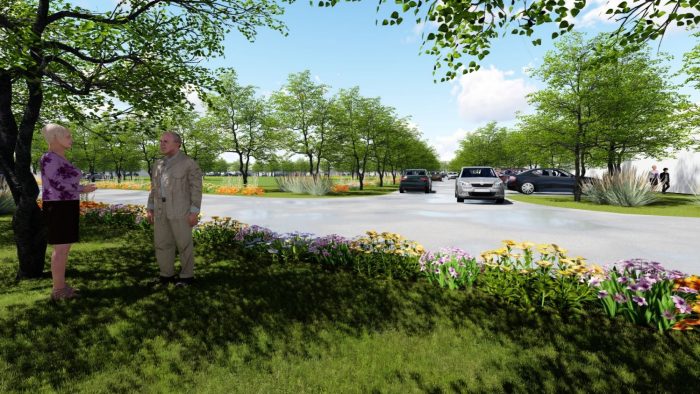
Based on a successful Dutch model, the facility would not feel or look like an institution, but rather mimic a tiny country town.
The proposal for the dementia village in Heathcote, 45 kilometres south-east of Bendigo, has won the support of the state government, which contributed $150,000 towards a feasibility study.
The committee behind the proposal says the village would greatly enhance the lives of those living with dementia, a brain disorder that has no cure, affects more than 413,000 people across the country and has recently become the leading cause of death among Australian women.
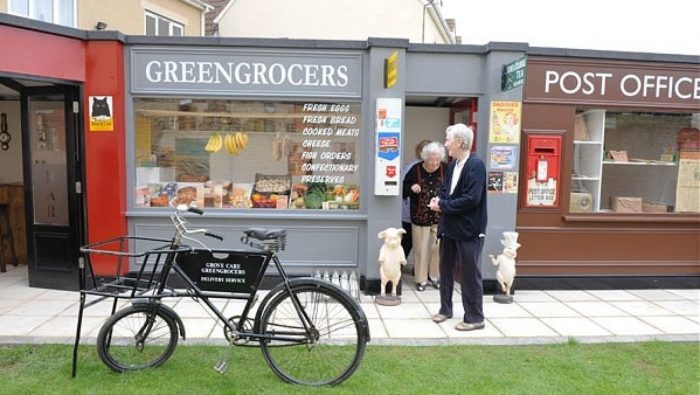
In Holland, the Hogeweyk dementia village has shops, cafes and a theatre for residents.
The village would also create a sustainable economic model for Heathcote, injecting an estimated $15 million into the local economy each year.
The idea was first floated in 2014 when staff at Heathcote Health’s 42-bed aged care ward were caring for a cluster of patients with severe dementia.
Hospital chief executive Dan Douglass was faced with an enormous challenge. One woman was swallowing any object she could get her hands on. A man had developed sexual inhibitions and was behaving inappropriately around female residents, staff and visitors.
Residents would be free to walk the streets of the Heathcote Dementia Village.

“We had another gentleman that was suffering post-traumatic stress syndrome from the war and that played out in his dementia in that everything had to be very, very quiet around him,” recalled Mr Douglass.
“We tried to see if we could relocate those residents to more suitable accommodation, and we found it was almost impossible to do so.”
At a board meeting, Mr Douglass asked his colleagues what they would do “if they had a magic wand”. A local pharmacist piped up. She would build a dementia village in Australia, right there in Heathcote.
The facility would be specifically designed for dementia patients, unlike traditional aged-care facilities. And, importantly, it would be a restraint-free environment.
“Confusion is a key issue for people with dementia,” Mr Douglass said. Busy, noisy spaces where everything looked similar could agitate residents.
“For example, certain colours or patterns might look like insects so they might think insects are running all over the place,” he said. “Or if you’re walking around the facility and there’s ten doors that look the same, how do they know which one is their room?”
Confusion can lead to aggravation, which often results in violence towards staff, and chemical or physical restraints.
“They don’t understand what they’re doing,” Mr Douglass said. “If they get frustrated, they hit out.
“The idea of the dementia village concept is that they would be in more home-like surrounds.”
Six to eight residents would live in a building that was tailored to suit their background. For example, if they were a farmer, they might live with other residents from rural areas.
The residents can sleep, wake and eat when they choose, and are free to walk around the village on their own.
“They feel like they’re having a normal day,” Mr Douglass said. “They don’t realise they are in a facility, they think they are at home.”
“It’s not rocket science.”
Steven Abbott, manager of Bendigo council’s community partnerships, said Heathcote was ideally located because it was close to Melbourne, Bendigo and rural areas. He said the village could be expanded to include the township.
“As it develops and evolves over time, we want the Heathcote friendliness to actually branch out and for the Heathcote community itself to be fully dementia-friendly.”
Tasmania recently announced plans for Australia’s first dementia village in Glenorchy, a $25 million complex expected to open in 18 months.
Heathcote’s village would be different in several ways, Mr Abbott said. Firstly, it would be bigger, housing 150 patients and employing more than 200 staff, with an estimated building cost of $60 million.
It would also aim to expand to include the entire local community, as well as partner with rural and agriculture enterprises.
There are also plans to include a $25 million research facility on site, an idea that has universities lining up to be involved.
The committee needs to raise another $120,000 to fund business and concept planning, and have requested financial support from the federal government.
“If the feasibility study comes back positive, then we’re very excited this will be a real game changer for Australia,” Mr Douglass said.
At Ipswich and Logan Granny Flats, we can’t build you a whole village,
but we can help you on a smaller scale!
If you’re wondering if a granny flat might be the solution to
housing your loved ones, give us a call today!
Call Sonia on 0403 309 136
Tiny Houses – Will they be the next BIG thing??
Tiny houses… small, transportable dwellings or cabins, offering a basic and compact accommodation solution. Could they be the answer to an upcoming housing shortage? Or are granny flats and apartments what cities need to help cater for the population boom?
The experts are looking at all the options…what are your thoughts?
Tiny houses might accommodate a population boom
Rob Burgess, The New Daily
14 September 2017
For the past couple of years, economists have expected to see apartment gluts develop in Brisbane, Sydney and Melbourne, where developers have sought to profit from soaring property prices.
However, new research from BIS Oxford Economics suggests that one of those capitals – Melbourne – will see no glut at all due to high immigration.
This makes sense when you look at the breakdown of Melbourne’s population growth.
In 2016, a third of it was from natural increase (births minus deaths), with the other two-thirds made up of 13 per cent net interstate migration, and 55 per cent net overseas migration.
Department of Immigration figures show that slightly more than two-thirds of the overseas migrants are students – who generally do pretty well in small apartments, hence the disappearance of that glut.
The problem going forward, though, is that the once-expected glut will quickly become a shortage again if Melbourne’s ‘education exports’ boom continues.
Some lobby groups would prefer that boom not to happen, arguing that a bigger priority should be preventing further population growth – too often for ill-considered ecological or racial/cultural reasons.
Those views are attractive to some at an emotional level, but are based on inflated claims that have been fairly well debunked in past months.
See, for instance, the ‘Is Australia full?‘ series of articles published on The Conversation website by demographers, economists, town-planners, human geographers, public health experts, built-environment experts, agricultural experts and cultural researchers.
Housing solutions
If those more moderate views prevail, and Melbourne’s education boom does continue, where will all those migrants live?
One solution to that problem has been proposed by the development consortium Australian Education City, which wants to build a combined residential and educational ‘city’ near Werribee, in Melbourne’s outer-west.
The idea is to invite numerous universities to run campuses there, and to house many of the students, staff and researchers in 30,000 new dwellings.
The Victorian government says a decision on that $30 billion project should be made by year’s end – “too slow” according to the shadow planning minister David Davis, who points out that the scheme was first examined when his side of politics was still in power.
A spokesman for the consortium told me on Thursday that, among other things, it would take some pressure off other Melbourne areas where residents don’t particularly want their suburbs to change.
Tiny ideas
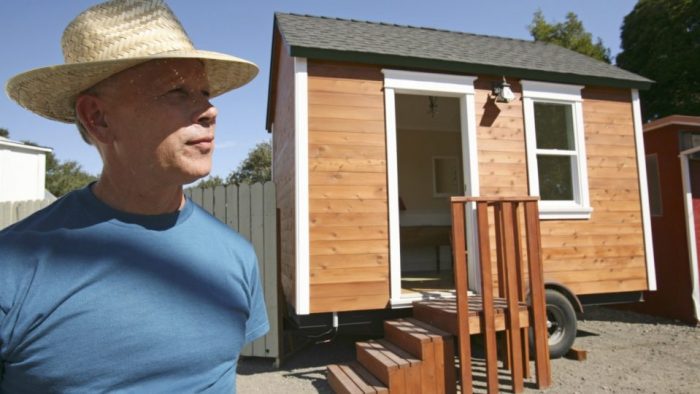
Mega-projects aren’t the only solution on offer. Planning consultant and former Victoria MP Clem Newton-Brown argued in Thursday’s Australian newspaper in favour of building ‘tiny houses’ to make use of the nation’s suburban backyards.
He wrote: “Tiny houses can be small, modular truck-transportable dwellings, or cabins on wheels. There are tiny-house and modular builders popping up across Australia and they are creating extraordinary buildings, nothing like the old granny flat, which in any case can be installed only to house a family member.”
The ‘tiny house’ idea is big in the US, and among frustrated Gen-Ys and millennials, but is it really a solution?
Perhaps, though in WA the much maligned ‘granny flat’ is gaining more traction.
That’s because the WA state government legislated in 2015 to allow ‘ancillary dwellings’ to be built in just about any backyard on blocks over 450 square metres – and unlike previously, they can be let to anyone and not just a family member.
Mayor of Fremantle Brad Pettitt trialled a similar scheme in the City of Fremantle in 2012 – a success, he says, which inspired the state-wide legislation.
The Fremantle scheme, which required building permits but no planning approval, had some unexpected results.
One, he said, was that empty-nesters built small dwellings for themselves in their backyards and rented out the family home out front – the reverse of what was expected, but a logical way to generate higher incomes and free up larger dwellings.
Mr Pettitt sees the ad hoc ‘granny flat’ approach to urban planning as “complementary” to more closely planned medium-density projects in his area such as a 150-person solar-plus-storage powered development south of Fremantle or a new ‘Gen Y’ project that aims to fill the “‘missing middle’ of medium density housing, whereby housing stock … is increasingly either low-density, single-family homes or higher-density apartments, with little choice in between”.
The ‘missing middle’ pretty much sums up what Australia’s cities need to build to become more liveable.
But whether it’s granny flats, high-rise apartments, new ‘cities’ or the “missing middle” the recent experience in Melbourne highlights the challenge at hand.
And the solutions to that challenge will have to be more creative that slamming the door on migration and stamping out a nascent boom.
Ipswich and Logan Granny Flats…
when it comes to Granny Flats, we’re
BIG on knowledge, service, and value.
Call Sonia today on 0403 309 136
State Politicians and Councils discuss need for different types of dwellings
Queensland’s housing needs are changing … and our politicians and councillors are including granny flats and the like in their plans! New green guidelines, homes that work with our climate and are in tune with their community … it looks like they might just be getting it right! Take a look at this excerpt from The Courier Mail article discussing the future housing plans for Brisbane City.
Future Brisbane: Major parties respond to action plan
Daryl Passmore, The Courier-Mail
September 16, 2017
… As for housing, there is broad support from state politicians and the city council for encouraging new models, such as granny flats, duplexes, terraces and low-level apartment blocks in low-density areas.
The Government has emphasised this “missing middle’’ approach between single detached houses and high-rises in its just-released Southeast Queensland Regional Plan.
Lord Mayor Graham Quirk says: “Council will consult local communities on the future of their suburb to ensure that different types of dwellings are in tune with community expectations for that area.’’
Council has committed to using new green guidelines promoting designs compatible with the subtropical climate into its assessment of CBD building proposals and is now incorporating them into new neighbourhood plans.
The Brisbane River will be enhanced with five new hubs to enhance recreation and tourism, while extra bridges are on the cards, along with a major expansion of South Bank Parklands.
But council has ruled out a major element of the Future Brisbane action plan – incentives to encourage businesses to set up in hubs in middle-ring and outer suburbs to relieve congestion caused by people travelling into the city centre to work.

While council supports the development of economic hubs outside the CBD, Quirk says incentives are not necessary.
“The Brisbane Metro will significantly reduce travel times and support the development and attractiveness of suburban precincts,’’ he says. “Council-related costs for setting up suburban businesses are already significantly cheaper than the CBD.”
State Government projections forecast that the proportion of people who commute into the Brisbane Council area from other parts of the region to work will rise from 31 per cent to 42 per cent by 2041.
Debbie Smith, managing partner for professional services firm PwC, says: “(We need to) think about how we decentralise economic activity away from the CBD and generate more opportunities for people to live closer to their places of work. This will reduce congestion and help boost lifestyles.”
Top demographer Bernard Salt, who conducted exclusive research for the Future Brisbane series, highlights the need to create employment opportunities close to fast-growing residential areas away from the inner city if Brisbane is to avoid the crippling gridlock that’s afflicting other cities.
He insists that direct intervention is necessary, saying: “The Government can lead this process by locating any new departments, divisions or authorities somewhere like Chermside or Mount Gravatt or Springfield, and that in turn draws businesses.”
Now’s the time for YOU to start thinking about future housing plans too – in your own backyard!
Talk to your Granny Flat Experts – we’d love to help you!