
Investors Can Still Get First Home Buyer Benefits
“Rentvestor” is a new term that we are hearing more and more, as savvy buyers find ways to make their investments work best for them. This little-known loophole in the first-home-buyers scheme gives investors who haven’t lived in their property for more than six months an advantage when it comes to stamp duty concessions and grants.
Read and enjoy …
Investors Can Own Multiple Properties but still be Eligible for First Home Buyer benefits
Jennifer Duke, Domain
30 August 2017
A little-known loophole across all states and territories is allowing investors, who already own multiple properties, to take advantage of government grants aimed at helping first-home buyers.
An analysis of rules around grants across the country shows that it doesn’t matter if you already own one property, or 10 – a homeowner who hasn’t lived in their properties for more than six months may be able to claim certain first-home buyer stamp duty concessions and grants.
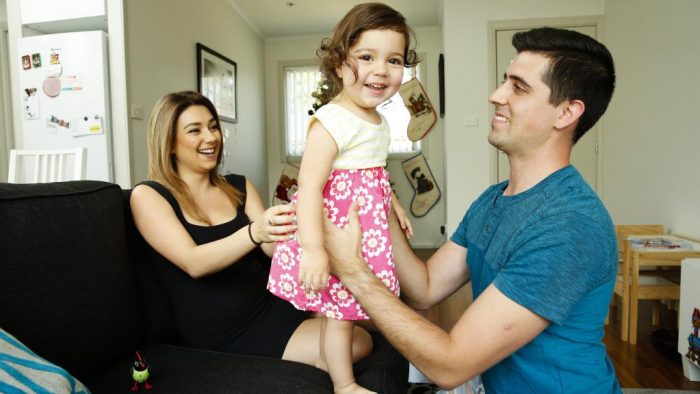
This means someone like Uber driver and quantity surveyor Dean Munro, 29, a multiple property owner – is eligible for government first-home buyer benefits, because this time he is buying a house with the intention of living in it.

Dean Munro is a multiple property investor, with a family-owned portfolio he estimates is worth more than $2 million, and he’s still able to claim the stamp duty exemption on his newly bought first-home. Photo: Paul Jeffers
His property portfolio, which includes three properties owned in his name and some he teamed up with family members to buy, is worth more than $2 million.
After a decade of rentvesting – a term given to those who own investment properties but continue to rent – Mr Munro has bought a house in Melbourne’s Broadmeadows. The first-home stamp duty exemption he is entitled to will save him $17,620 on his $425,000 home.
If the property he had bought was a new build, he would have been able to claim up to $10,000 from a government grant.
An examination into the rules found property investors across all states and territories may be eligible for some form of government benefit on a property purchase, provided they haven’t lived in any of their previous investments and they haven’t owned real estate before July 1, 2000.
This is good news for Mr Munro and investors like him.
Despite also having a shares portfolio, gold and silver bullion, and a cash buffer in the bank “just in case there is a downturn in the property market”, he said the stamp duty concession – which his lawyer confirmed he was eligible for – is one of his “tactics” to get the last loan over the line and push the portfolio to its eighth property.
“This last loan was not easy to get and required a lot of thinking outside the box,” he said. “I’m just going within the rules and I haven’t used it before.
“I never used [the grant], so I’m using it now. It’s the right time to settle down and stop renting a room [in a share house]. I want to live by myself and do some renovations.”
So, how many multiple property owners like Mr Munro have been given a first-home owners grant? Even government departments handing out the grants aren’t sure.
Domain requests to all state and territory relevant government agencies for providing first-home owner grants revealed none of them collect data on whether first-home owners are also investors when providing the grant or stamp duty concession.

While rentvestors claiming first-home buyer grants are simply playing by the rules, First Home Buyers Australia founder Daniel Cohen said the grant should be a one-off payment to people purchasing their first property to live in. Both he and FHBA co-founder Taj Singh were surprised at the rules.
“So if you choose to enter the property market as a rentvestor … while this is a viable option for consideration, by choosing this method you should be giving up your right to the [grant],” Mr Cohen said.
He noted that investors were able to receive other tax incentives, such as negative gearing benefits, which were not available to first-home buyers.
The rules around the grants aren’t new.
A Queensland government spokesman said the purpose of the grant was primarily to offset the increased costs of housing arising from the introduction of the GST in 2000.
Since then, some variations have been introduced. In both Western Australia and the ACT, a property investor cannot claim entitlements if they have lived in the home for more than six months, if it was bought after June 30, 2004.For properties owned between July 1, 2000, and June 30, 2004, they could not have lived in it for any time period.
A Revenue NSW spokesman said: “It is important to note that investors do not benefit from the stamp duty exemptions that were recently expanded in NSW”.
Richie Muir, legal director at Lawlab, said there were some differing rules between the states and territories, but many rentvestors would be eligible.
“The number of rentvestors are increasing in Australia, particularly with younger generations, because they want to get on the property ladder as quickly as possible but can’t yet afford their ideal home,” Mr Muir said.
Rentvestors may be required to provide evidence they hadn’t occupied their properties, such as lease agreements, tax returns and utilities bills, and the rules also applied to their spouse, he said.
Mr Muir also noted this list was not exhaustive, and there are other eligibility requirements for the first-home owner’s grant that vary by state and territory, and the rules relating to stamp duty concessions can also be different.
“Where the first-home owner concessions are not available, there may be other home owner stamp duty concessions available,” he said.
Looking for an investment?
Whether it’s your first or fiftieth, we can help you find the right one!
Call Sonia on 0403 309 136
Granny Flats and Airbnb
Airbnb is a world-wide concept that is rapidly gaining popularity here in Australia. Letting out your unused room seems like such an easy way to make some pocket money or contribute a little extra towards the mortgage….right?
It can be, but before you place that ad you need to be aware of any possible tax obligations further down the track. Check out this article to discover what you need to know…
A homeowner’s guide to letting on Airbnb
Melissa Browne, The Sydney Morning Herald
29 August 2017
More and more homeowners are looking for ways to increase their household income. This includes looking to their family home to provide extra funds through Airbnb or renting out the granny flat in the backyard.
While this might seem like a short-term win that may include the ability to claim a percentage of your mortgage as a tax deduction, it’s important to remember the long-term cost when you sell.
Too many people aren’t aware that they may lose their main residence exemption if they use their house for income-producing purposes, which means they’ll potentially pay capital gains tax (CGT) when they sell their home.

If you’re thinking to yourself, ‘I’m only renting my spare room out every other weekend on Airbnb, the Tax Office will never find out. Besides, if I don’t declare the income and claim the deduction then I don’t need to worry about CGT’ – I urge you to think again.
That’s because the Tax Office can data match your information on sites such as Airbnb to ensure that you’re declaring income.
The ATO’s assistant commissioner Matthew Bambrick has said that information is used from “a range of third-party sources” such as banks, eBay and Uber, to data match with what is being declared on tax returns and to catch undeclared income.
“The data enables us to put together a picture of what a person’s assessable income should be. If something doesn’t look quite right, it will send up a red flag and we’ll investigate further,” he said.
“The ATO is keeping up with the sharing economy, meaning that we have the ability to identify if you have left out a significant amount of your income.”
Does this mean that you shouldn’t be renting out the granny flat or making a few extra bucks on Airbnb? Generally, no however it’s important to understand the long-term financial implications of the short-term gains you’re currently making.
Let’s take the case of renting a granny flat on Airbnb. If you decide to rent the granny flat on Airbnb, it’s available to rent every week and it’s available for market rent then you may be entitled to claim a percentage of your interest, council rates and more against the income derived which means part of your ownership costs may be tax deductible. Which can be a great thing. This may mean that the income and expenses cancel each other out and you end up paying no income tax on the net income. Let’s assume in this example that the granny flat represents 7.5 per cent of the house.
When you eventually sell your house, let’s say you make a profit of $300,000. Normally you’d pay no tax on this as you’d be entitled to the main residence exemption. However, as the property was income producing for half that time then $150,000 is potentially now subject to CGT. The good news is you are potentially entitled to a 50 per cent discount, which reduces the profit to $75,000 of which 7.5 per cent is now declarable for CGT purposes or $5625. If your taxable income is an average one, the tax payable would be $1771.88.
Now that might not seem like a lot of money; however, if you live in a suburb where house prices have skyrocketed, your profit could be much more than the example above, which means that the CGT payable is also much more.
With the average Australian income for Airbnb hosts at $4500 a year, in the example above, even with deducting the CGT payable, the host would be better off.
However, with some suburbs, particularly in Sydney, having increased dramatically, there is a chance the CGT will be more than the income received, which may mean you want to reconsider your options.
You may argue that you have no intention of moving and therefore any potential CGT is irrelevant because you only pay tax on the profit when you sell. However, circumstances change for all of us and it is important to be aware of any potential gain should you choose to sell.
What is important is not to bury your head in the sand and claim that you didn’t know. That’s simply not a good enough excuse and the Tax Office will issue fines and penalties if you’re not declaring both the income and the CGT.
Airbnb and granny flats can be a fantastic way to make some extra money from what is often our biggest and most expensive asset, however it is important to be aware of both your tax obligations both in the short term and the long term.
Got a Granny Flat ?
Perhaps Airbnb might be a good alternative rather than a standard residential lease arrangement (subject to any council requirements of course !)
Don’t’ have a Granny Flat yet – when you look at some of the returns home owners and investors alike are achieving, it makes it worthwhile investigating.
Then talk to your financial advisor or accountant to see what the tax implications might be for your own personal circumstances …
Give Sonia a call today on 0403 309 136
The face of Brisbane’s housing market has started to change…
When people talk of “future-proofing” their homes, thoughts of technology, mortgages and energy-efficiency usually pop into one’s mind. But the term is now more commonly being used by parents who have come to realise that their children are likely to still be living with them well into adulthood. Read here how this Brisbane couple built their home to cater for their 3 adult children (and partners!)
Michelle Hele, The Courier Mail
5 August 2017
THE face of Brisbane’s housing market has started to change in line with adult children living with their parents longer.
Architects are being called more often to adapt housing to suit the needs of dual living, and families have found inventive ways to alter their homes to accommodate numerous adults under one roof.
University of Queensland urban and social planner Laurel Johnson said there were more secondary dwelling developments now as more children stayed at home longer.
“Also known as granny flats, the secondary dwelling appears to be making a comeback in our metropolitan area,’’ Ms Johnson said.

“Where people have a big enough yard, the secondary dwelling is a good option, not costing much more than an extension.
“It can generally be developed without town planning approval and the costs of a subdivision don’t apply. The secondary dwelling is simply added to the title of the existing dwelling. This is a fully independent living space, without the cost of buying a separate parcel of land.’’
Ms Johnson said councils once required that only grandparents could occupy a second dwelling, but this had changed.

“Now the second dwelling is being occupied by a range of family members including teenage and adult children and other extended family members.’’
Ms Johnson said in Brisbane, a secondary dwelling could be up to 80sq m, as long as it was within 20m of the main house – bigger than many new one-bedroom units.
Archicentre director Peter Georgiev said it was a bit of “back to the future’’ as for many years European and Asian families had lived multi-generationally.
“In the 21st century we are seeking to “design” this idea,’’ he said.
Mr Georgiev said it was not so much about adding value in terms of increasing the sale price but it added value to the lives of people developing these homes, so the property often remained in the same family for a long time.

“If – when – they come onto the real estate market and another family finds a “goodness of fit”, this will be a fortuitous occurrence rather than a deliberate aim.’’
When Annette and Warren Denny built their St Lucia home five years ago, front of mind was to allow their three adult children to remain there and to accommodate them comfortably.
“We purposely built this house to have our adult children at home,” Mrs Denny said. “It’s close to UQ where they went to university. We wanted to help them as they finished their degrees and then searched for their first jobs, which don’t often pay very well.
“We went from a family of five to eight as our children’s partners came along too. The house worked perfectly and we honestly loved having them here.
The bedrooms are completely separate, each has an ensuite and study area.
The home at 179 Ninth Ave, St Lucia, is for sale through Judy Goodger of Place.
Mr Denny said they had always considered the stage in life of their children in designing and building their homes. They believed young people needed a degree to enhance employment chances and many could not afford to do this and live out of home at the same time.
“We gave our architect a brief to design the largest house he could fit on the site.
“They (the children) were rarely seen, preferring to study and watch movies in the comfort of their bedroom chambers.’’
They couple have bought a renovated Queenslander at New Farm which is half the size of the St Lucia home.

“On signing the contract, the child eviction program became a reality for our children,’’ Mr Denny said.
“Our house is officially on the market to be sold with no residual child issues.’’
Ms Goodger said now more than ever, new build homes often had a separate bathroom and bedroom to cater for families with older children. Lachlan Walker of Place Advisory said there was a lot of work going on in Brisbane with people “future proofing’’ their homes.
“Particularly in those inner city regions within the first five kms, there is a lot of renovation happening to add value and to accommodate all family types,” he said.
Mr Walker said one of those family types was parents living with adult children.
Accommodating them was not as simple as just adding another bedroom, there needed to be separate living areas so everyone felt they had their own space.
“I think it is adding value and increasing the marketability.’’
Sonia and the team at Ipswich and Logan Granny Flats are the local experts you need to speak to
if you’re concerned that your kids may never leave the nest!
Give us a call on 0403 309 136 – we can help!!!
When the family nest is best
You’ve fed and clothed them, endured the teething torture through to the teenage years, suffered through sleepless nights, tantrums, school productions and sports games. Now it’s time for them to leave the nest and give you some peace, right??? Sorry, but it’s official, more young people than ever before are living at home with Mum and Dad… And it’s creating a big demand for properties featuring separate accommodation options.
Kate Farrelly, Domain
27 July 2017
When the family nest is best: Demand rises for multi-generation homes that reinvent the granny flat
Going by a host of names from teenage retreat or in-law accommodation to a studio or self-contained apartment, the granny flat in its myriad forms is a keeper.
And yes, grandparents are also contenders for that extra bedroom.
“A lot of our market buying these kind of properties are either looking for a teenager retreat, accommodation for young adults in the family to have their own space or they want to provide for ageing parents,” says Ray White Manly agent Stephen Bock.
“We’re finding with the growth we’ve seen in the market, young adults are staying at home longer and having that separate living space is really important but often hard to find.”

One of Bock’s listings, 33 Wyndora Avenue, is a prime example. Designed to accommodate extended family, the two-storey retreat built over the double garage at the back of this contemporary beach house comes complete with an internal lift to access a first-floor bedroom and bathroom and top-floor living spaces.
“This would be one of the most versatile floorplans I’ve seen to accommodate separate living for teenagers or elderly parents,” Stephen Bock says of the Freshwater property, priced over $4 million. “The finishes are exquisite.”
Of course, the same top-end finishes can also be found in the main house where the glass-encased living spaces gaze over a manicured garden and in-ground spa, and a parents’ retreat captures ocean views.
Harcourts Brock Williams Luxury agent Stephanie Williams says having a separate, multi-functional space is a great drawcard for buyers. “It allows flexibility, whether as guest accommodation, an artist’s studio or a pool-side cabana.”
Williams is currently selling 20 Avenue Street in Millswood, South Australia, with a guide of over $3 million. On a 1500-square-metre block, the picturesque Victorian home has a clever, single-level floorplan catering for every member of the family.
There’s a “children’s wing” with three bedrooms, a bathroom and a study, formal living rooms opposite a home office and master retreat and bright casual living areas extending to a verandah overlooking the pool and the studio adjoining the double garage.
Lucky for you Ipswich and Logan Granny Flats are here to help! Give us a call, we can help you with a place for the kids (or even a new place for you, if you need to escape from them!)
Call Sonia on 0403 309 136
Aussie Dream of Home Ownership Dying as Renting is Preferred Option
This week Ipswich and Logan Granny Flats bring news of a change in the makeup of the Australian property market. The article below details the disparity between the great Australian dream of owning your own home and the harsh reality that some areas of Australia may soon have more than half the population renting, like New York. Affordability, investor domination of the market and the cost of stamp duty are the major hurdles standing in the way of young people today, 90% of whom still cherish the dream of home ownership.
Enjoy…
Annabel Hennessy | The Daily Telegraph
17 December, 2017
SYDNEY is turning into a city of renters as rising prices force more people to ditch the homeowning dream.
Experts report an increasing number of people choosing to rent rather than buy and predict Sydney could soon turn into a city like New York, where more than half of the population rents.
In some Sydney suburbs the rate of renters has already topped 60 per cent.
Real estate giant L?J Hooker tips the rise of the renter to be one of the biggest property trends in 2017. Hooker research head Mark Tiller said affordability and investor domination of the market were driving factors.
“House prices are continuing to rise but, because of the increase of apartment supply in particular suburbs and the rise of investor numbers, we could see rents soften for units in some areas in 2017,” Mr Tiller said.
“The cost of transaction in terms of stamp duty also makes buying less achievable, which is also driving more people to rent.”

While just 30 per cent of the Australian population rents, Bureau of Statistics data shows that in popular suburbs such as Potts Point the number of renters has risen to beyond 60 per cent.
McCrindle research director Eliane Miles said while home ownership was still a major aspiration, it was simply affordability stopping young people from buying.
“We did some research that showed 90 per cent of Australians still want to strive towards owning their own home,” Ms Miles said.
“It’s still the Aussie dream, it’s just more difficult and I think for young people it seems incredibly far off.”
Real Institute of NSW president John Cunningham said: “I don’t want to see Sydney turning into New York where the majority of people rent but it could happen.
“This is why we think the stamp duty system in NSW needs an overhaul, to make it easier for young people.”
Mahnam and Michael Mogaddam rent a granny flat in Baulkham Hills but are lucky enough to have bought a block of land nearby where they hope to build soon.
There were times when they nearly gave up on the homeownership dream.
“It’s really horrible. We’d have to live 45 minutes away for our family to get something affordable,” Ms Mogaddam said.
“There were several times I said that we should think about just continuing to rent but we want to own a house so we can make it easier for our children and pass it on to them.”
Are You Interested in Entering the Property Market?
Call SONIA 0403 309 136
Backyard Building Boom: Granny Flats Make a Comeback
This week, Ipswich and Logan Granny Flats bring you an excellent article on the growing demand for Granny Flats. With housing prices continuing to climb and the suburban population explosion, building a Granny Flat has never sounded better. Owners are typically able to achieve 15% rental yield, with the average rent at $283 p/week. While for renters, Granny Flats provide privacy, a massive drawcard over share housing for very little more money p/week. It’s a win win situation.
Read and Enjoy….
Backyard Building Boom: Granny Flats Make a Comeback
Julia Corderoy | news.com.au
14 January, 2017
YOU could become a property investor without looking beyond your own backyard. The Granny flat is making a comeback, it has nothing to do with your grandparents, and it could be a gold mine for homeowners.
No longer regarded as just a quick, budget solution to housing your ageing relatives, Granny Flat-living is having a bit of a renaissance.
State governments are becoming more open to the building and use of Granny Flats — the New South Wales government overhauled its regulation regarding Granny Flats in 2009, as an example — and the designs are becoming smarter, more modern and more liveable too. So much so, that Granny Flats perhaps shouldn’t even be labelled “granny” anymore.
According to data from Flatmates.com.au, Granny Flat listings as private rentals on the site increased by 16 per cent in 2016, nationally, while searches for Granny Flat accommodation increased by 84 per cent in the last quarter alone. In Perth, the number of Granny Flats listed on the site rose a whopping 56 per cent in 2016.
More and more renters are opting for Granny Flats over share housing and savvy homeowners can capitalise on this.
THE ANSWER TO HOUSING AFFORDABILITY?
Thomas Clement, the CEO of Flatmates.com.au, said the resurgence of the Granny Flat is “absolutely” driven by rising real estate prices and affordability pressures. And both sides of the equation — owners and renters — are looking for ways to reap benefits in a heated market.
“There are a lot of people in their 20s and 30s that struggle to afford accommodation, particularly in the main city centres,” Mr Clements told news.com.au.
“It is also driven by the fact that there is so much money in property in Australia and people are looking at their property and asking how they can utilise that asset better and make more money out of it … It is a great way of supplementing their income.”
The national average weekly rent a homeowner can receive from privately renting out a Granny Flat is $283, according to data crunched by Flatmates.com.au. But in Sydney, homeowners are receiving an average of $346, equating to an average of $17,992 in rental income a year.
In Perth, where Granny Flat listings rose the most in 2016, homeowners are receiving an average of $257 a week, equating to $13,364 per annum.
By comparison, the national average weekly rent for a private room in a share house on Flatmates.com.au was $220 per week in 2016.
Granny Flat Finder, an online service which compares Granny Flat designs and builders for consumers, has had an increase in inquiries every year since the company started in 2010.
“It has literally been month-on-month growth in inquiries,” Harry Laos, Senior Project Manager of Granny Flat Finder told news.com.au.
“But the demand for Granny Flats really started taking off around 2011 because it became a good idea in investment property circles.”
Pretty soon after that, Mr Laos explained, everyday homeowners were clueing in and really beginning to add fuel to the resurgence.
“More and more we are seeing your everyday mum and dad couples reaching their retirement years, and even younger couples, wanting to divide their backyard with a partition or hedge, build a Granny Flat, and rent it out to pay off their mortgage sooner.”
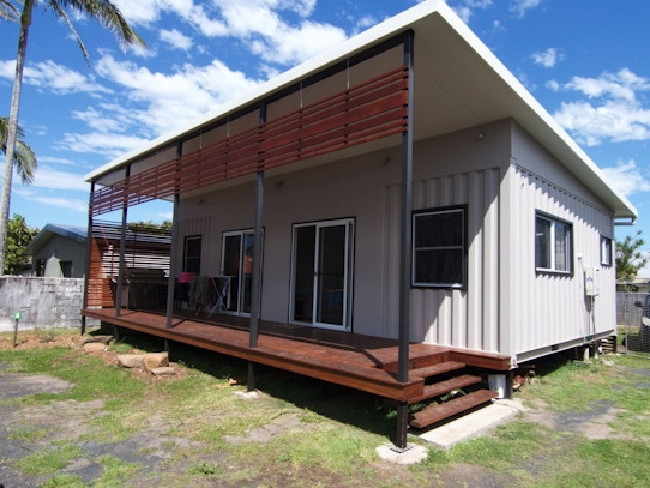
The average cost to build a Granny Flat, according to Mr Laos, will set a homeowner back somewhere in the vicinity of $1,600 to $2,000 per square metre, depending on the size. For a two-bedroom, 60sqm granny flat — the most popular for homeowners inquiring with Granny Flat Finder — will cost around $105,000 to $125,000 in total to build.
A 2015 analysis by BMT Tax Depreciation suggested the average cost of a Granny Flat to be $121,000 to construct. The tax firm, which collected data from thousands of its depreciation schedules, also suggested that property owners are typically able to achieve annual rental yields of 15 per cent on this investment.
WHAT ARE THE RULES?
The regulations regarding the construction of Granny Flats and who can live in them varies from state to state, but a change is in the air.
Traditionally, as the name suggests, a Granny flat was for the sole purpose of housing family, with regulations restricting the construction and private rentals of these backyard properties. And in some states, such as Victoria, this is still the case. But for others, such as New South Wales, the government has adapted.
In 2009, as a part of the New South Wales government’s diverse and affordable housing agenda, it overhauled its regulation governing Granny Flats, making them much easier and faster to build. As a part of the Affordable Rental Housing State Environmental Planning Policy 2009, otherwise known as the ‘SEPP’, a Granny Flat can be built in all residential zones and can be approved as a complying development in just 10 days, subject to minimum requirements.
These requirements state that the lot size must be at least 450sqm, the Granny Flat must have a floor space no larger than 60sqm, the lot cannot be subdivided and there is only one house and one Granny Flat on the lot.
Western Australian, the Northern Territory, Tasmania and the ACT have similar regulations. All allow property owners to easily build a secondary dwelling and then rent it to those other than family members.
Victoria, on the other hand, has some of the toughest regulations surrounding Granny Flats in the nation.
It varies from council to council but typically those wanting to build an extra home in their garden have to prove that the future occupant is a dependent person, such as a teenager or disabled elderly parent. The Granny Flat must also be removed if the person dies or moves out.
But now, a change.org petition by Small Change Design and Construction calling on the Victorian government to introduce laws similar to NSW has received more than 2,000 signatures. And according to an article published by The Age in January last year, the Victorian government has pledged to review the rules.
The Age quotes Acting Planning Minister Lisa Neville saying the government was “making sure planning rules keep pace with people’s needs.”
Queensland and South Australia have similarly restrictive regulations.
WHAT ARE THE RISKS?
Building an investment property in your own backyard certainly has potential to be a gold mine, however, it isn’t without its risks. The biggest risk being how it could affect the value of your property.
While it very well could be a drawcard for some buyers and aid its value, it could also do the opposite. Adding an extra property on the land which cannot be on a separate ownership title and therefore cannot be sold separately, could decrease the pool of interested buyers and decrease its overall value.
In addition, homeowners should be wary of its impact on privacy. As you cannot subdivide the lot to build a Granny Flat, you are ultimately sharing your space with others.
“You have to ask if the financial incentive of having that extra income stream is worth the personal choice of sacrificing some privacy, potentially, in your backyard,” Mr Laos said.
“Some backyards are made for Granny Flats and work very well — they separate very nicely between the main house — but others simply don’t, so you can really be sharing a lot of space with other tenants.”